

By Maliha Rehman
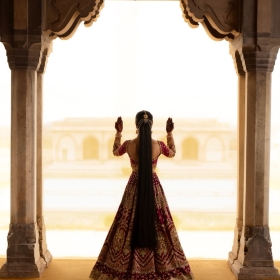
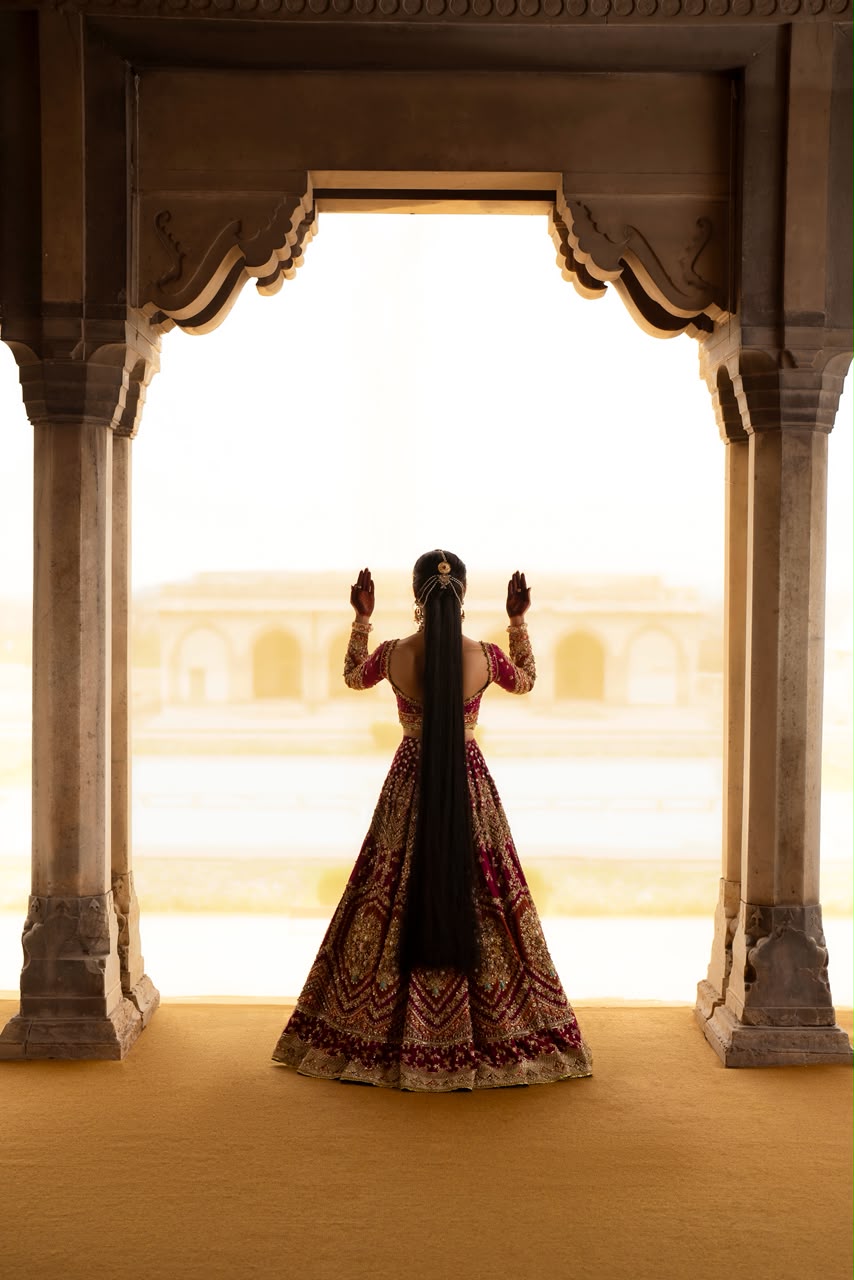
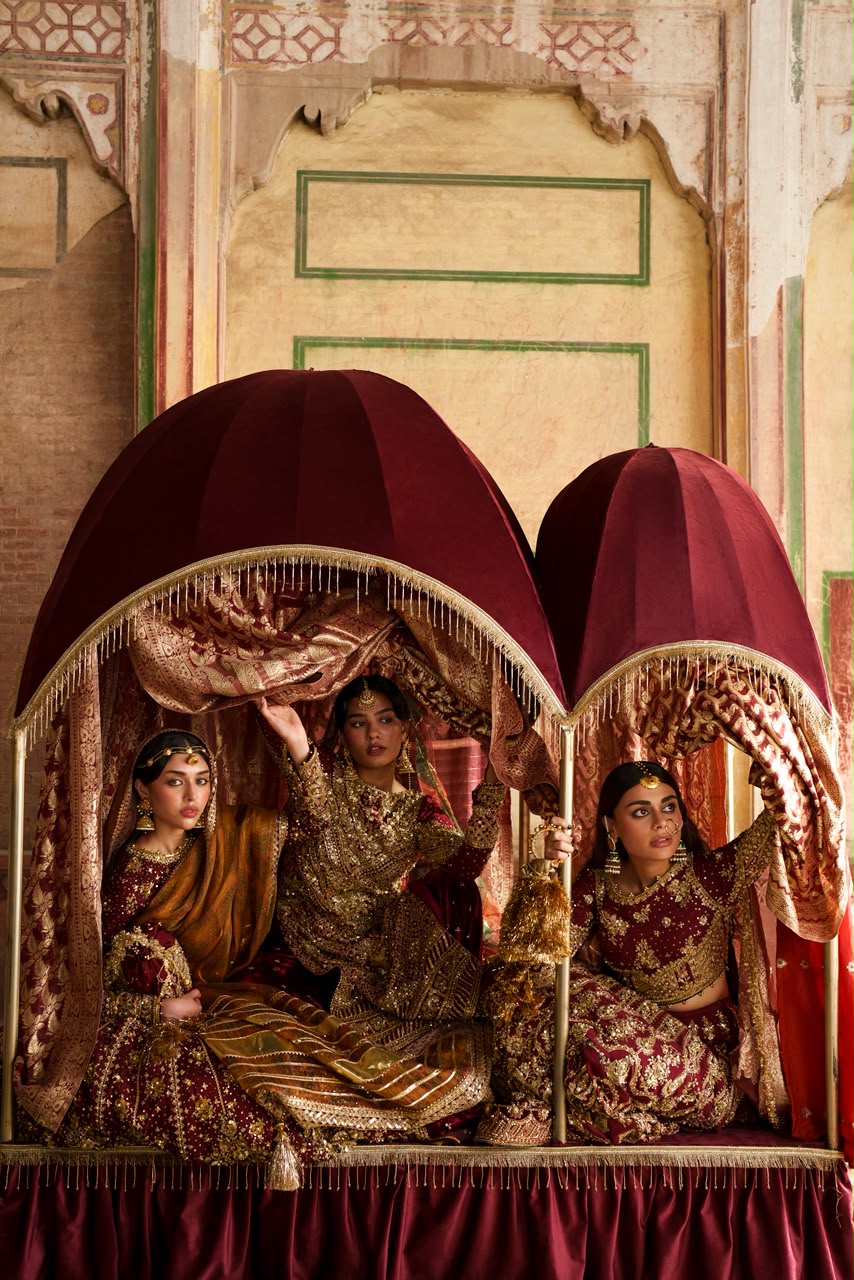
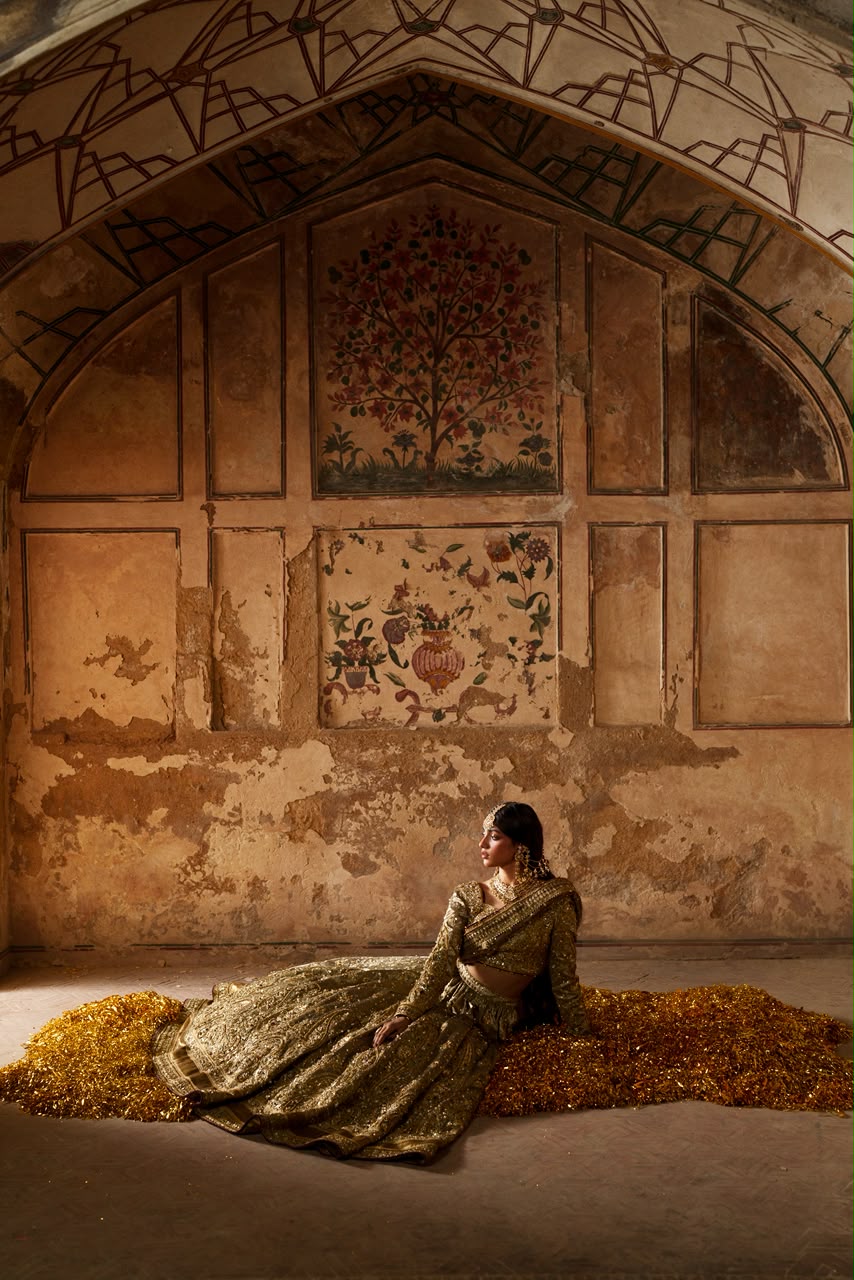
Set against the weathered walls, imposing pillars and majestic arches of the Lahore Fort, designer Mohsin Naveed Ranjha pays homage to the Sikh heritage that is intrinsically woven into Punjab’s history with his latest bridal collection, Kaur. The campaign tells stories, exploring cultures, evoking nostalgia and recognizing the enduring appeal of traditional craftsmanship.
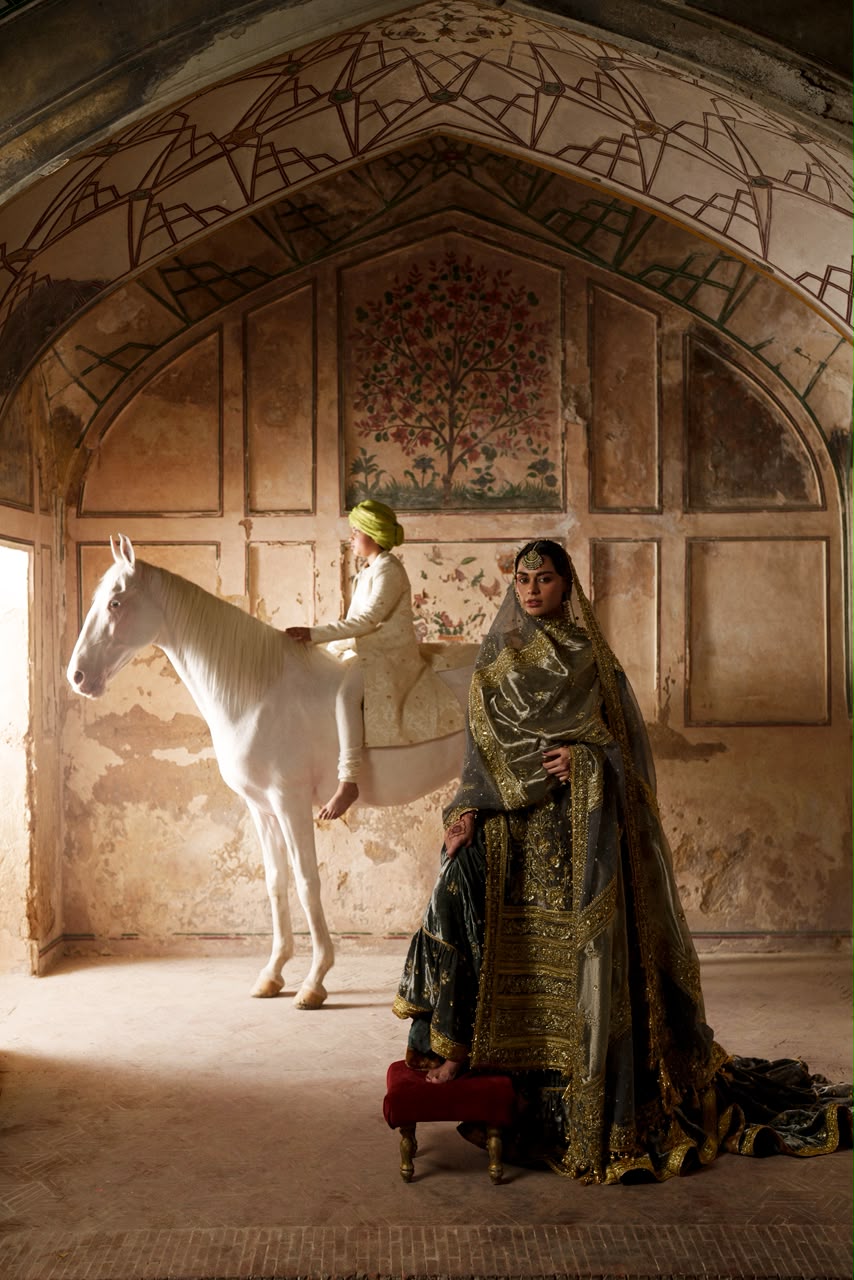
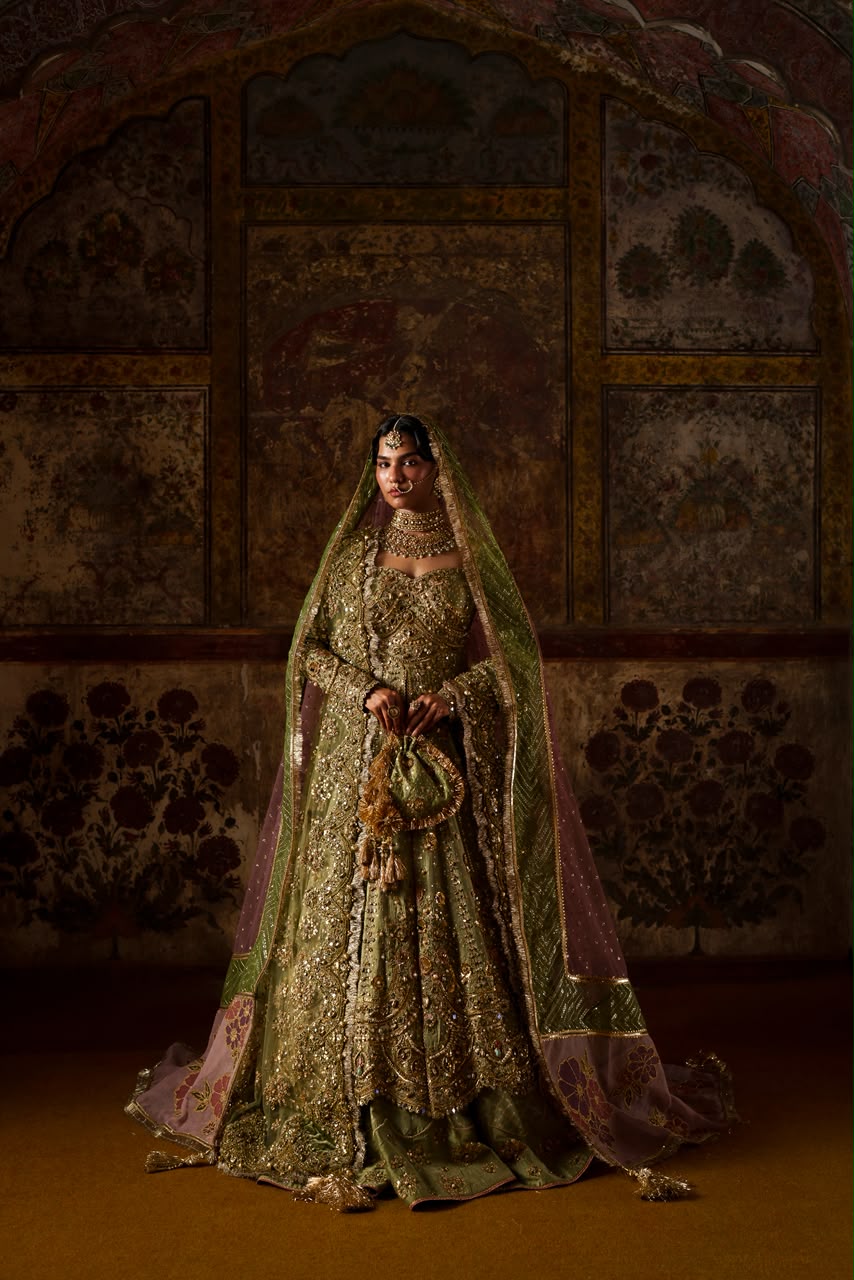
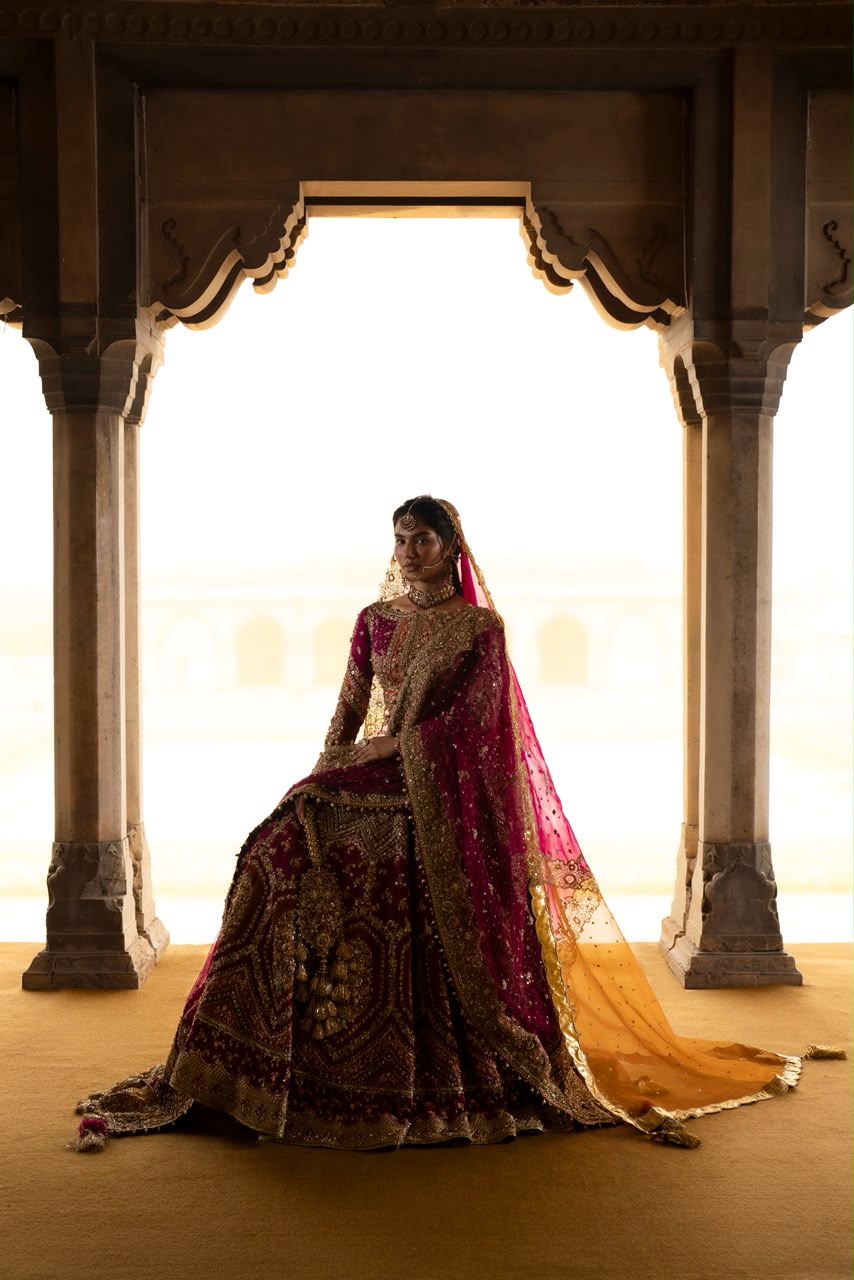
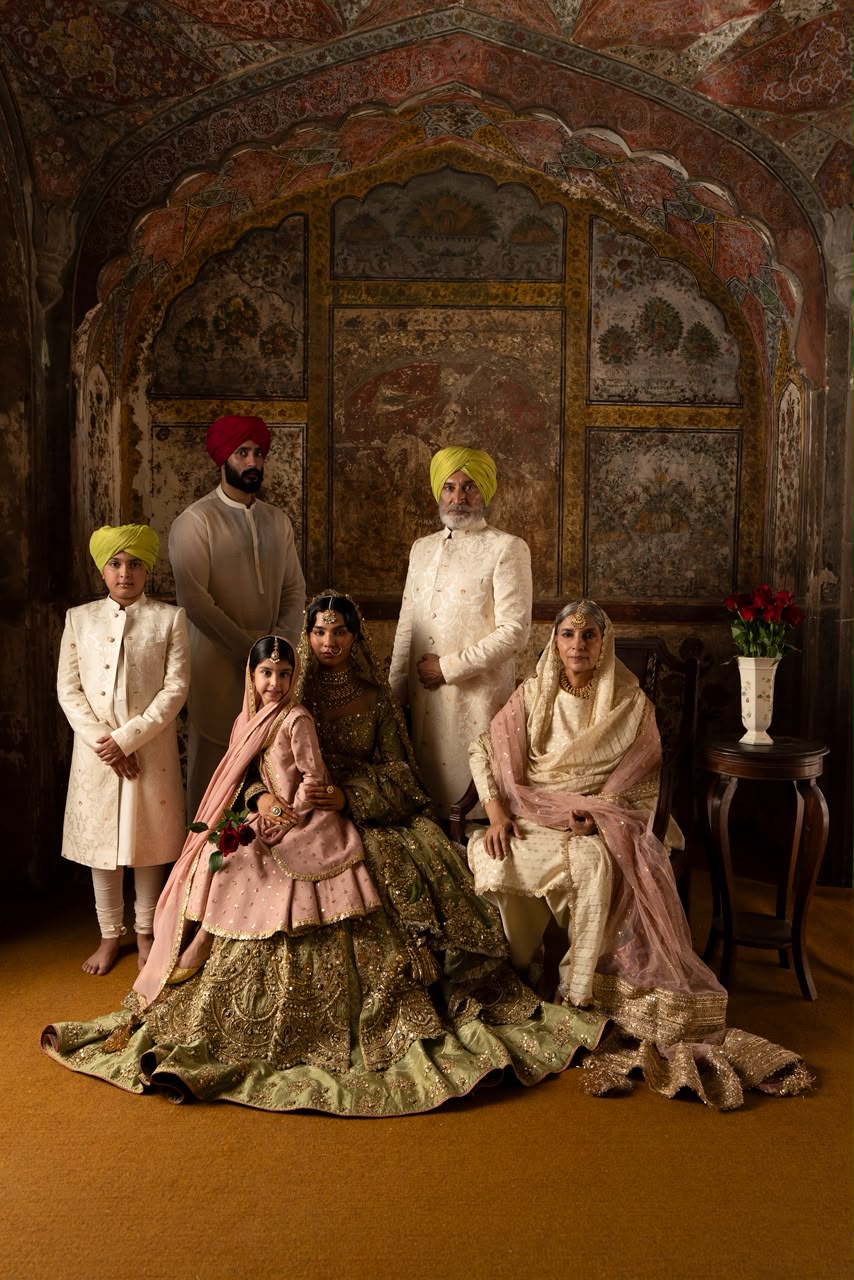
The imagery immediately catches the eye: the silhouette of a bride, looking out at the ancient landscape, framed by pillars; a traditional bride and her entourage peering out from the velvet drapes of a doli; a family gathered for a portrait with a solitary tree standing behind them; timeworn walls with peeling paint and faded colors forming the backdrop for an elaborate bridal-wear lineup.
There is an unmistakable old-world charm to the campaign. The clothes themselves, however, are familiar territory: traditional bridal silhouettes, elaborate embellishments and craftsmanship that have long been part of Pakistan’s wedding-wear template. What, then, makes Kaur a tribute to Sikh history rather than simply another collection of traditional Pakistani bridal-wear?
Designer Mohsin Naveed Ranjha observes, “The history of the Sikhs and of Punjab is linked throughout and the Lahore fort, also, is a place where Sikhs once roamed about. I don’t overthink my inspirations for a collection and they are almost always connected to my roots and my culture. And I am passionate about Punjab, its music, its culture, its history. I am always curious and have often connected with people across the border, wanting to see what Punjab is like there, wanting to see the land and the havelis up-close. Many of them have, likewise, been curious about Punjab in Pakistan.”
“The styling and the storytelling in the Kaur fashion shoot are that of a Punjabi family. The little girl who is also part of the family, has actually been dressed according to our research on how one of the Maharanis of the time dressed in her childhood. And then, there is the Sikh connection. My brand has, over time, gained a considerable Sikh clientele and this was my way of acknowledging them.”
He continues, “One of our clients is the Punjabi singer Amrita Kaur. When her clothes are being made, there is always an excitement in the air in our office. Employees go about, discussing ‘Kaur madam ke kapray’ – that’s how we came up with the name of the collection.”
Amrita Kaur can also be heard singing in MNR’s fashion video for the campaign. Why attach a story at all to a collection? The designer could have just placed the designs against an aesthetically pleasing backdrop and photographed them, presenting them as his latest lineup.
“Without a story, how would the clothes look distinctive?” points out the designer. “It is wedding-wear. We have worked on it painstakingly but at the end of the day, these are silhouettes and embroideries that have always been part of the subcontinent’s wedding-wear vocabulary. When you set a narrative, it draws people’s attention towards your inspirations and your aesthetic. Otherwise, we could just create a backdrop with AI and get done with it. It would be so much easier and cost-effective but it would also be forgettable.”
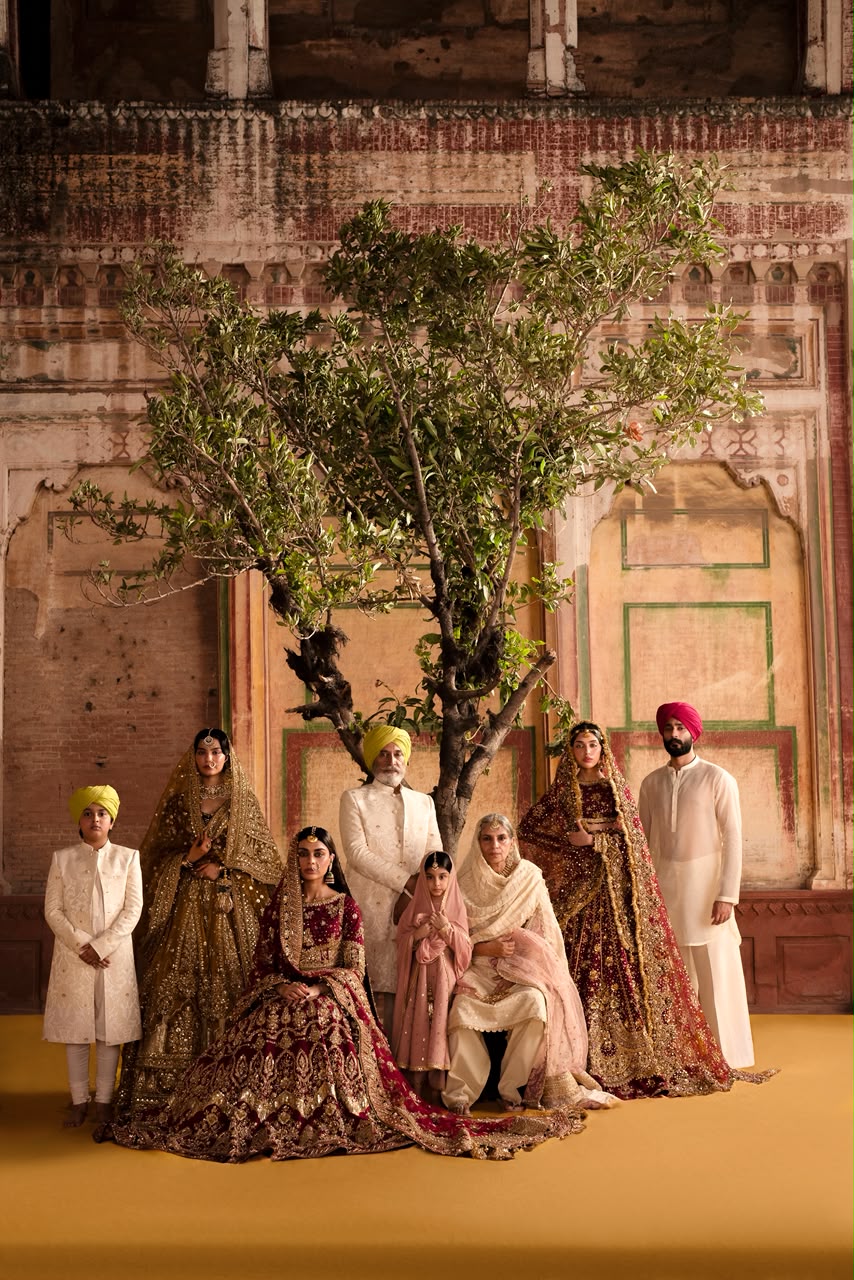
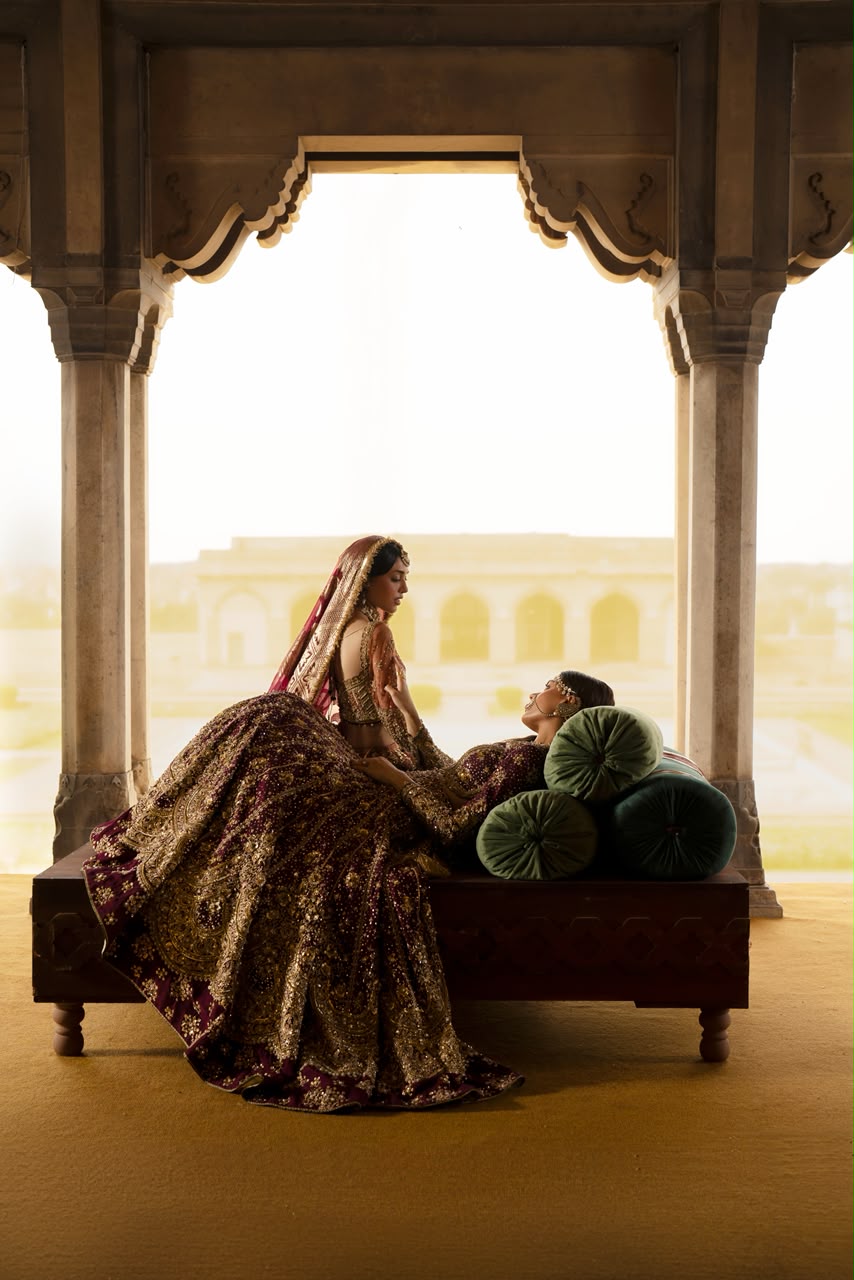
The details in the shoot, says the designer, sometimes required extensive effort. The tree seen in the family portrait was carried, with much effort, up the Lahore Fort’s steep elephant stairs. Effort was made to make sure that the styling was reminiscent of a bygone era, the hair braided, the women wearing elaborate traditional jewelry. The men featured in the shoot, present primarily to add to the narrative, are all Sikh. “We chose Sikh models because we wanted them to tie their turbans and carry them with ease, like they have been wearing them all their lives,” says Mohsin.
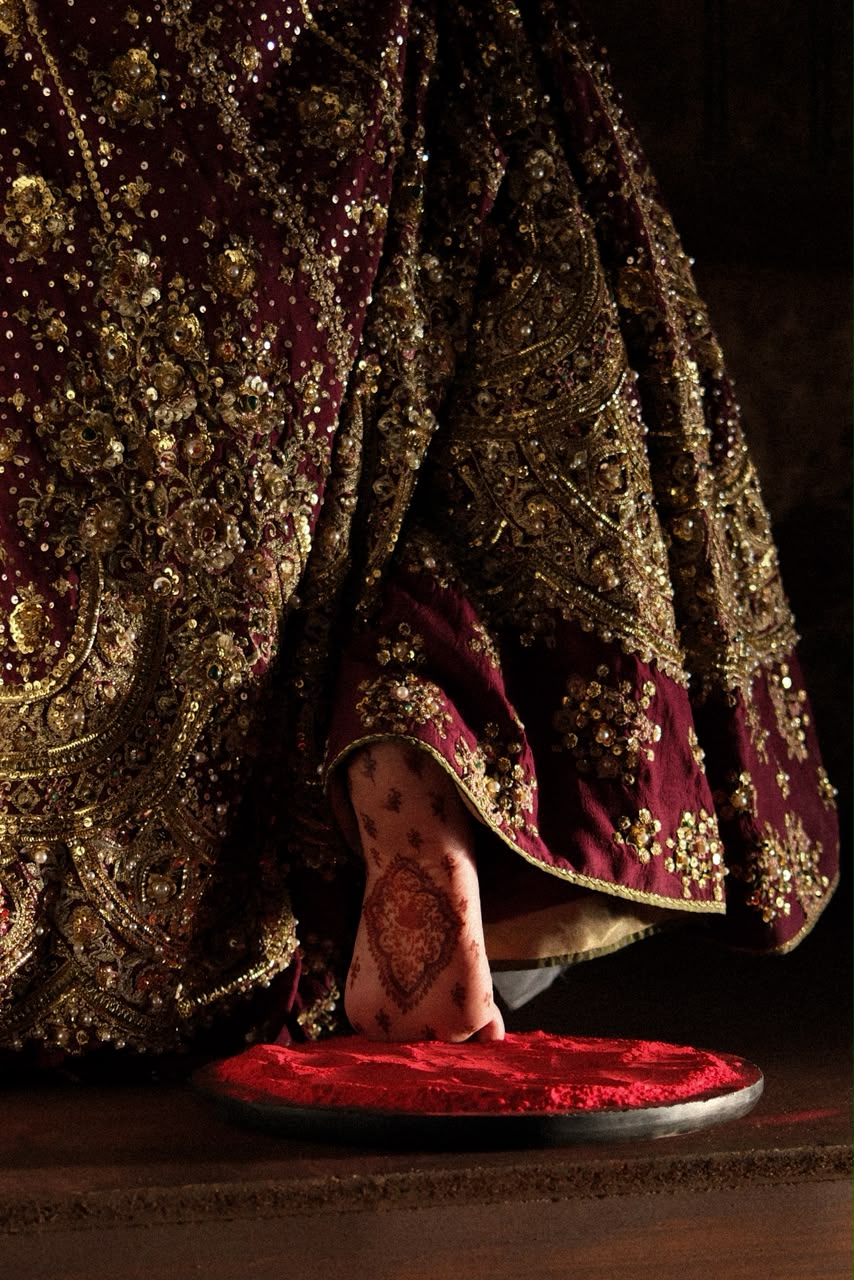
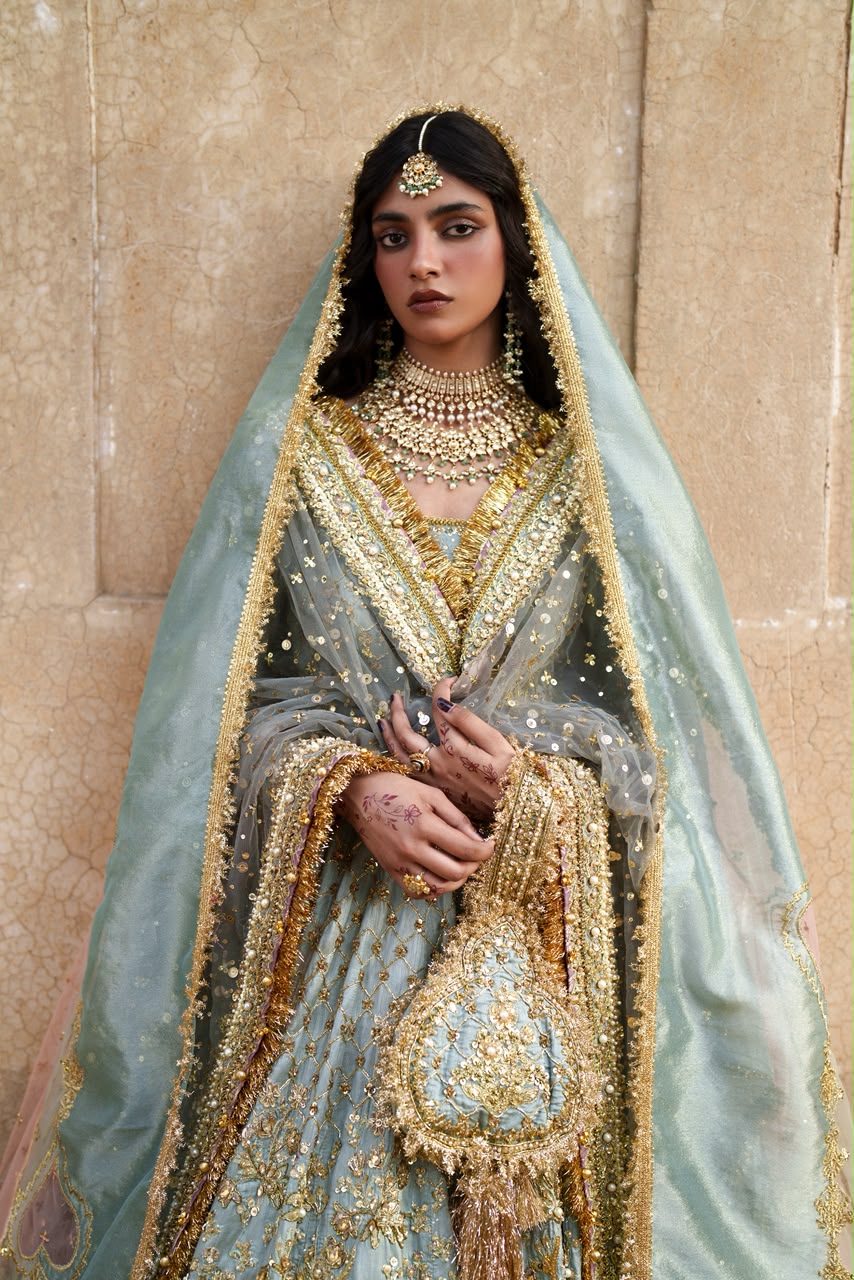
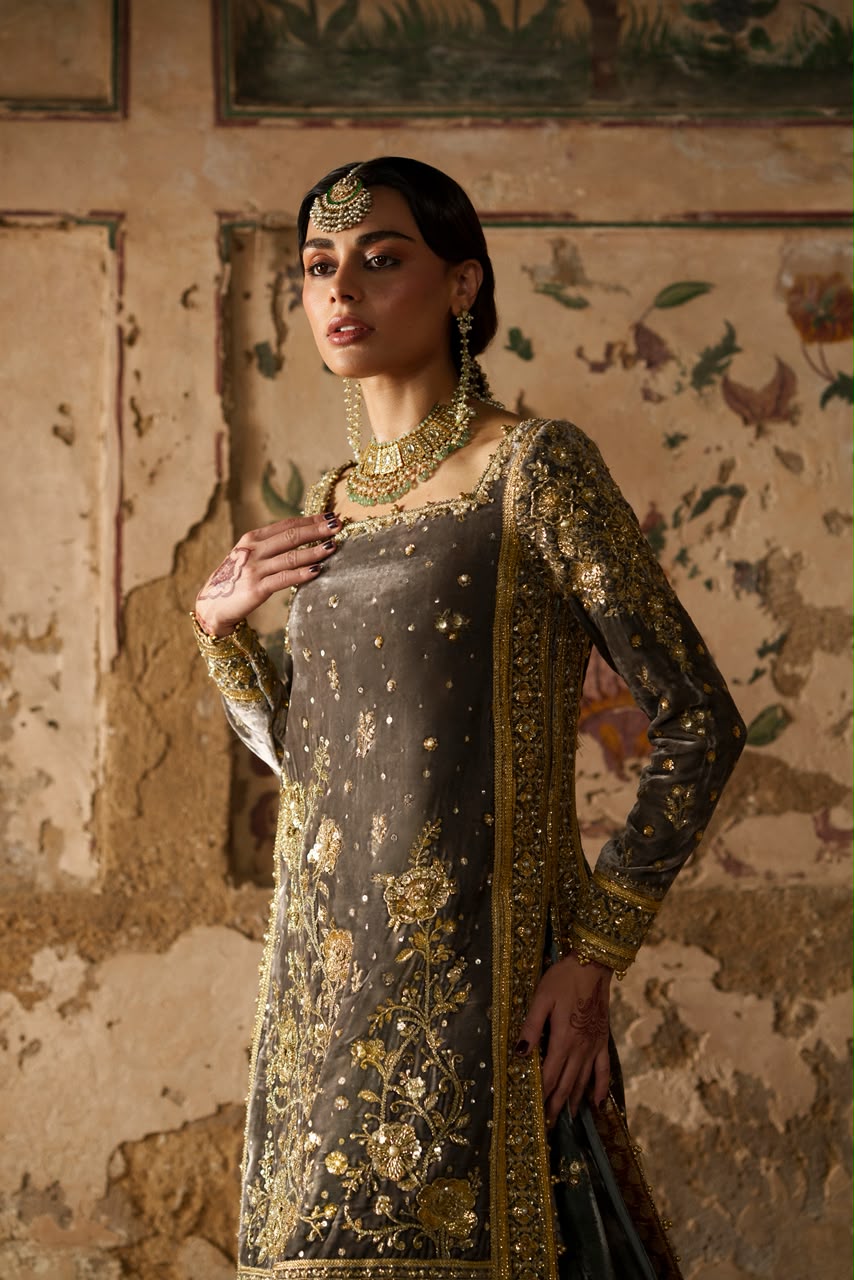
Strip away the carefully constructed narrative, and MNR’s Kaur is still very much an MNR bridal-wear collection, amplified by heavy duty mixes of machine and hand embroideries. There are farshi ghararas, embellished cholis, lehngas, long shirts, multiple dupatta options and embroidered chaddars. Falling under the brand’s Gold Series category, there are mostly five pieces in each design and the collection spans 14 options.
The clothes, though, are very evidently only part of the story. As Mohsin himself points out, what makes Kaur interesting is the effort that has been made to showcase the designs in a setting that moves beyond the wedding aisle. The Lahore Fort adds character and historical significance to the shoot, the music adds atmosphere, the Sikh models add authenticity, the styling inspires nostalgia.
It all comes together in a narrative that draws attention to Indo-Pakistan’s shared cultural heritage, one that blurs the boundaries dividing Punjab on either side of the border.


What do you think?