

By Maliha Rehman
It was a fashionable night out.
Not just because some very exciting brands were going to be showcasing collections on the catwalk centered around a single theme. Not just because Pakistani fashion’s pioneering photographer Tapu Javeri had put up an extensive installation of portraits earmarking four decades of fashion. Not just because of the gorgeous venue – the Indus Valley School of Art and Architecture, or because of the mirrored chandelier reflecting light on to the catwalk.
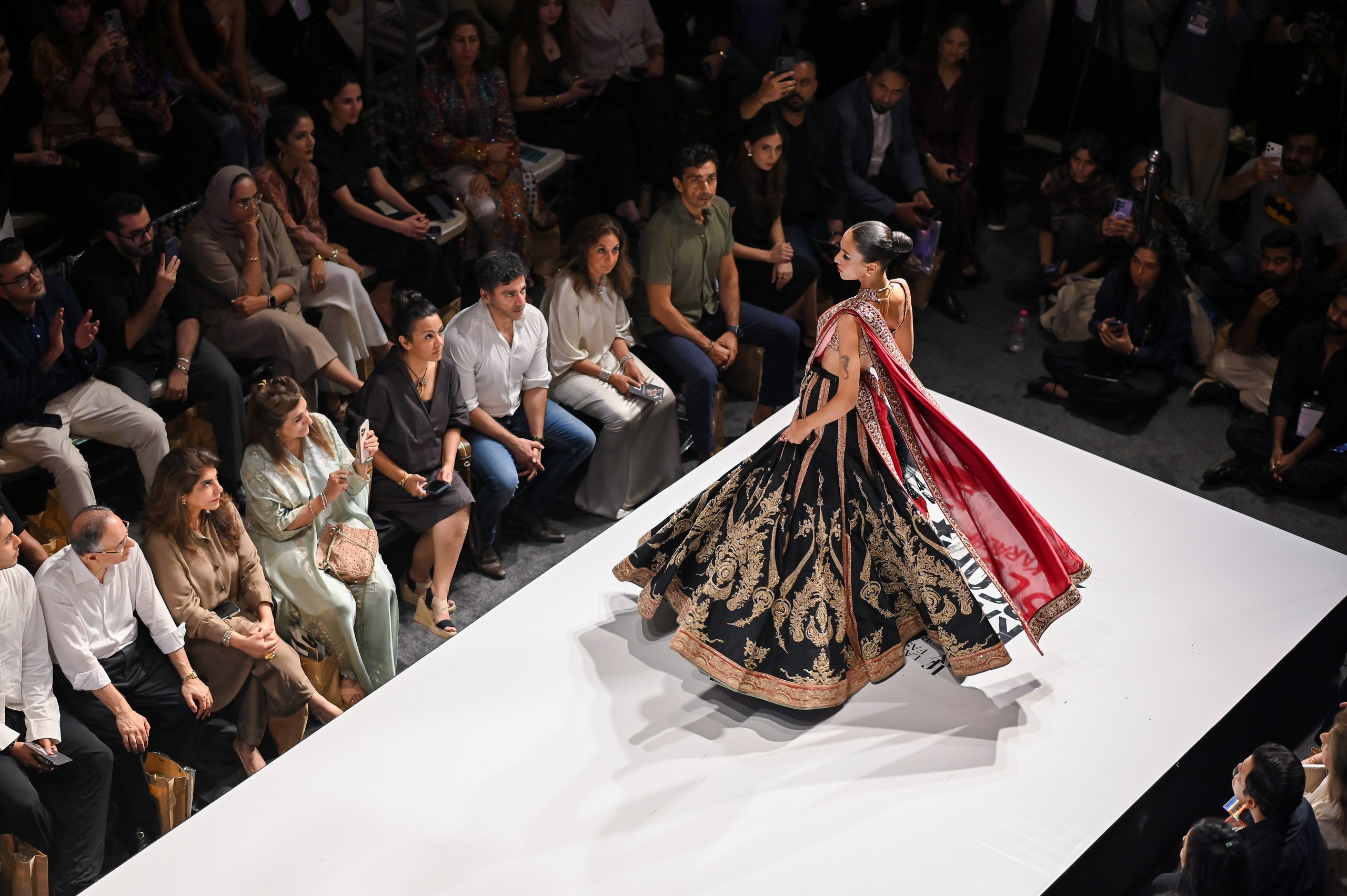
What truly stood out at Kaleidsocopic Karachi, the one-day fashion show recently organized by the Laam Fashion Week (LFW) team, was the excitement in the air. An unusually cohesive crowd of fashion industry professionals gathered in the IVSAA lawn, posing for pictures, having a quick chat and then, watching the show.
In attendance were Bunto Kazmi, Faiza Samee, Maheen Khan, Maheen Kardar, HSY, Kamiar Rokni, Fahad Hussayn, Adnan Pardesy, Parishae Adnan, Zaheer Abbas, Feeha Jamshed, Zahir Rahimtoola, Scherezade Rahimtoola, Sana Hashwani, Shamoon Sultan, Saira Shamoon, Umair Tabani and Sania Maskatiya, among others. Such a prestigious guest list is rare. Before the show began and the designs came in focus, one kept taking pictures of the front rows!
Tapu Javeri’s homage to his four decades as a fashion photographer served as a powerful opening act to the event. The extensive installation took up the entire lawn of the IVSAA and was truly a journey through Pakistani fashions day of yore. There was Aamina Haq, smoky eyed, blonde, staring out in one of Tapu’s most famous portraits. There was the celebrity fraternity which has almost all been captured by Tapu’s camera lens; Shaan, Meera, Samina Peerzada, Junaid Jamshed, the boys of Junoon and so on. There were the supermodels of the late ‘80’s, the ‘90’s, of the 2000’s, all captured in avant-garde editorial images that would raise eyebrows when seen in magazines, back when print was yet to lose its popularity.
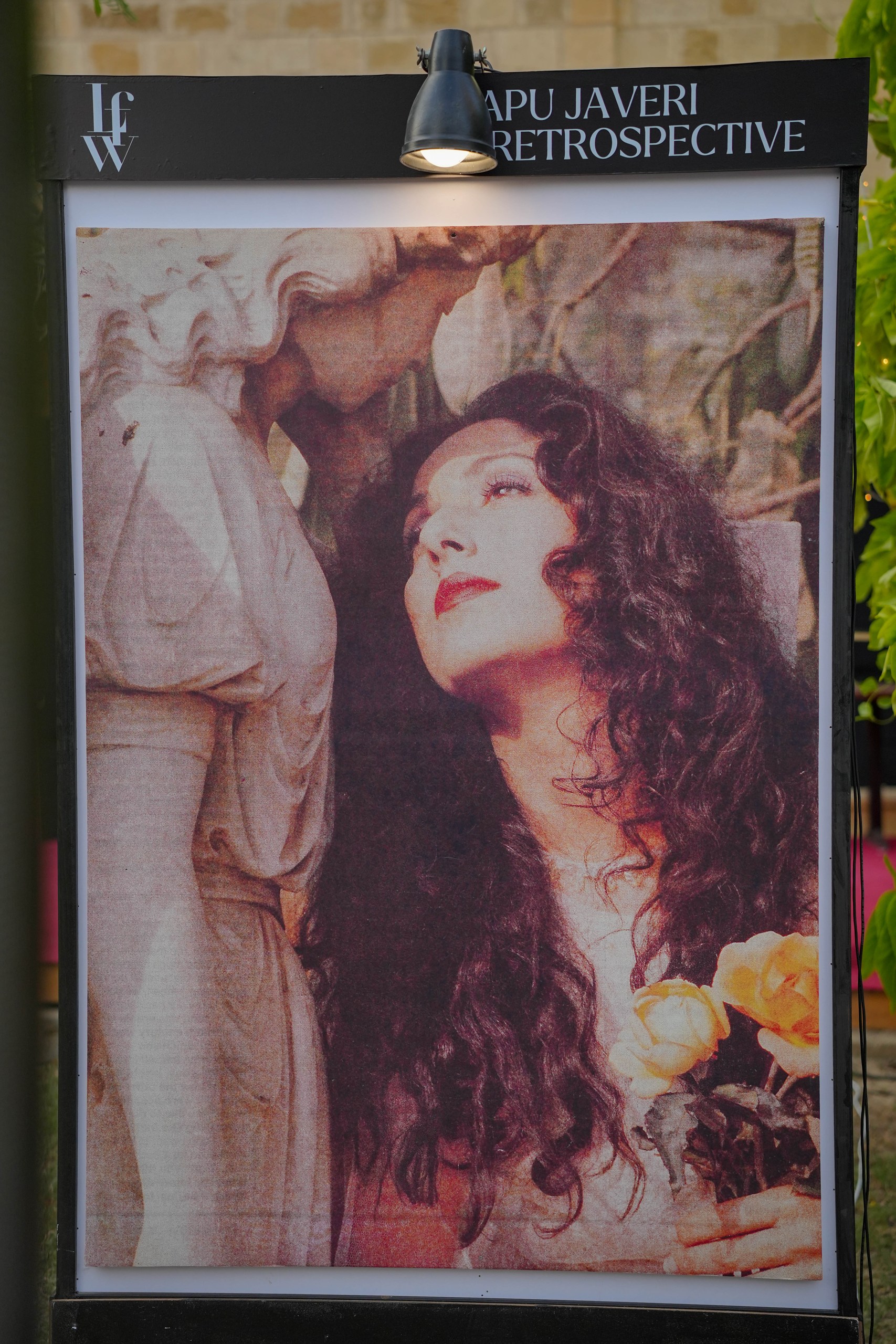
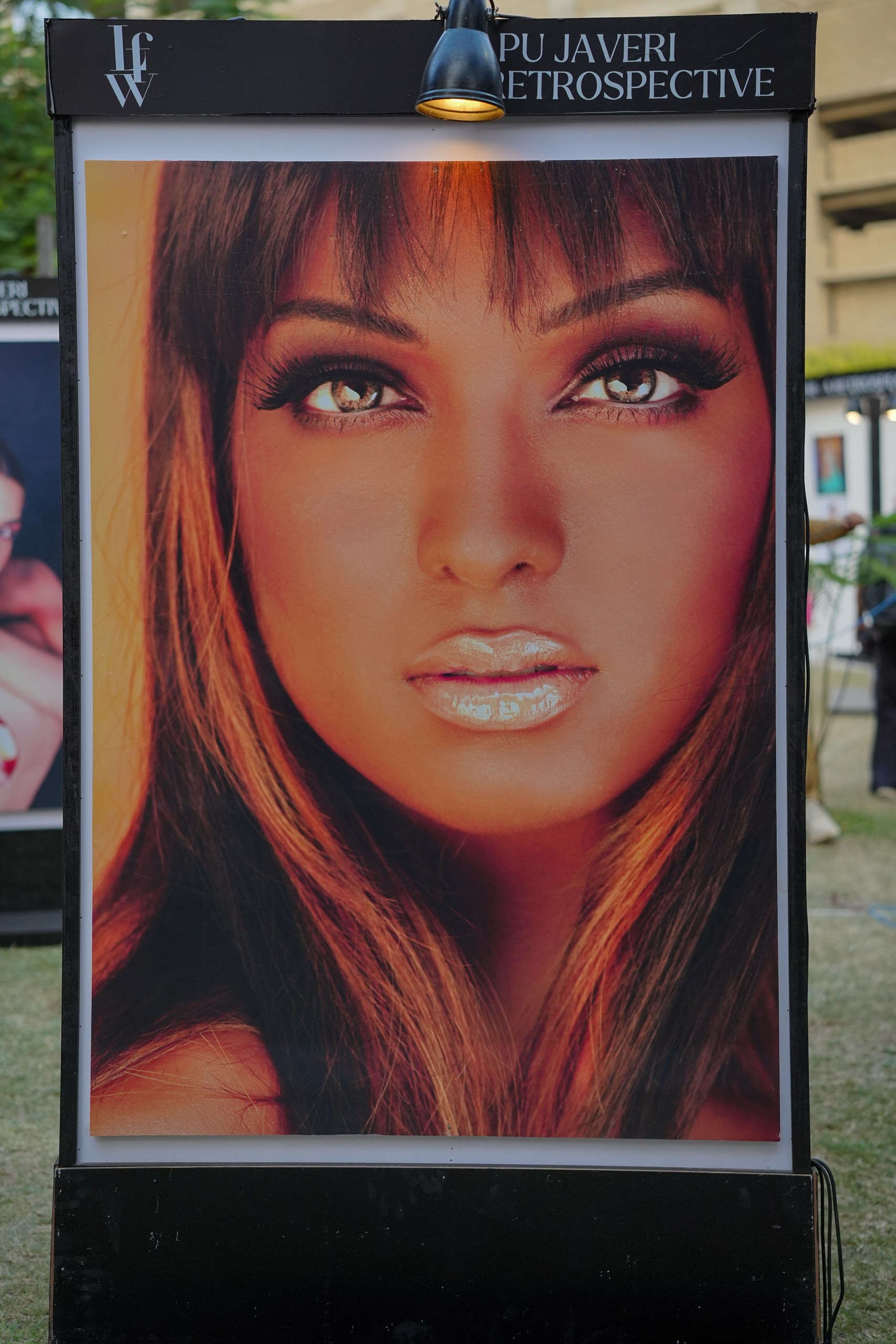
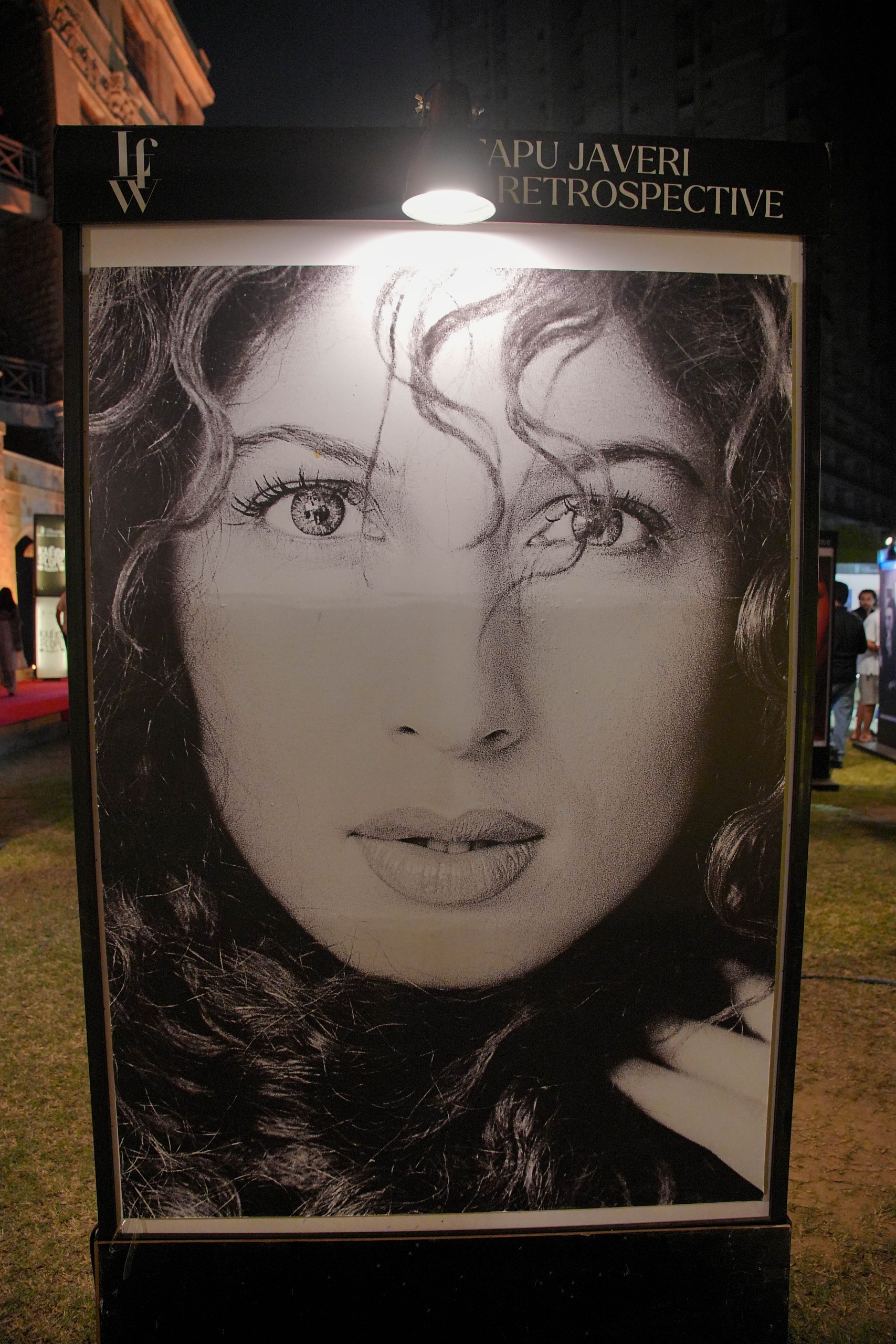
The portraits went on and on, representing merely a fraction of the exceptional work that the photographer has done over the years. And right next to the catwalk entrance was a whirling, digitized ‘karachakra’, created especially for the night – another Tapu Javeri signature and also, very kaleidoscope like.
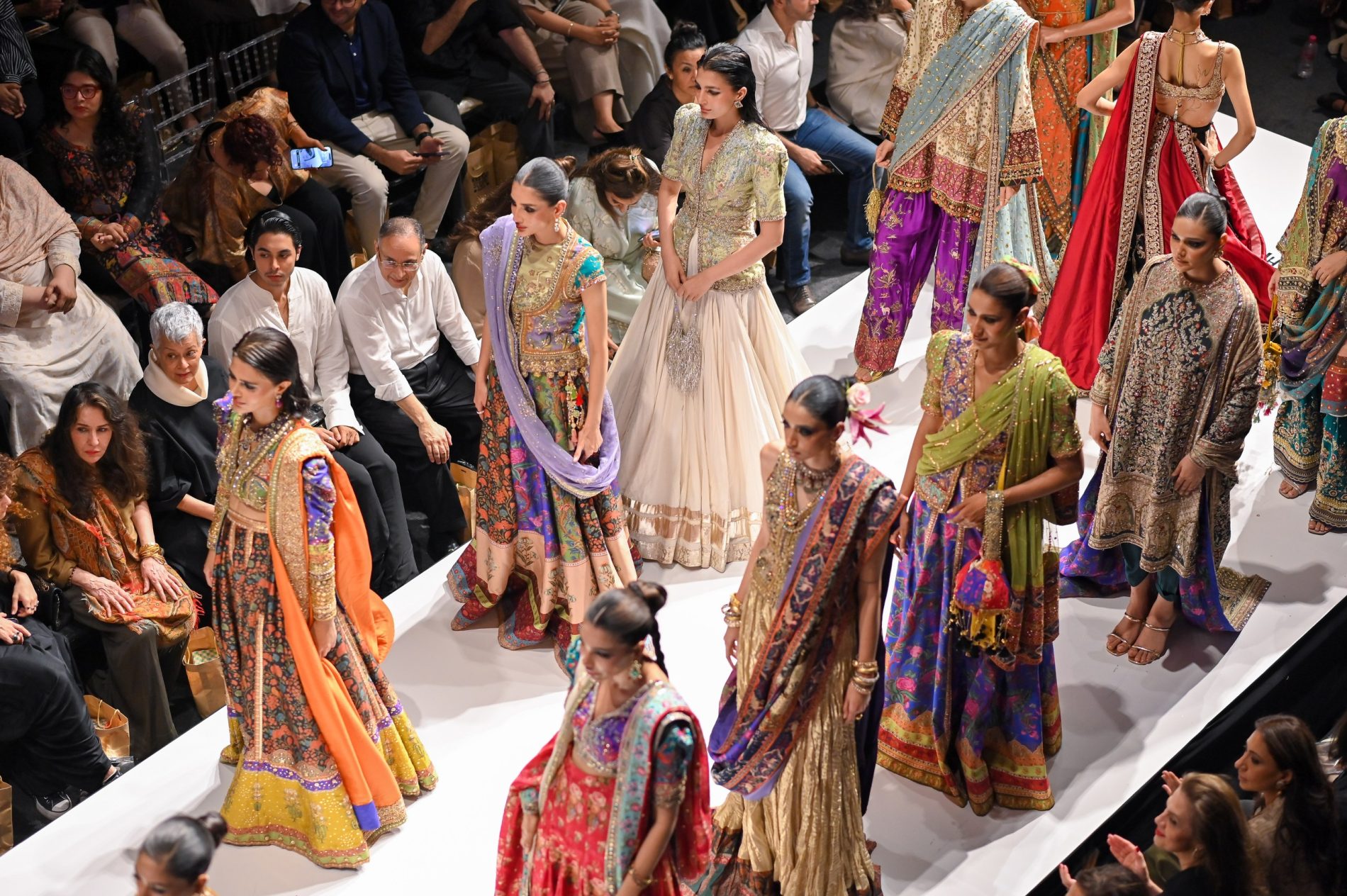
The fashion on the ramp, also, could similarly be likened to the metaphorical kaleidoscope, with some very disparate aesthetics coming together to form one beautiful show.
The show started off with Deepak Perwani’s ‘Cocktail Hour’, featuring long, flowing gowns, tiered skirts, saris, kaftans, a bit of bling, plenty of skin show, a whole lot of oomph. The men came wearing blazers and jackets that mixed and merged textures, prints and colors. This was Deepak Perwani in his element: designing for the glamorous winter soiree, shrugging aside the commercial allure of the three-piece shalwar kameez and the ubiquitous lehnga; opting for minimal embellishments and smatterings of bling rather than the usual deluge of embroidered phool-pattis. And you could tell that he had enjoyed coming up with this collection.
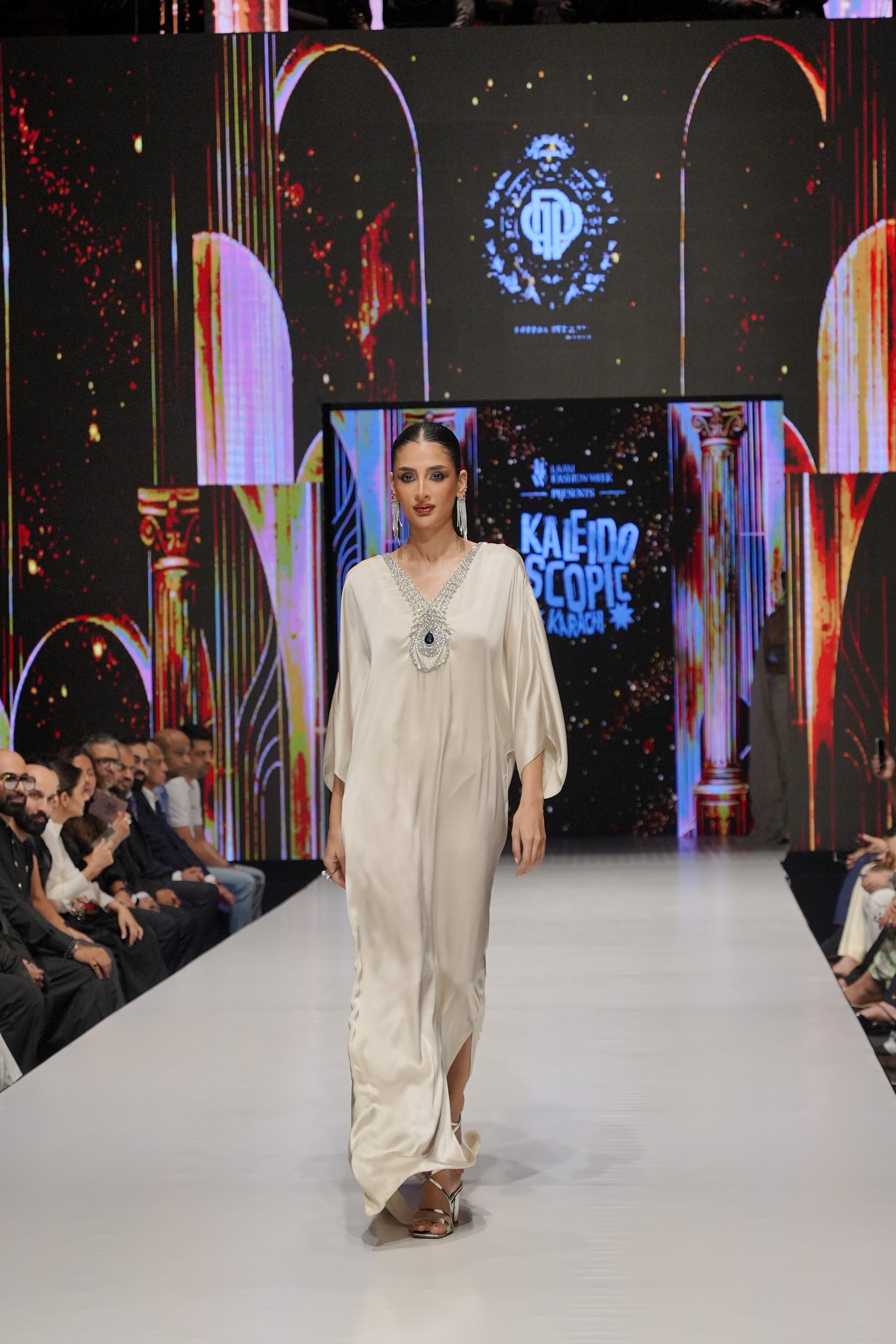
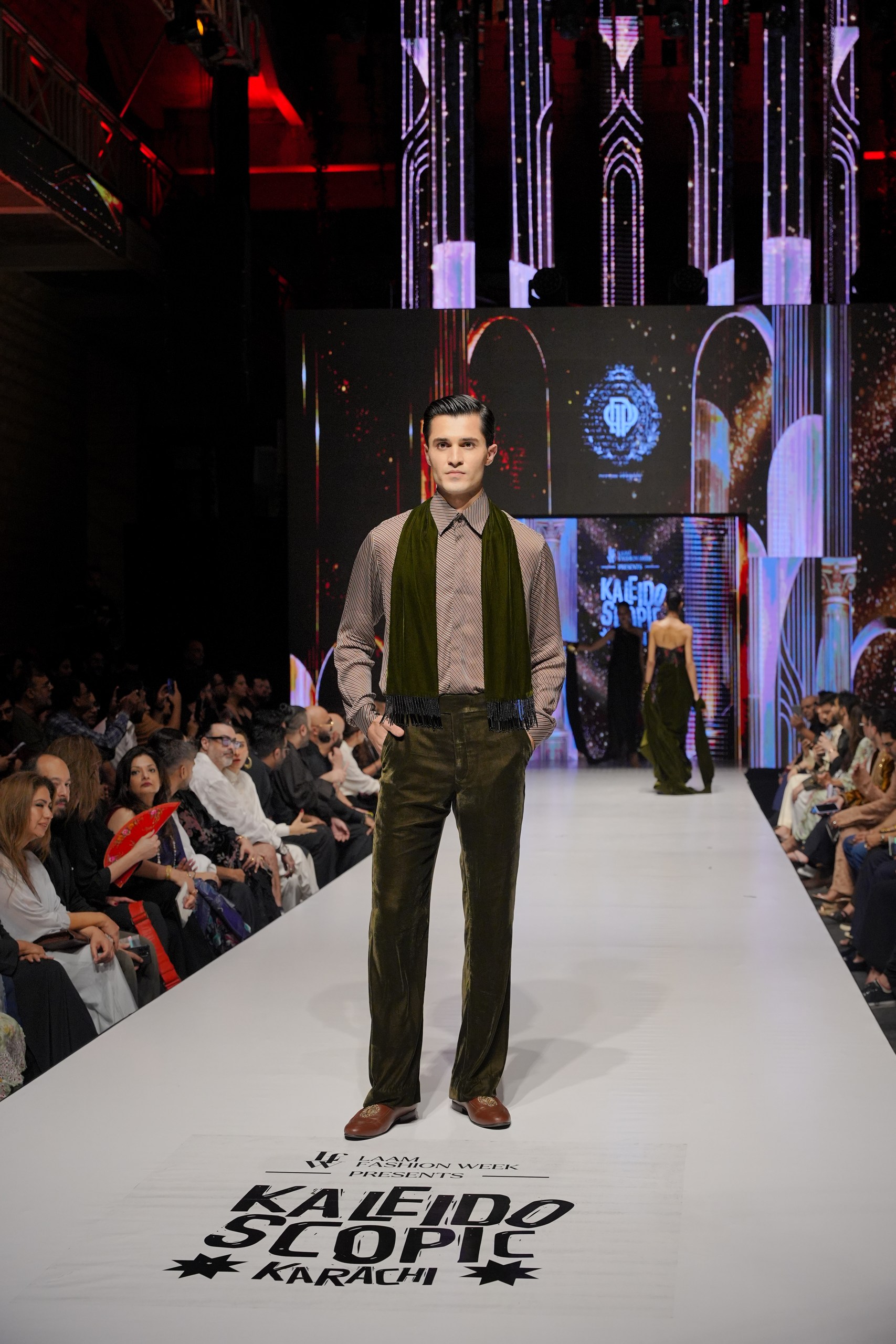
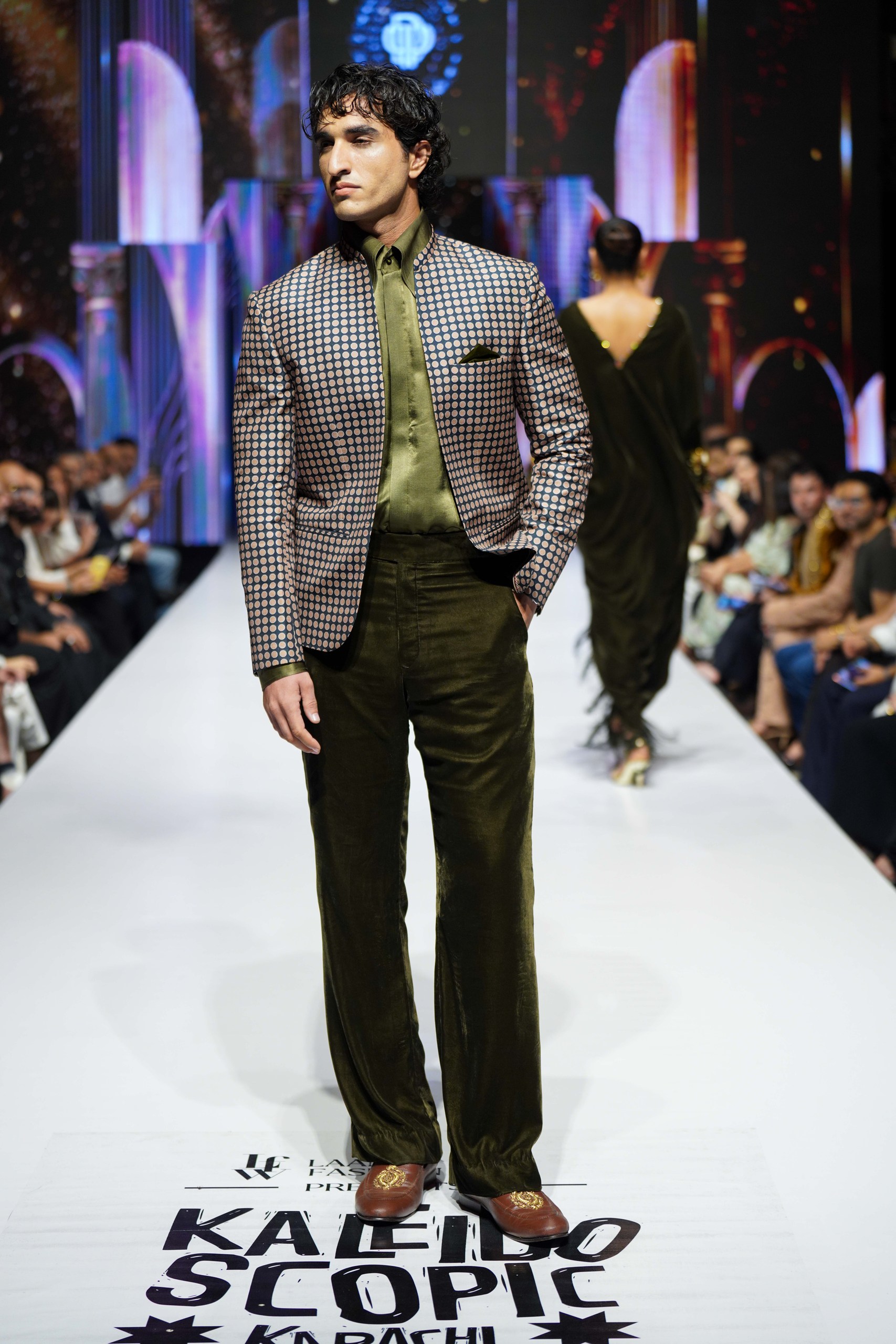
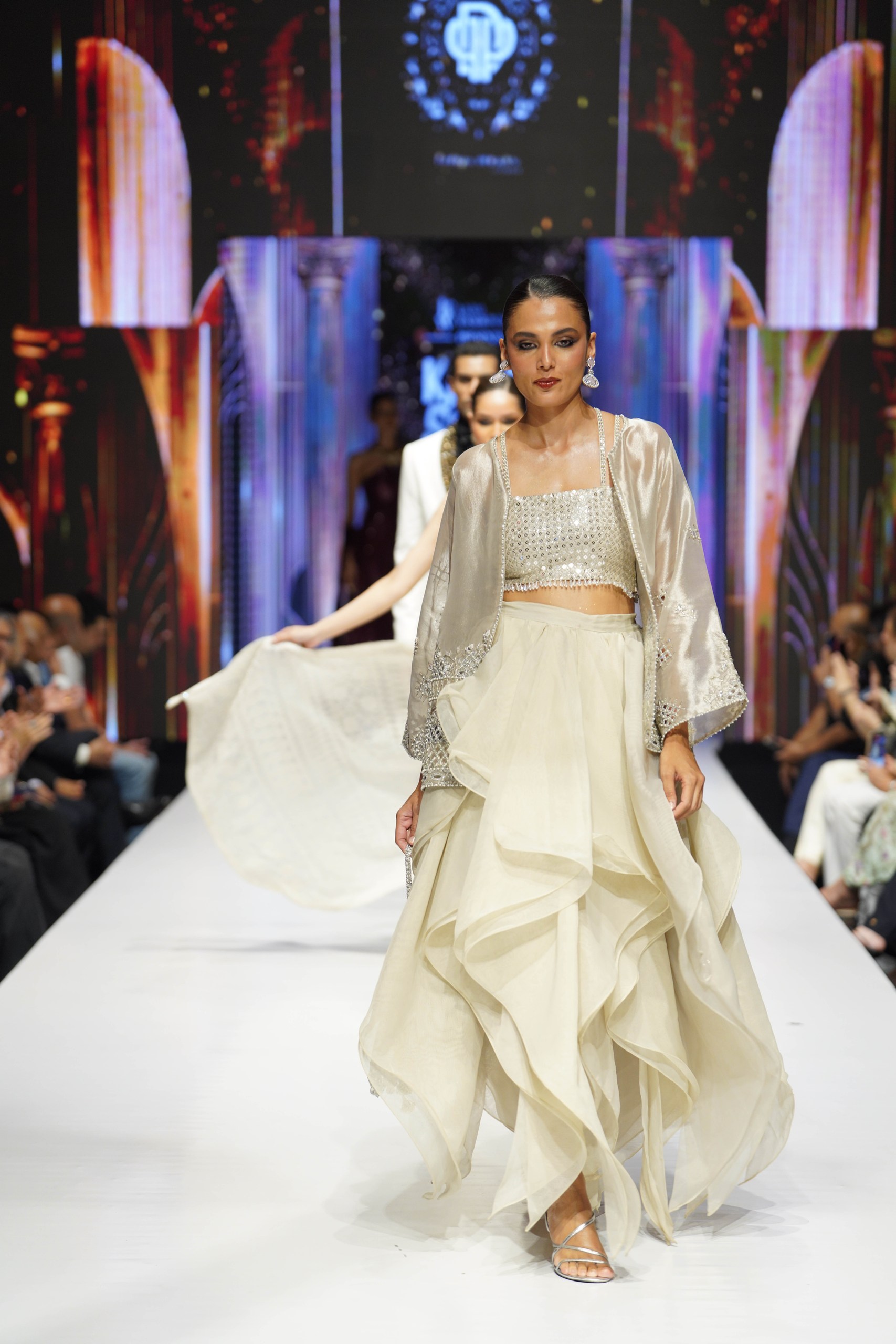
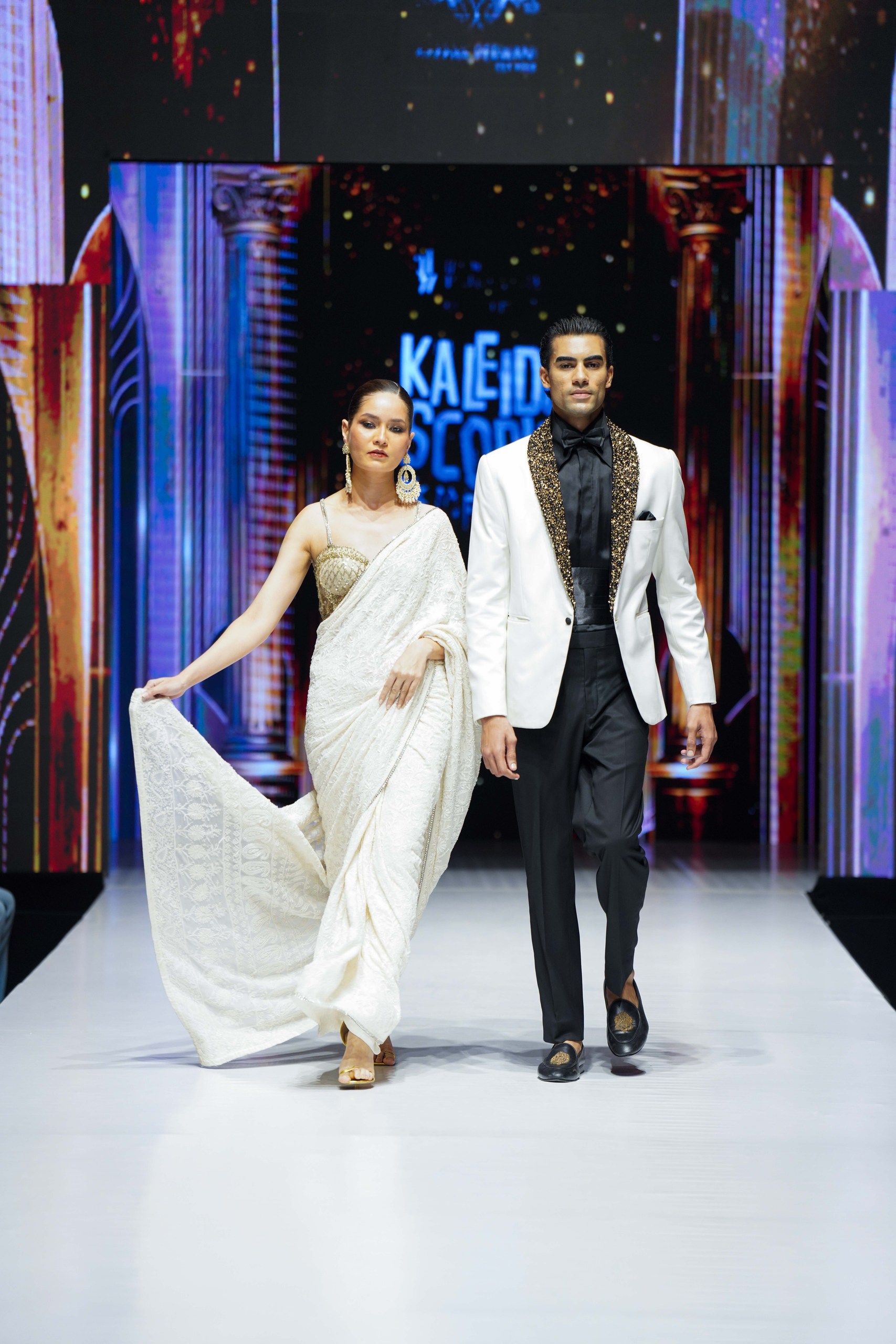
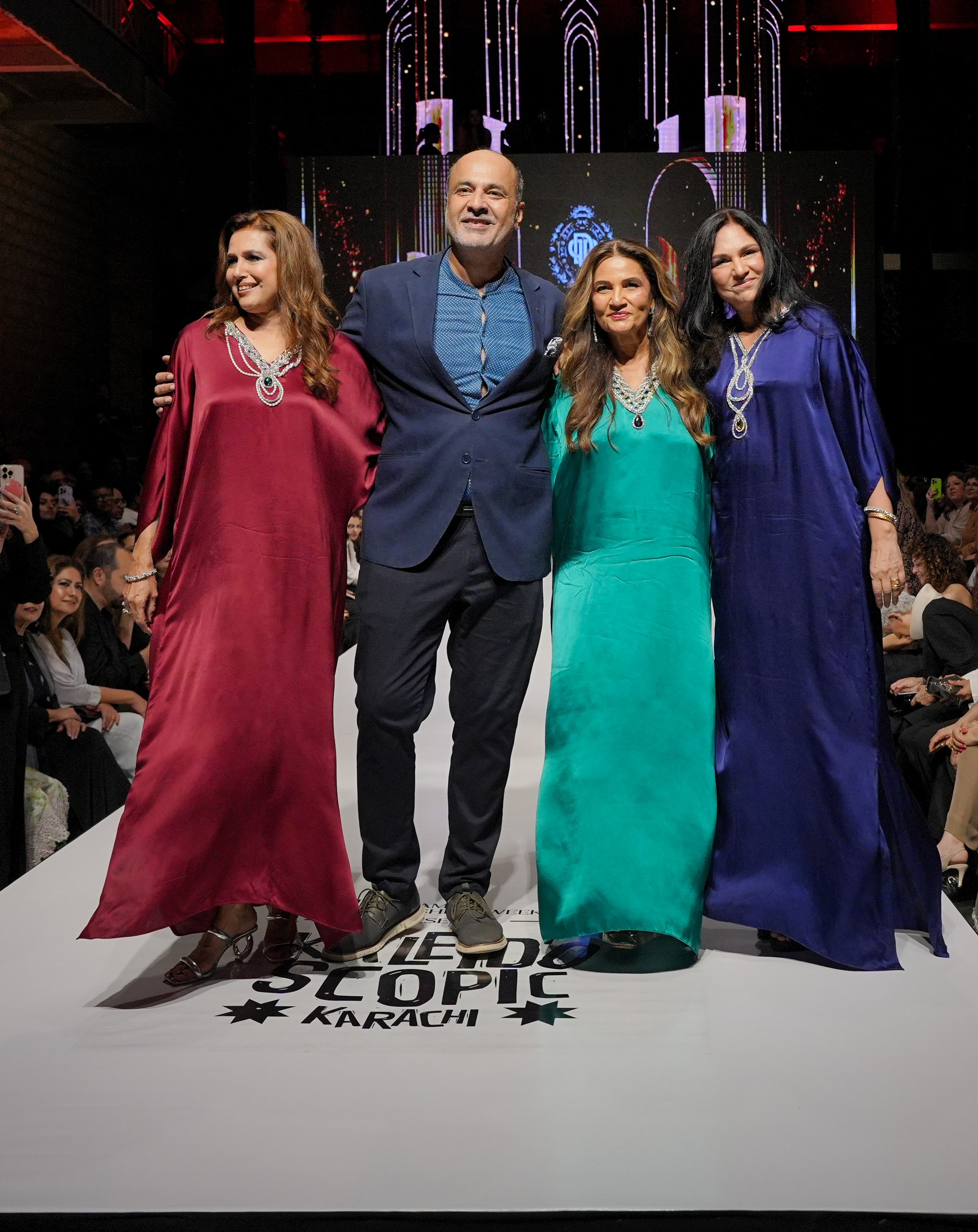
The best part of the show: veteran models Frieha Altaf, Atiya Khan and Seemi Pashah coming on to the runway, wearing Deepak Perwani kaftans. He dressed them then, he’s still dressing them now!
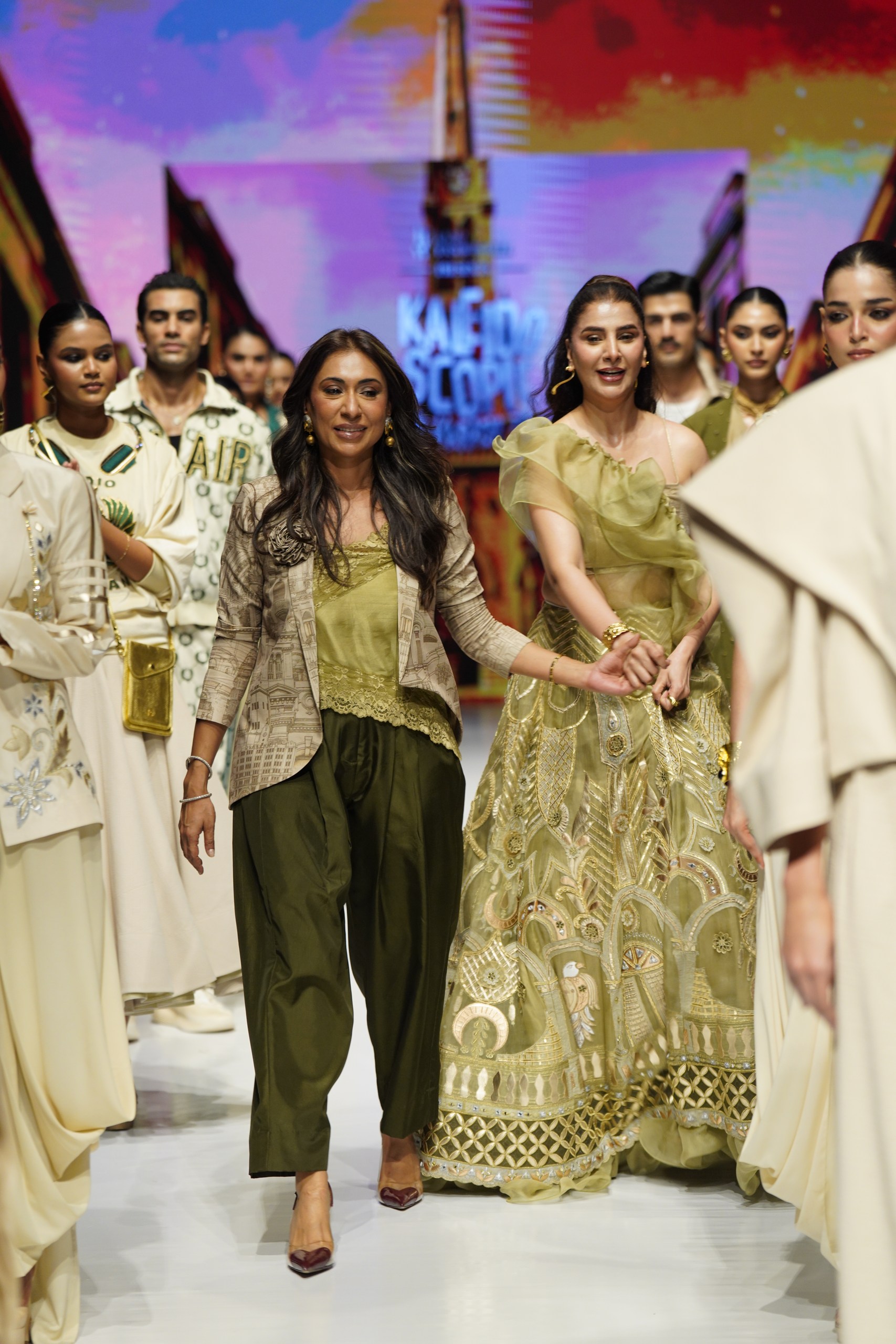
Wardha Saleem’s ‘Bandar Road Se Keamari’, followed with a distinct sartorial template of its own. The embellishments quite literally followed the Kaleidoscopic Karachi theme, with domes, pillars, jharokas and balconies etched out with the aid of aari embroidery, silver and gold florals created with leather embroidery and the city’s precolonial tram station and Radio Pakistan. One also enjoyed the play of silhouettes: pleated pants, cowl shalwars, cowl skirts, pleated pants, jackets, track suits and a gorgeous bomber jacket!
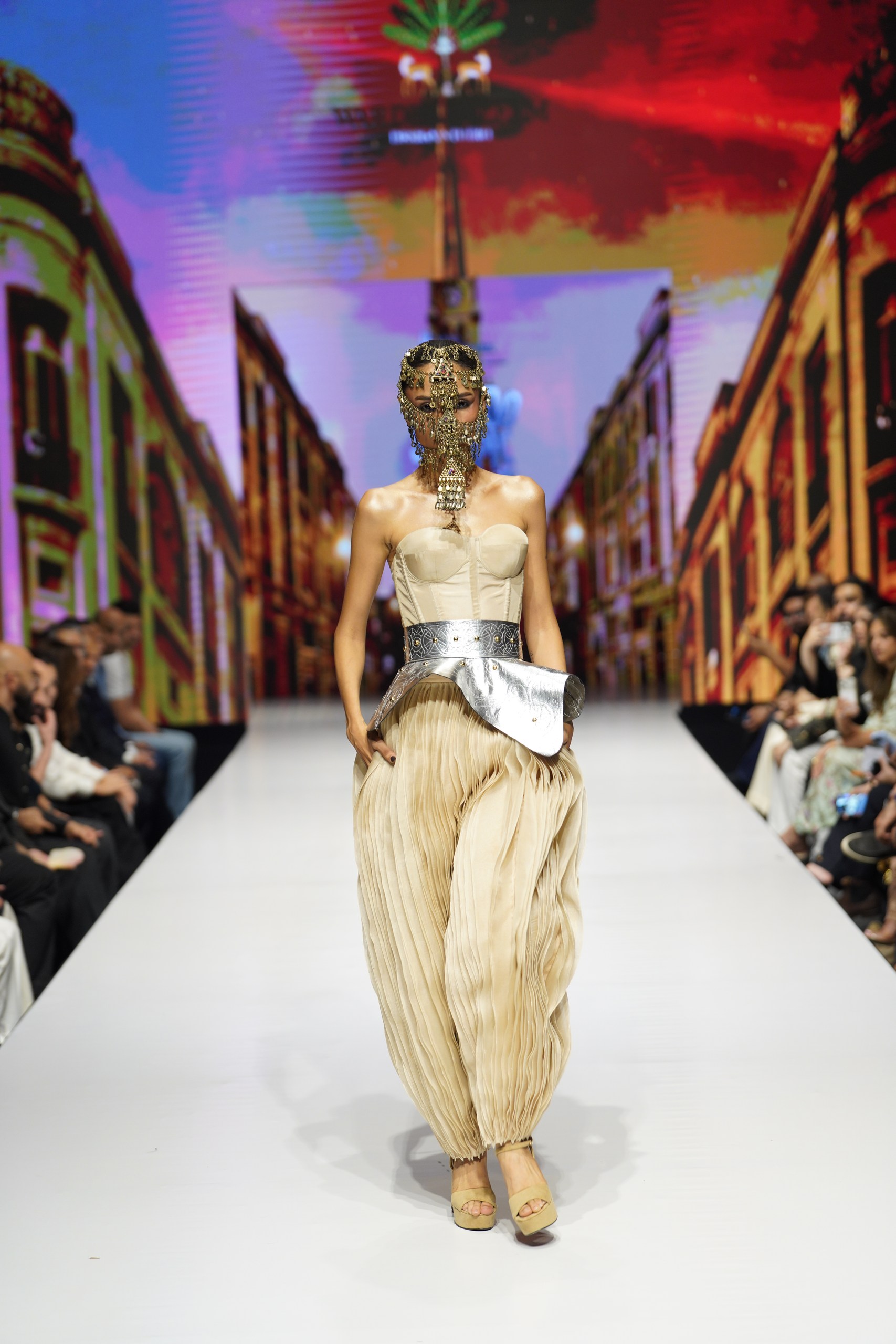
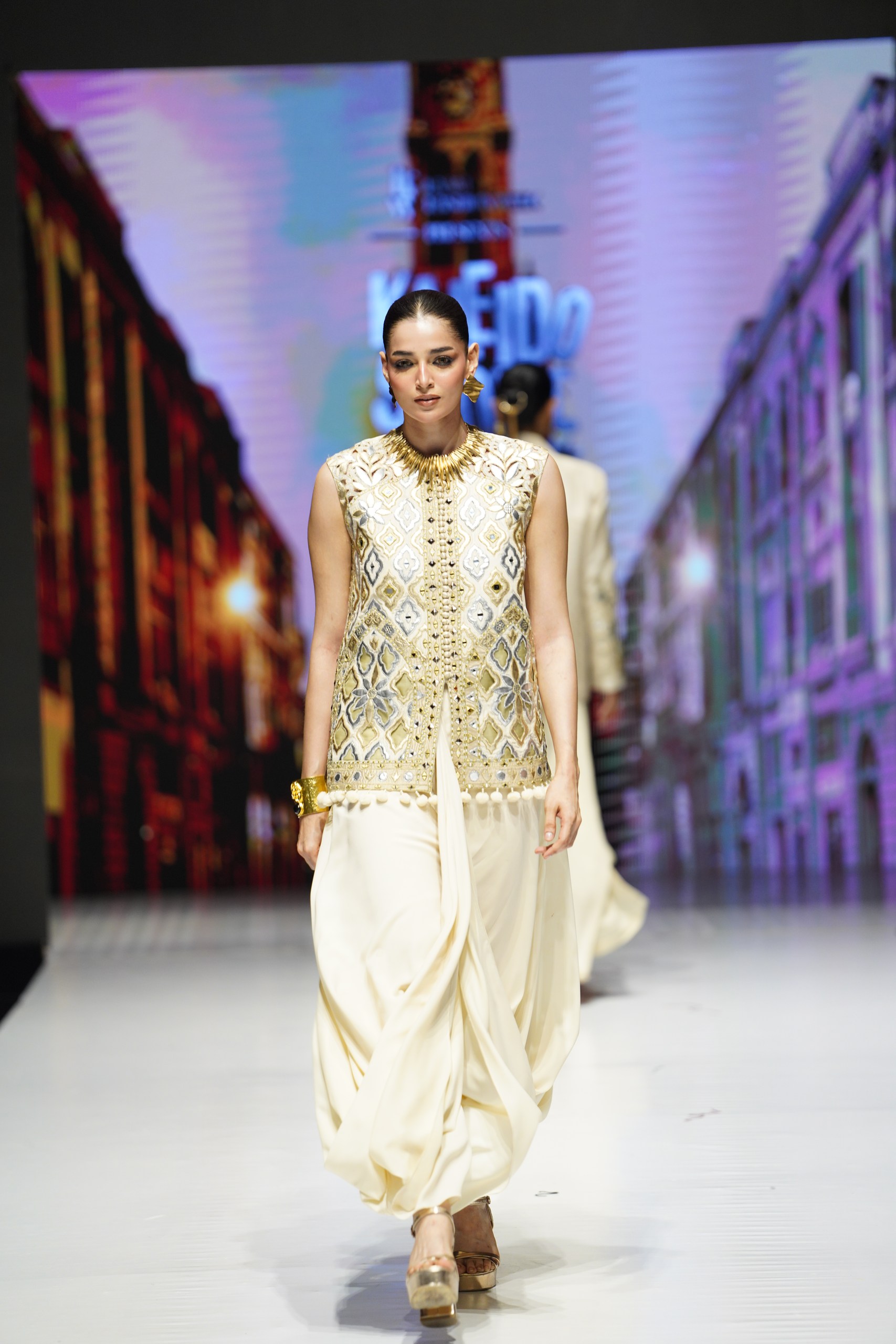
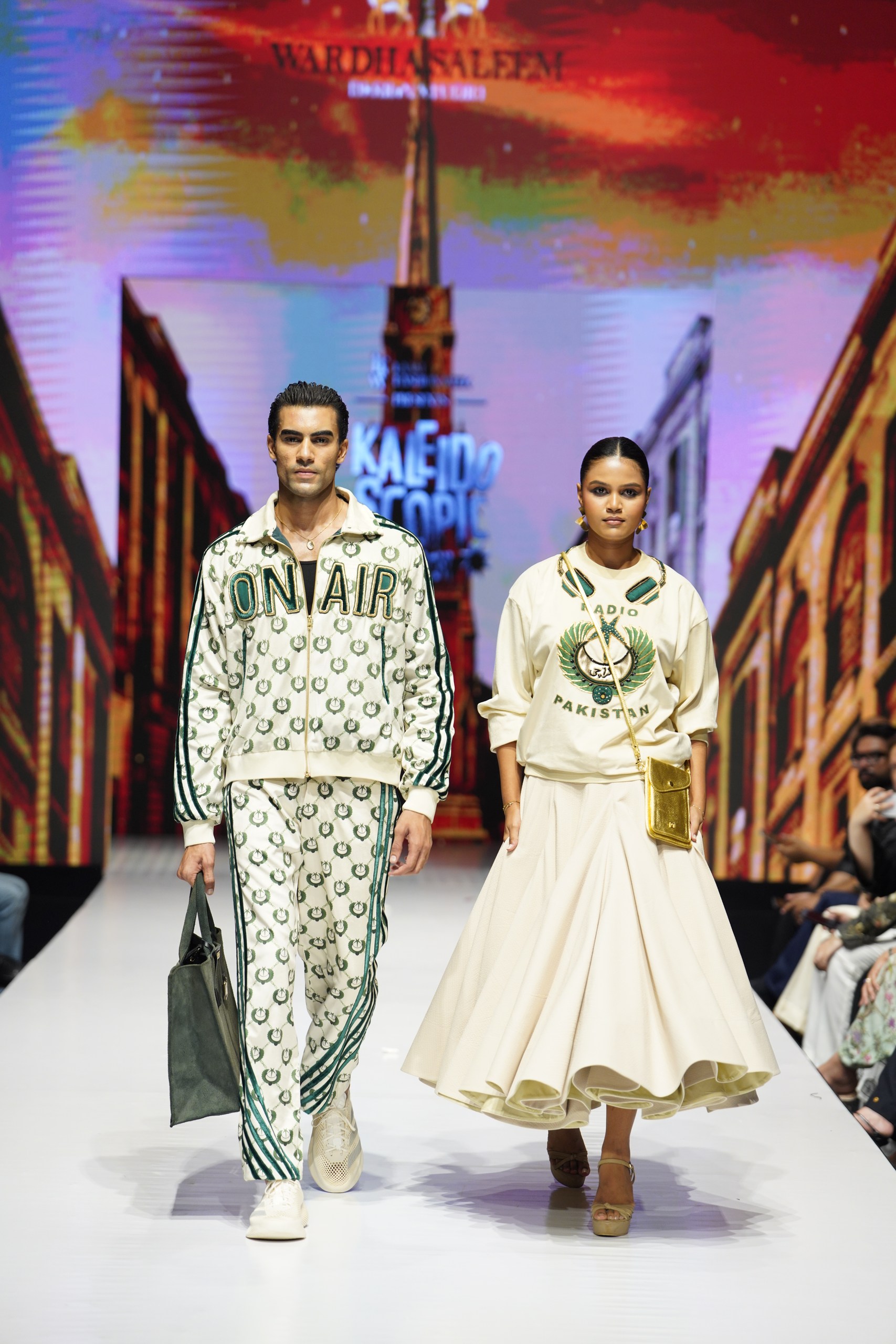
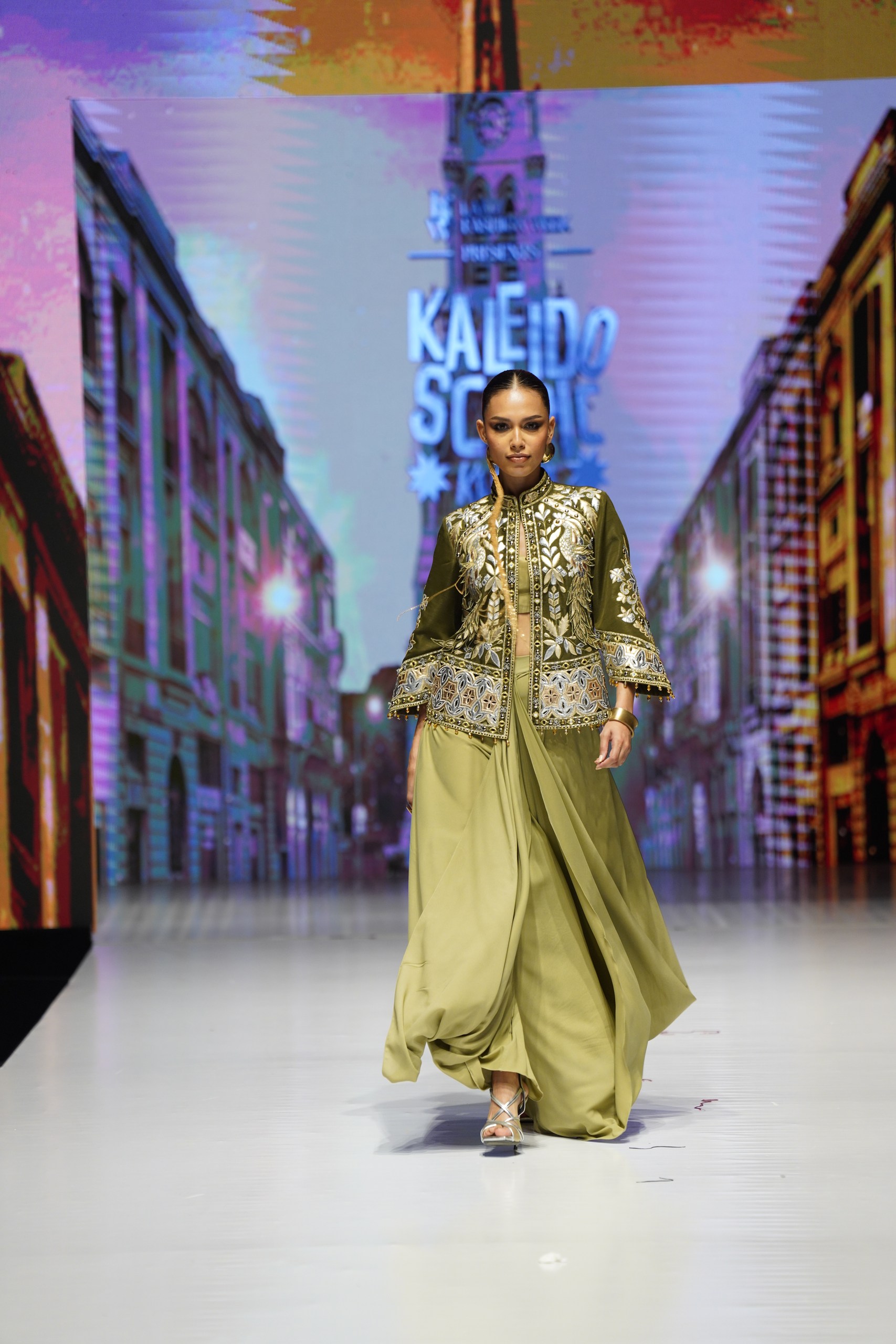
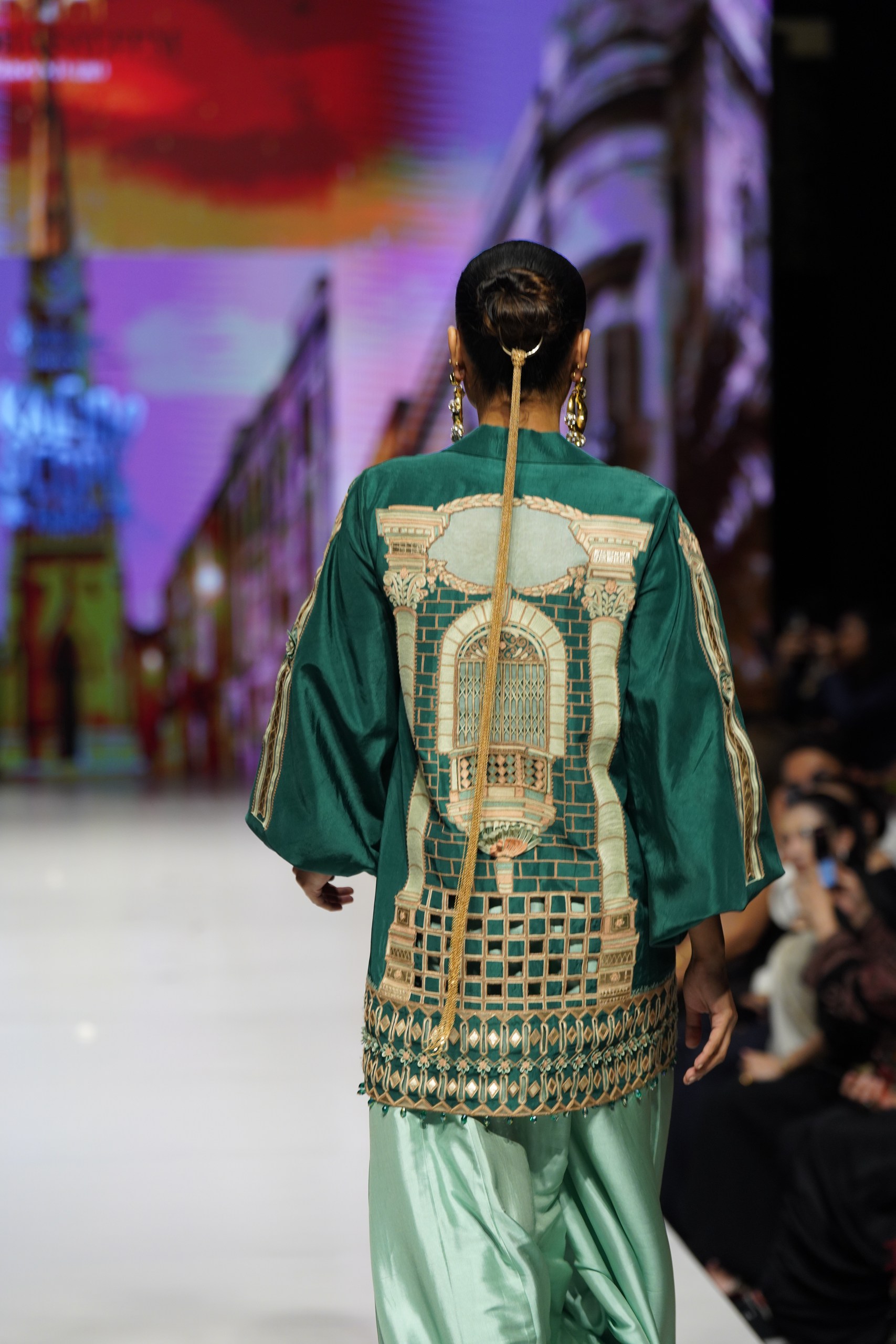
It was a trendy collection which made one want to zoom in on the details, offering a throwback to Wardha Saleem’s earlier days as a designer when she would revel in experimenting with color, texture and technique.
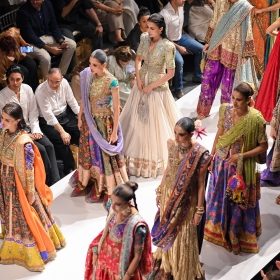
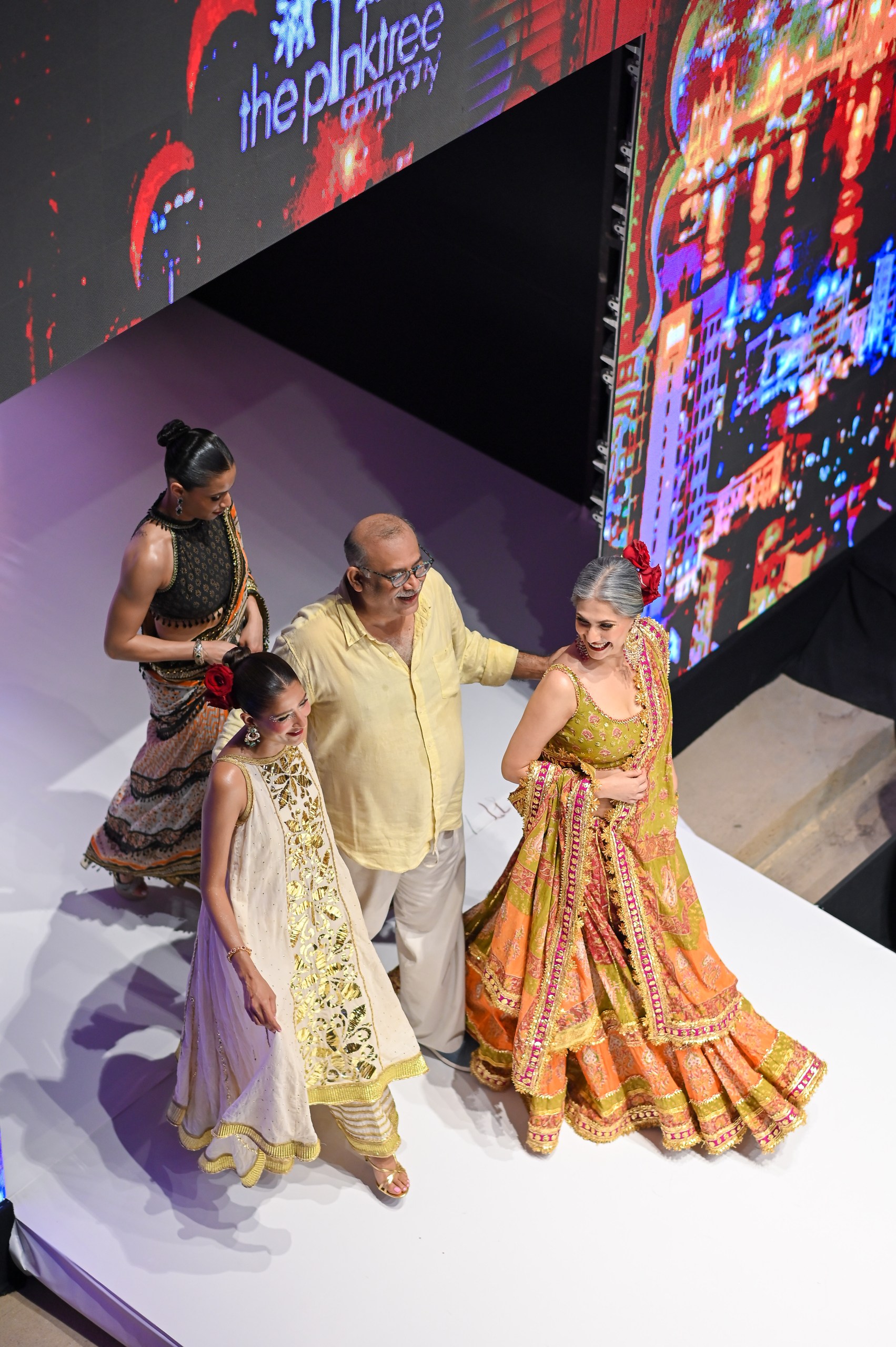
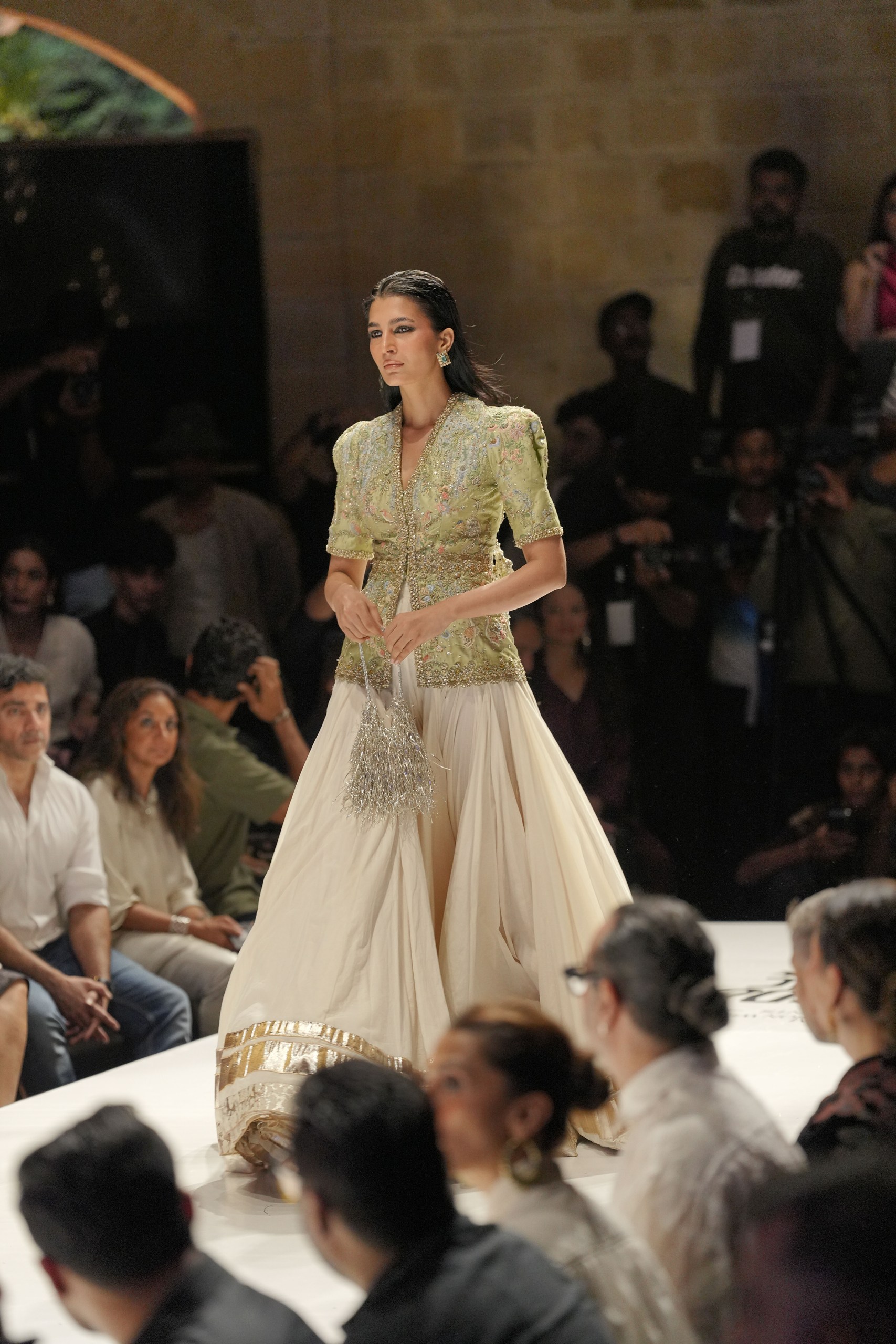
The Pink Tree Company played to its strengths, presenting a range of festive ethnic-wear. It was all really quite lovely; crinkled lehngas, ghararas, angarkhas, saris, dupattas lined with gota and kiran and a play of block-print. And as the brand’s designer Mohsin Saeed had pointed out to me earlier, the aesthetic was very Karachi-like: free-flowing, elegant, comfortable, elevating basic cotton to eye-catching festive-wear.
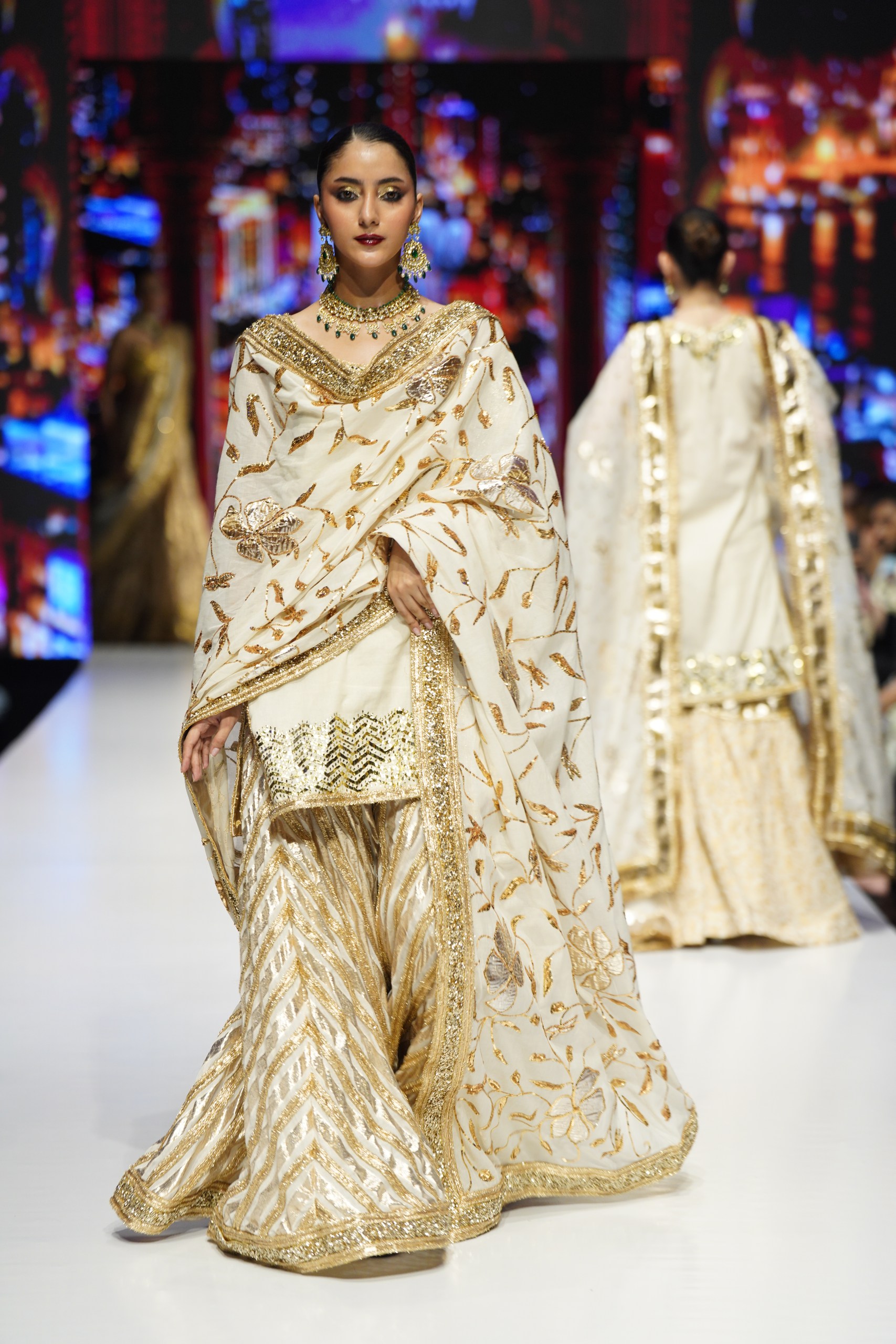
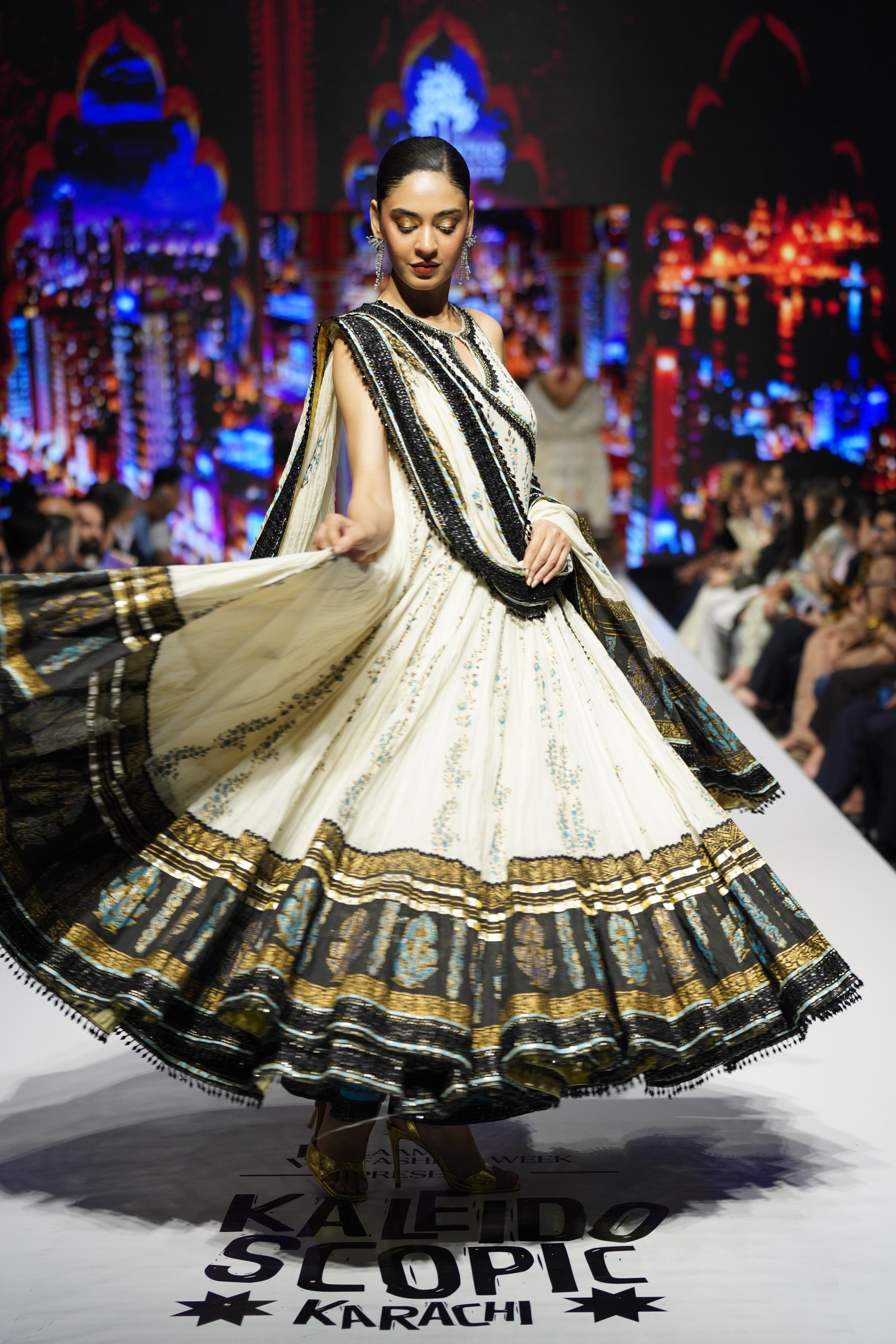
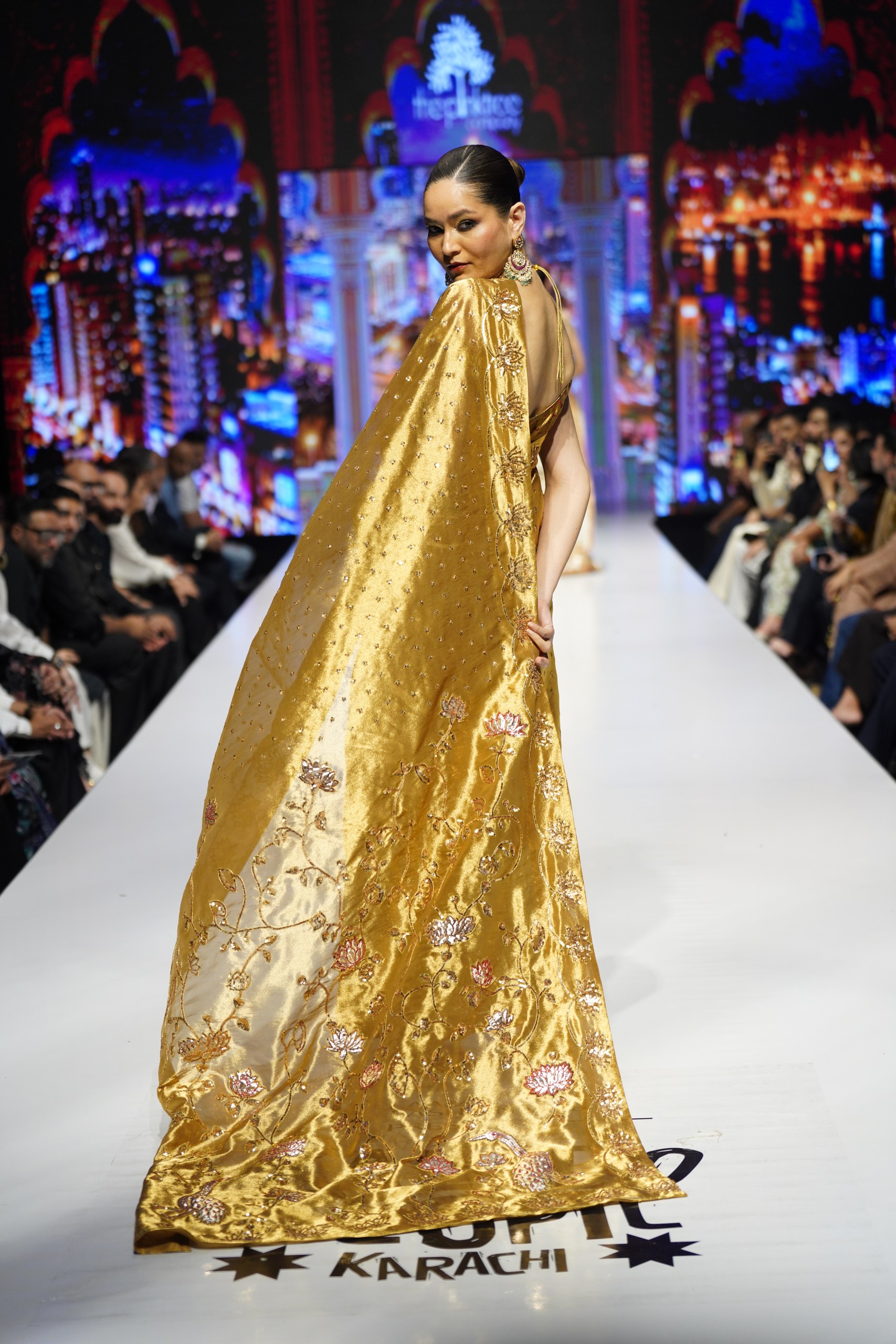
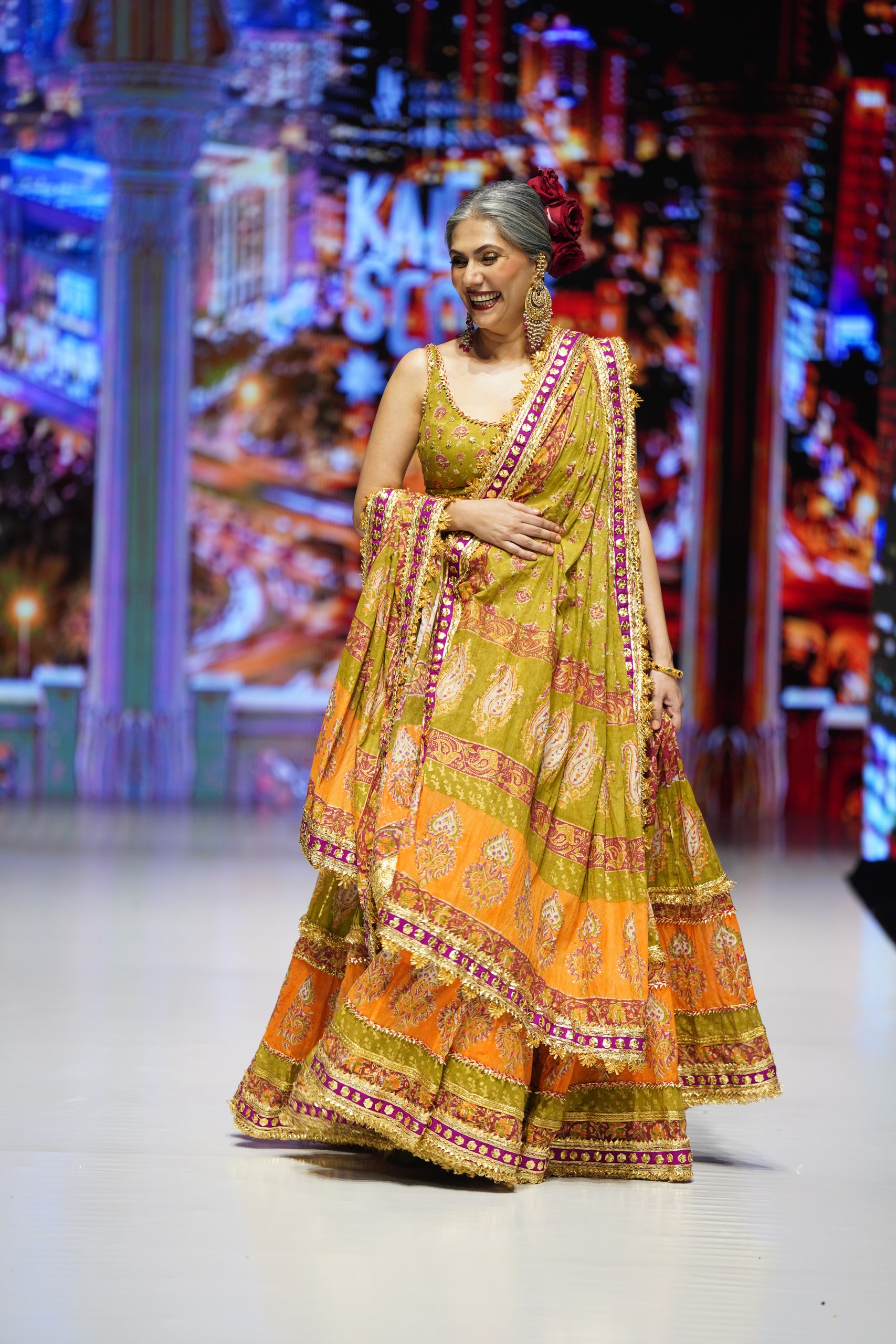
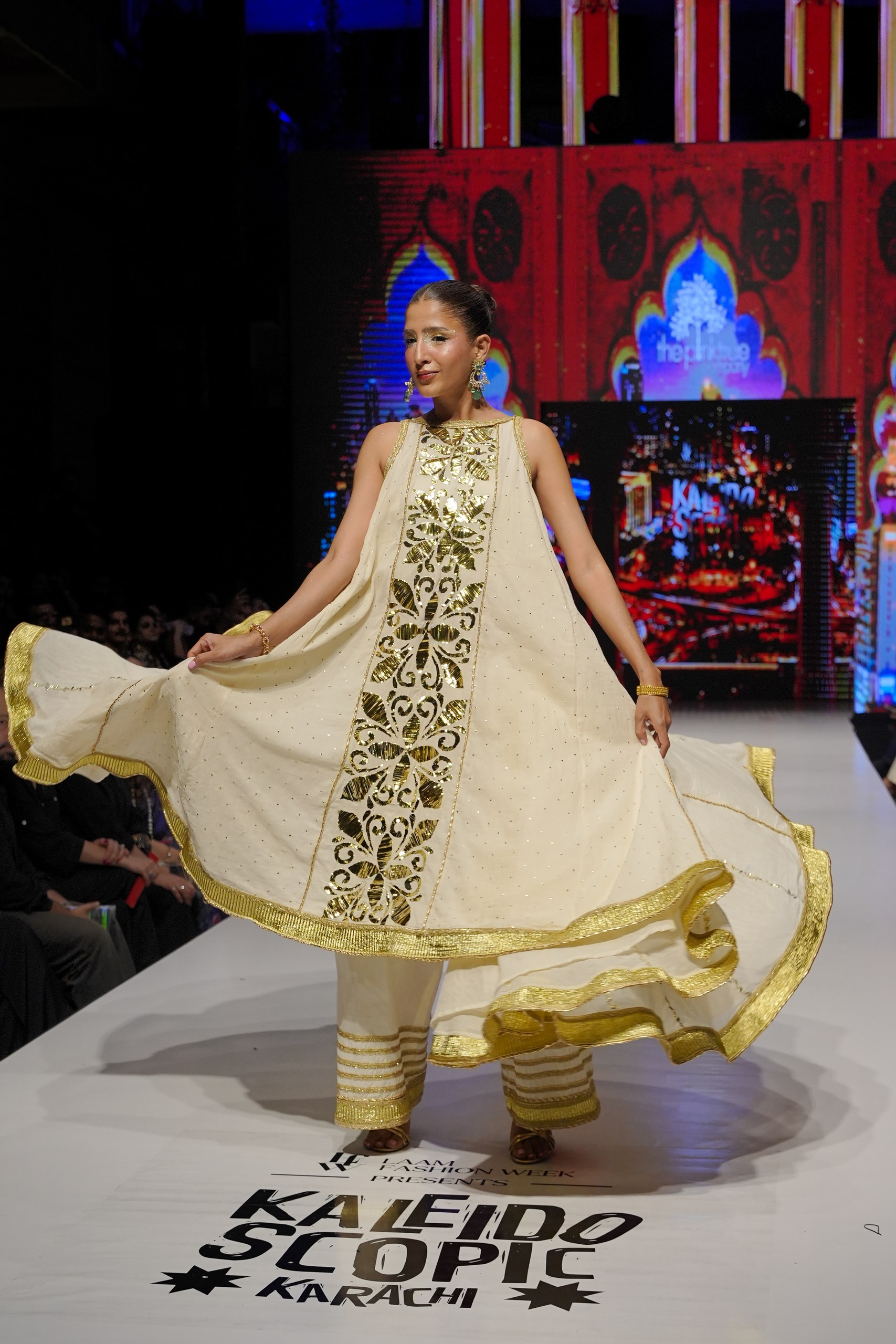
Having said this, one would have appreciated some more innovations from the brand. The collection presented The Pink Tree Company’s signature ethos but experimentation with color, fabric and silhouette would have made the showcase more impactful.
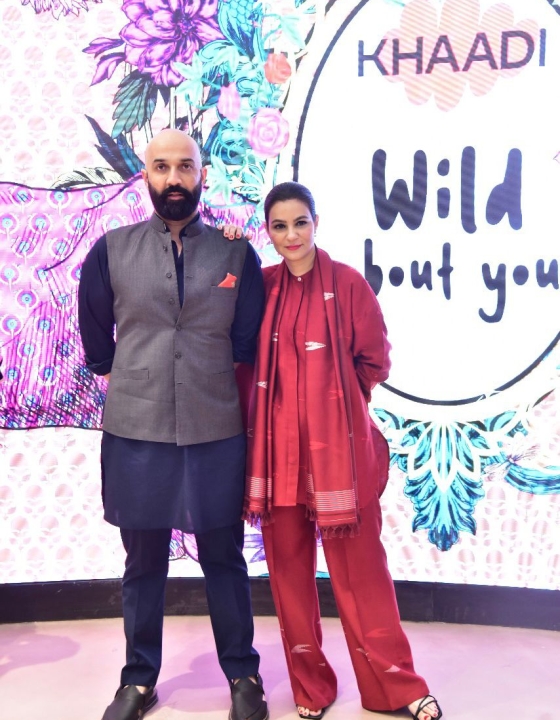
Then came Khaadi with a lineup that was refreshingly unpredictable. This wasn’t Khaadi, high-street heavyweight, on the catwalk. This was the spirit that simmered just beneath the retail genius that propelled the brand, a spirit that wanted to shake things up, set trends in motion, surprise you, enthrall you.
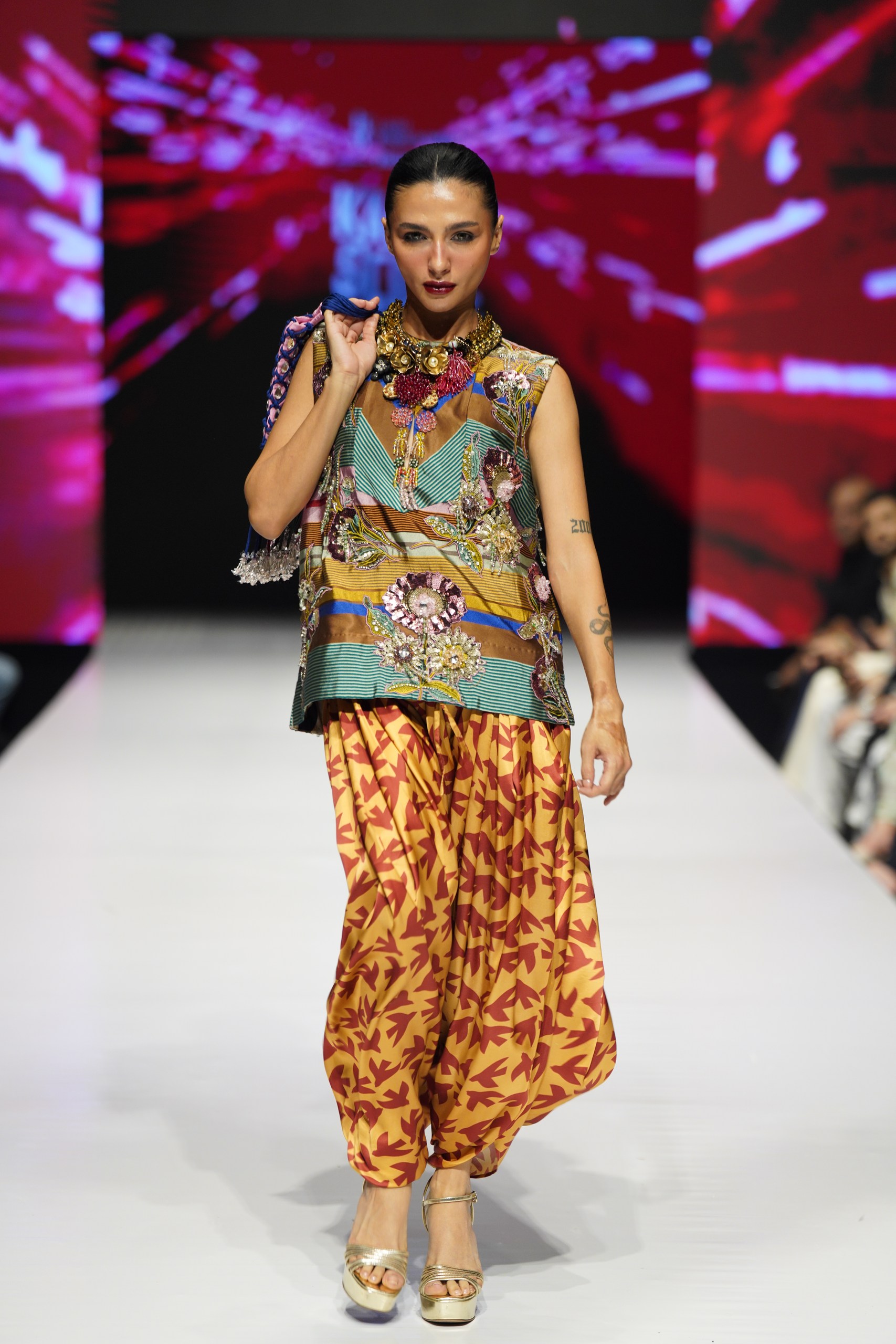
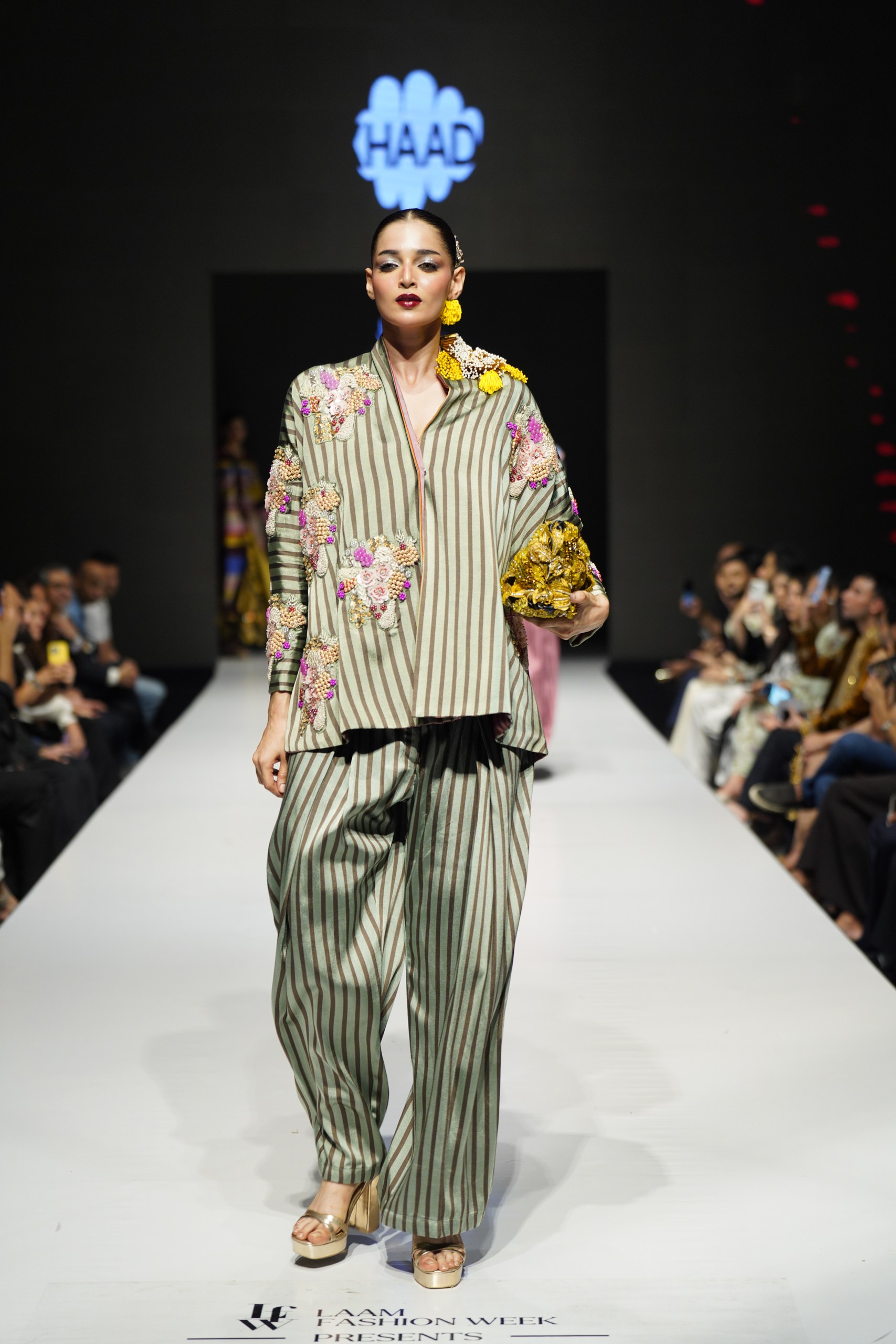
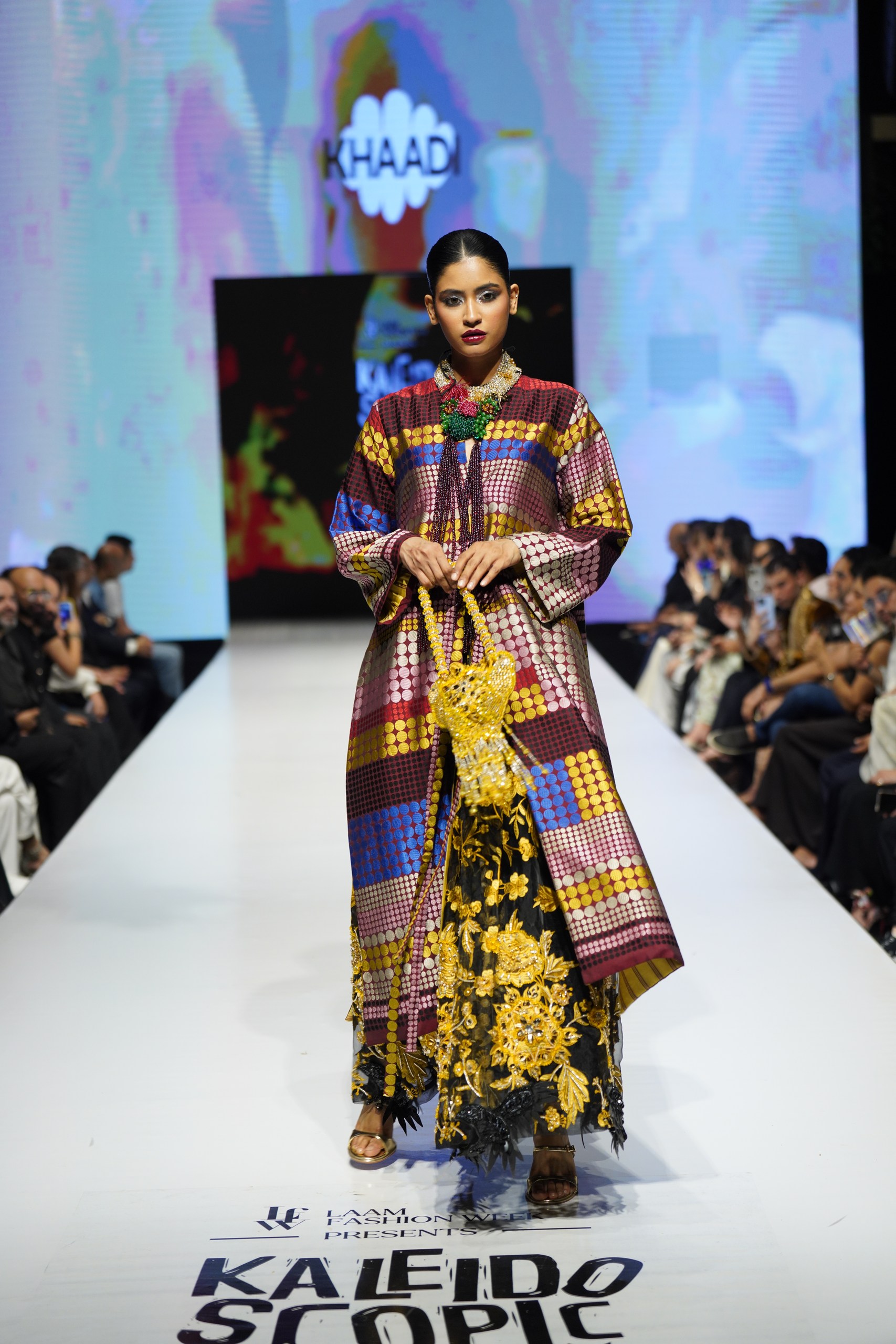
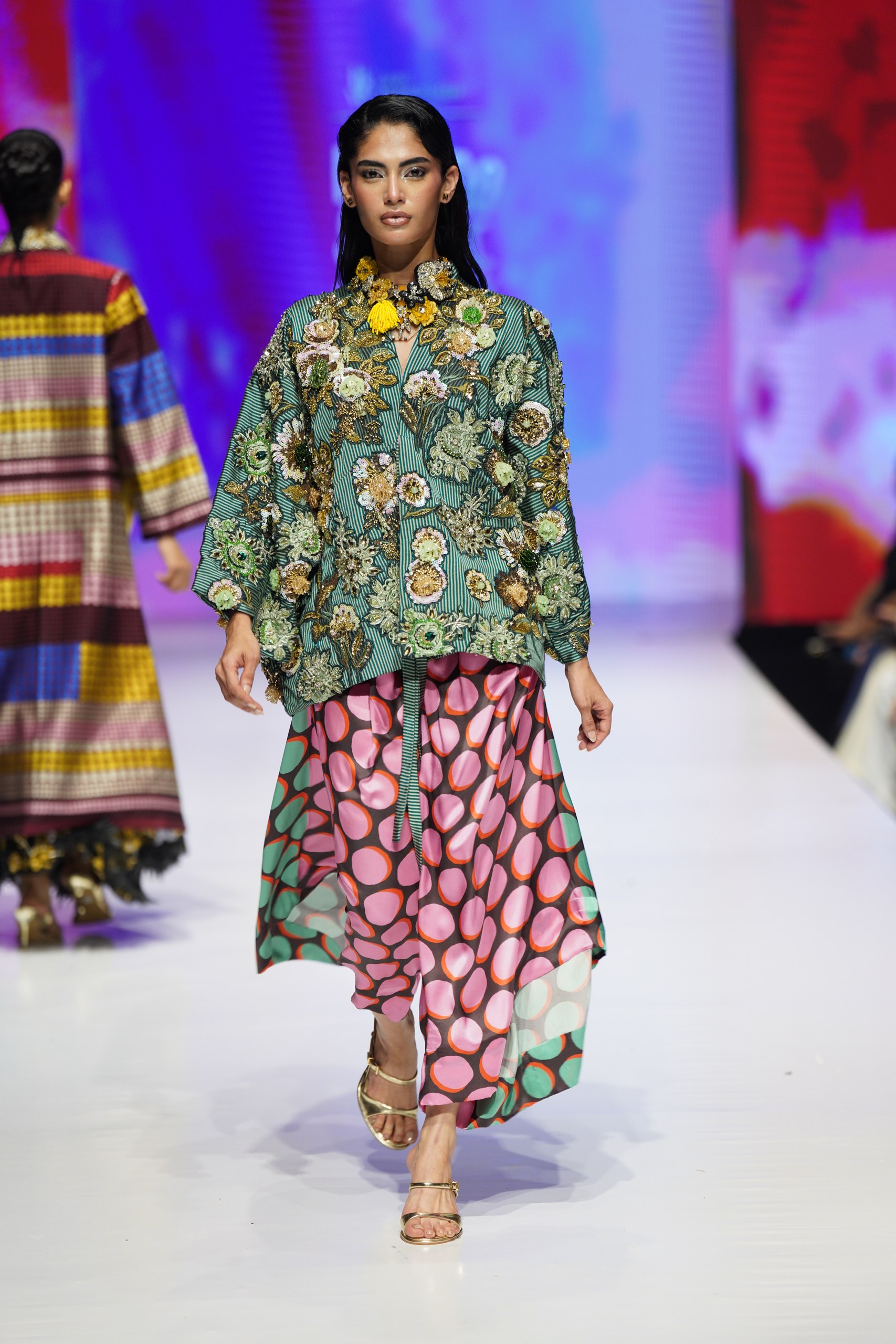
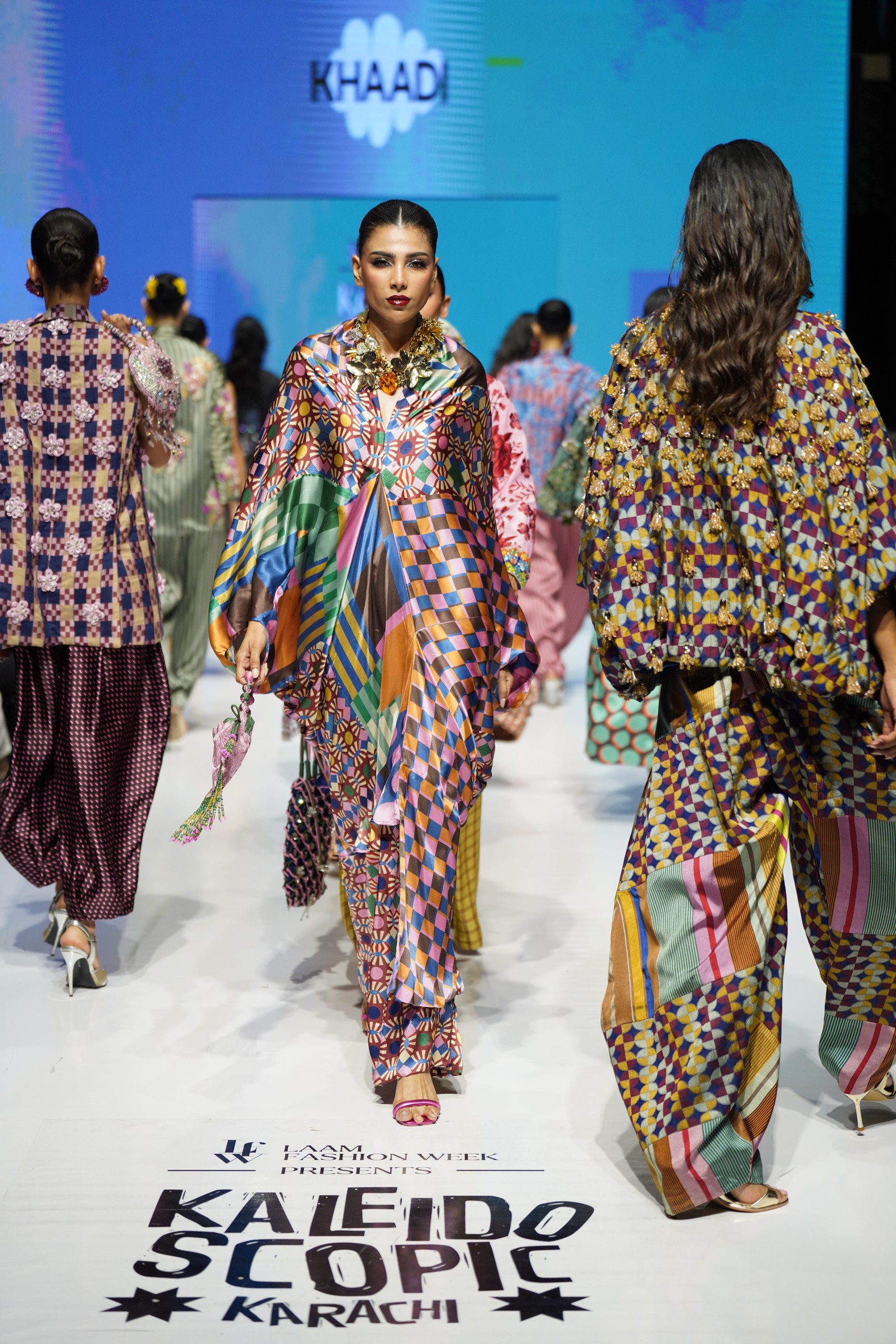
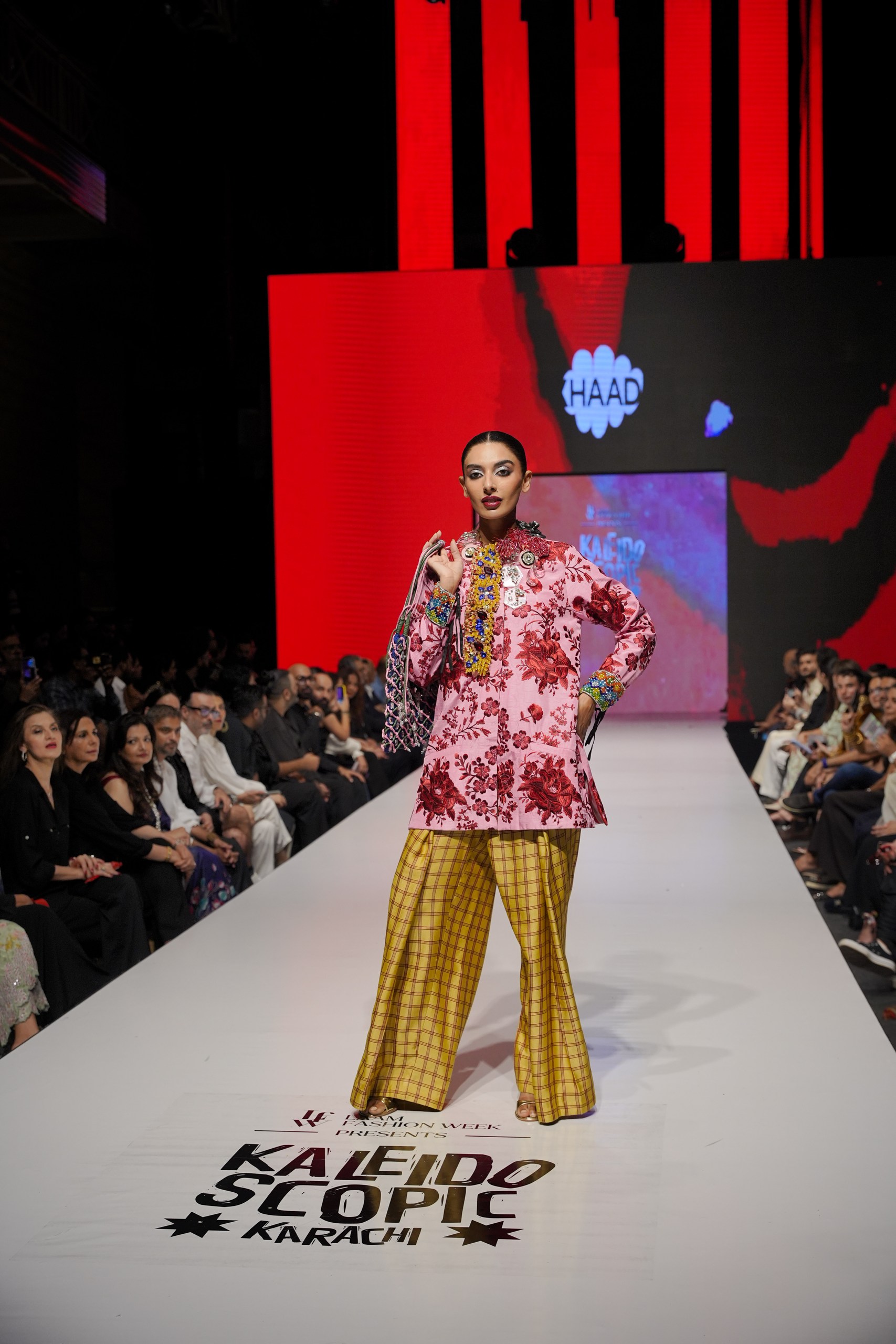
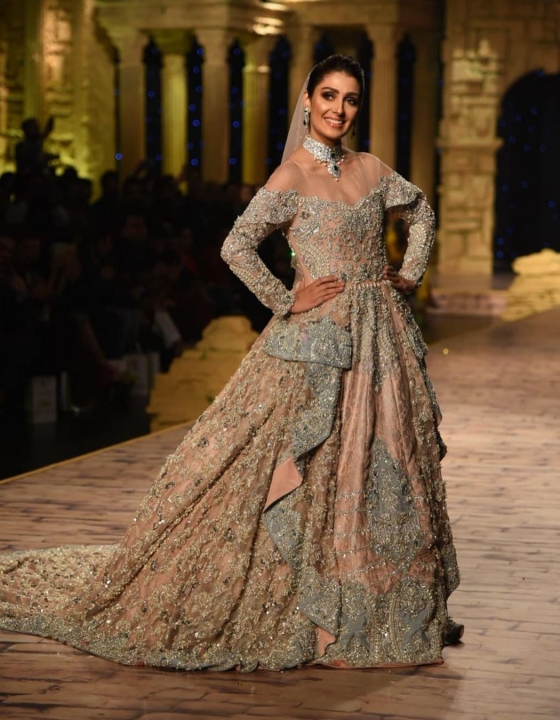
Eschewing the pleasing familiarity of minimal basics, Khaadi presented a maximalist collection. The colors clashed, embroidery ran into print ran into texture and a cool kaftan was followed by jackets, variations in shalwars, jumpsuits and blazers. It screamed high fashion and should Khaadi choose to bring this line to their retail racks, one presumes that a lot of the designs could sell well as statement-making separates.
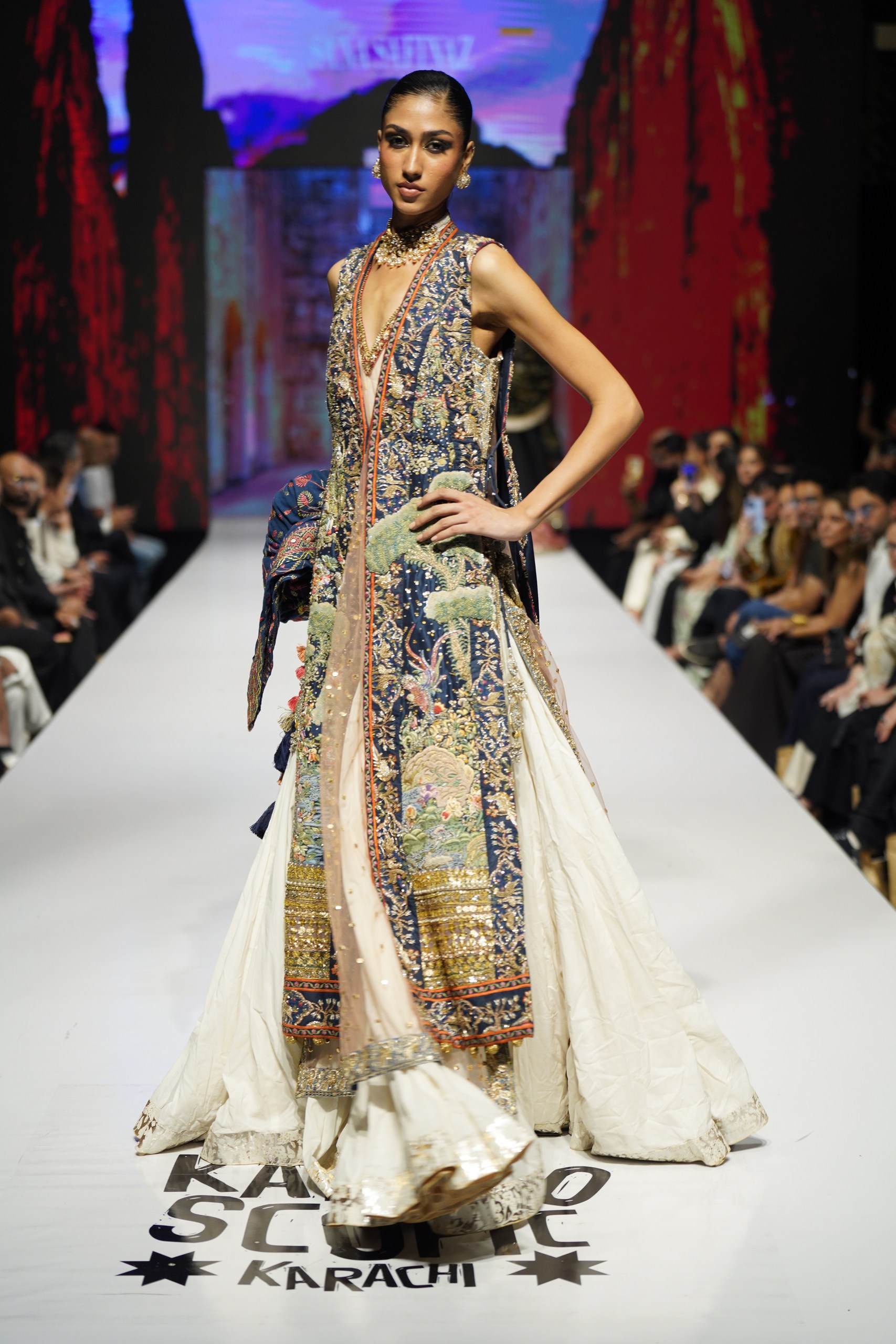
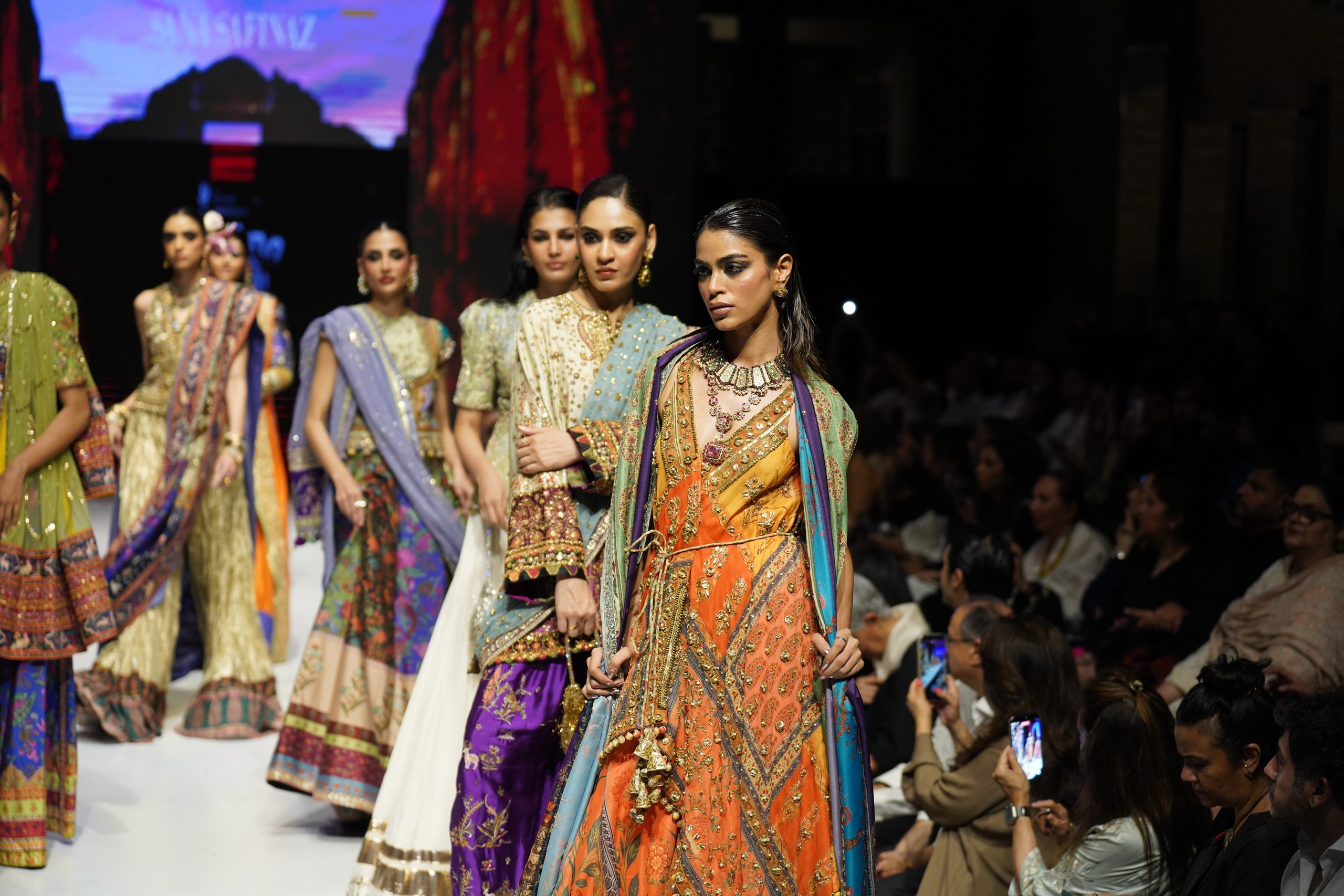
The final showcase of the night was by Sana Safinaz with their Mastani collection of festive-wear. It was a very colorful lineup, dabbling with a range of easy breezy silhouettes, embroideries and plenty of bling. It was a youthful lineup, where the fabric wasn’t completely weighed down by embroidery and the colors immediately caught the eye. However, one did expect more experimentation from Sana Safinaz. The lineup was pretty but did not make the striking impact that one has always associated with Sana Safinaz’s couture.
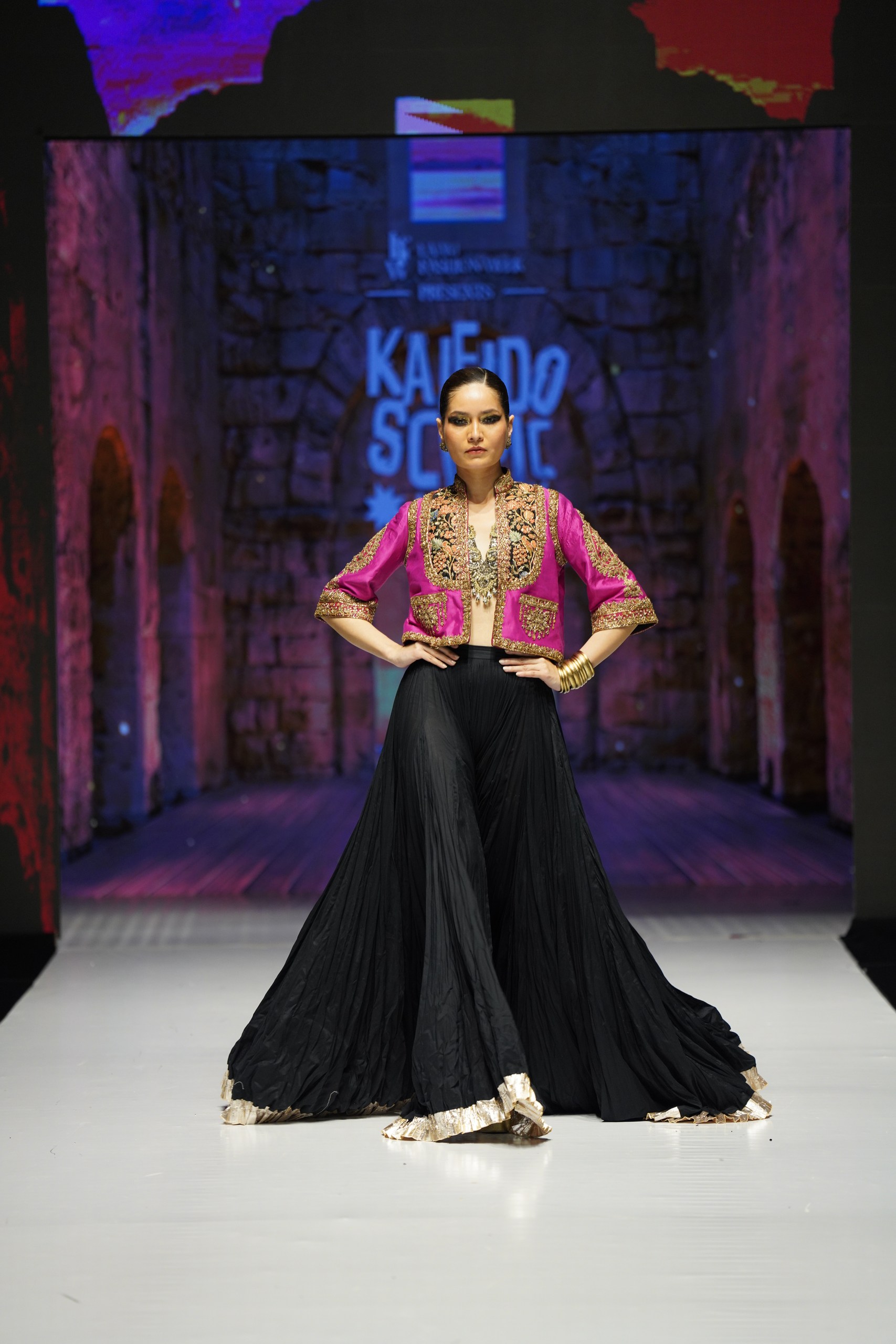
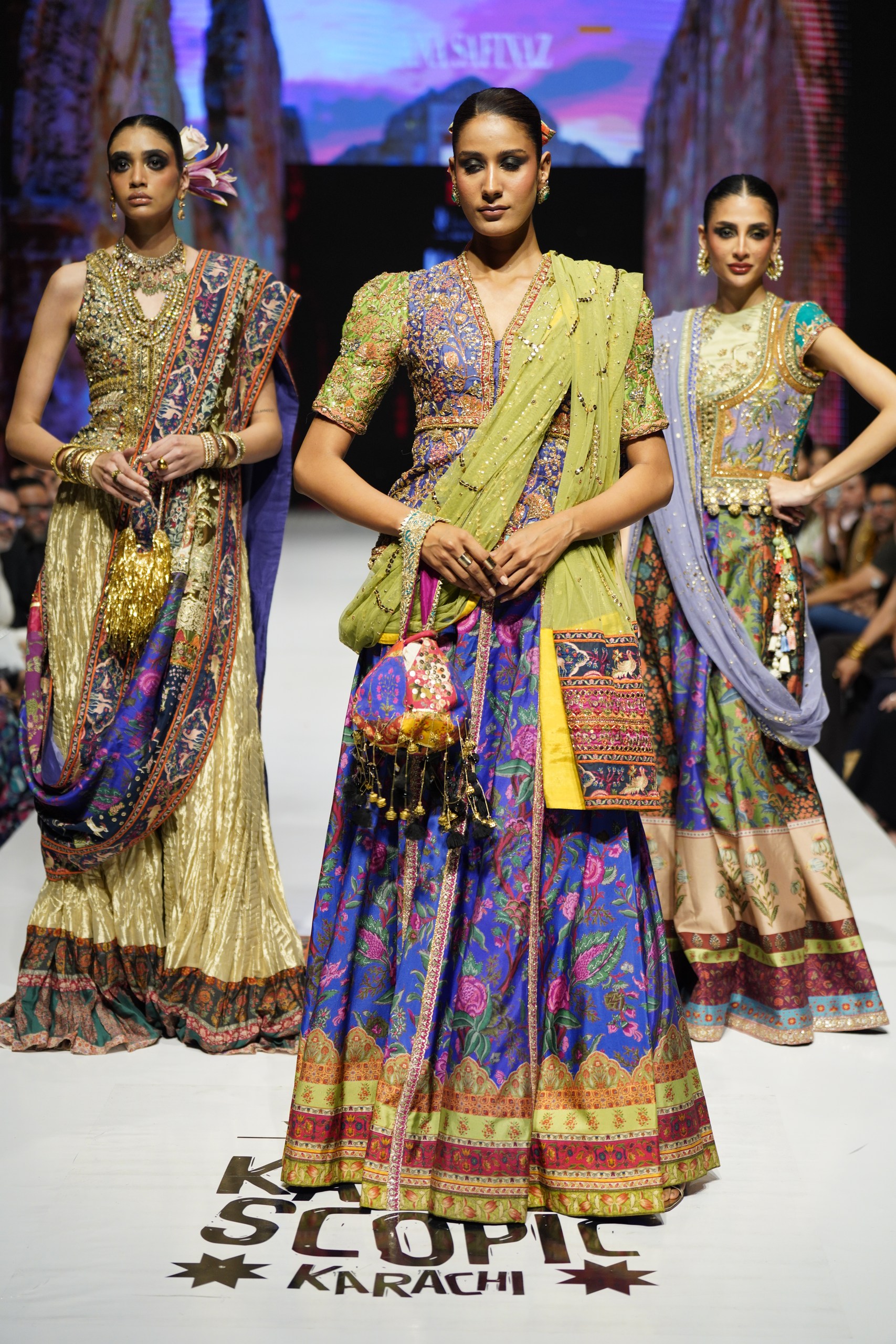
And with this, the show wrapped up. Did every collection raise the elusive fashion bar? Not always. But did it all come together in a show that brought a much-needed dose of excitement to the local fashion scene. Nubain Ali expertly put together the show as event director and the experts at N-Pro did a fine job with the hair and makeup.
And while not every design on the runway managed to reinvent the wheel, in an industry increasingly driven by commerce, it was refreshing to see designers interpret a city rather than simply sell clothes. Tapu Javeri’s photographs reminded us of where Pakistani fashion has been; the collections offered glimpses of where it could go. And the packed lawn at IVSAA, filled with the very people who have shaped the industry over decades, suggested that there is still an appetite for fashion as spectacle, creativity and conversation.
This was the real triumph of Kaleidoscopic Karachi.
What do you think?