





By Maliha Rehman
I think in a few years, when I look back on Kuch Ankahi, I will remember it as a story that drew me in, bit by bit, with the aid of a well-rounded script and powerful performances, until I just couldn’t stop watching it. It is the sort of drama that begins simply enough, a lighthearted watch on the weekend, before a few episodes down the line, the plot begins to thicken. A love triangle surfaces, characters become complicated, multiple storylines develop and you are completely in its grip.
There is so much that is beautiful about this drama, airing on ARY Digital. Director Nadeem Baig and scriptwriter Mohammed Ahmed have skillfully gathered a motley crew of characters and given them shades and dimensions, so that you feel like you know them and can almost predict how they will behave in a certain situation. Throughout, the story flows seamlessly, with not one unnecessary dialogue or longwinded flashback or prolonged scene. This is how a TV drama should be – how they used to be. One hopes that Kuch Ankahi has set a precedent that other dramas follow.
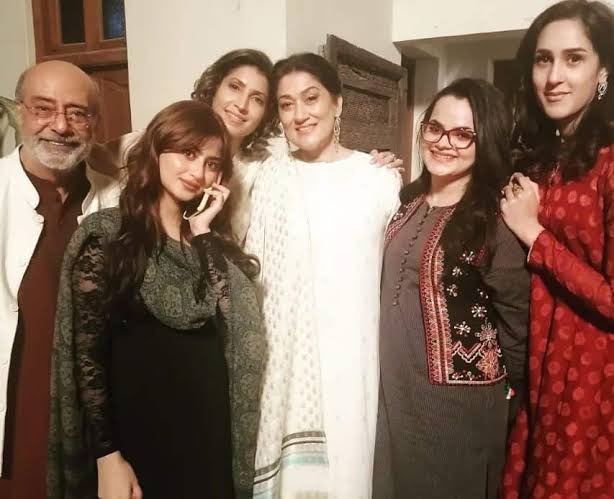
The cast is, of course, exceptional. The main leads; Sajal Aly, Bilal Abbas and Sheheryar Munawar are major stars with huge fan followings but one never feels that the story is revolving entirely around them or is relying on their popularity to attract the audience. The story is as much about Aliya, Salman and Asfar (Sajal, Bilal and Sheheryar respectively) as it is about Vaneeza Ahmed, playing the independent, forthright, devil-may-care Sofia Phuppo or about Irsa Ghazal, who plays the perpetually fretful mother with some rather regressive views or about Mohammad Ahmed, the doting father of three girls, obsessed with keeping a hold over the family home or about the spineless Saif-ur-Rehman, played by Ali Safina, his patient, wise wife Samiya, enacted by Mira Sethi and his greedy, scheming mother, played by Asma Abbas.
There is Qudsia Ali as the wilful Tania with dreams of becoming a filmmaker and Adnan Samad Khan as Shakeel, the cousin who speaks with a lisp, has a claim over the family home and holds a flame in his heart for Tania. There is Annie Zaidi as Almas, Salman’s sensible, broad-minded mother, and Uroosa Siddiqui as Shagufta, Sair ur Rehman’s girlfriend and Babar Ali as Thanvi, Sofia’s ex-fiance intent on marrying her and the young Falak Shehzad playing Deepak, the housemaid’s son adopted by the family and particularly, Sophia. Even the less pivotal characters have significance, fitting into the plot like the pieces of a jigsaw puzzle, never acting merely as fillers and each and every one of them delivering such beautifully nuanced performances.
There are multiple parallel storylines in the drama, navigating the relationship between Samiya and her mother-in-law, a possible case of work-place harassment, inclusivity of minorities, the rules of inheritance, societal expectations and assumptions regarding young, unmarried, working women and so on. And then, of course, there’s the love triangle.
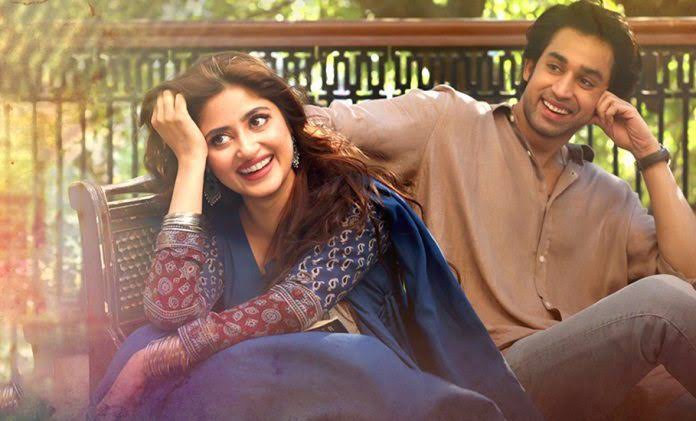
A large chunk of the scenes are inevitably dedicated to the Aliya-Salman-Asfar equation. Sajal Ali is Aliya, independent, career-oriented, supporting her family financially, with a very well-defined moral compass. Salman, enacted by Bilal Abbas is her long-time competitor at work and now, friend and neighbor. He is hard-working, emotional, sensible, with a tendency to get typically over-possessive about Aliya. There have been several moments when both Alia and Salman have been aware of the chemistry simmering between the two of them but it has taken its time in becoming clearly defined. And then there’s Asfar – Sheheryar Munawar – the apparently ruthless businessman and Aliya’s boss, fighting off the demons of his past and with a soft side that many don’t end up seeing. Asfar and Aliya snipe at each other, he scolds her and she challenges him right back and in a weak moment, he reveals personal details about his past and slowly, the delicious possibility of a romance between the two of them begins to surface.
Sajal is, as always, in her element. This isn’t a particularly complicated role for her – one has known her to have performed far more tricky characters with exceptional ease – but it is a role that she perhaps enjoyed, enacting a young, modern-day girl pursued by two very eligible bachelors.
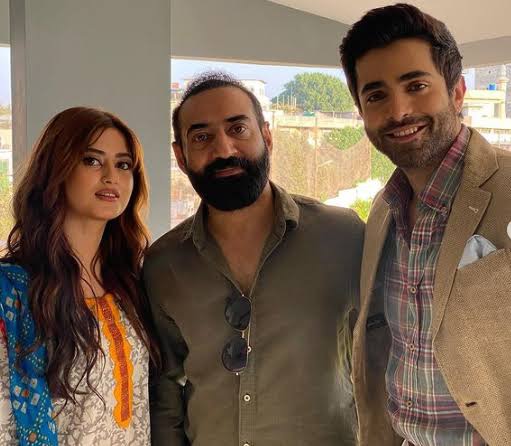
Sheheryar Munawar particularly draws the eye. The character of Asfar is very well-developed and intriguing and he looks great and acts well as the broody, tricky boss with romantic inclinations. Sheheryar may now be a pro at performing in feel-good romantic comedies but a character like Asfar, who cocks a sardonic eyebrow now and again and makes caustic remarks, particularly suits him. I’d love to see him in more similar roles rather than the usual do-gooder romantic hero.
Bilal Abbas’ performance is, as always, effortless but I have seen him in much more interesting roles in the past. Salman is likeable, dependable and straightforward which ultimately makes him predictable. An actor as extraordinary as Bilal is capable of taking on roles that are far more intricate and work wonders with them. He may have slipped smoothly into the role of Salman but this will probably not be one of Bilal’s most memorable roles. In fact, if I had to make a crib at all about the drama, it would be that I would have had liked to see Bilal Abbas in a more interesting role.
The true hero of Kuch Ankahi, though, is the script and the direction. The actors, extraordinary as they are, are often seen in other dramas, making do with cookie-cutter storylines and battling regressive tropes that are a hit with the masses. It is Kuch Ankahi’s narration which makes them shine – and it makes one hopeful of more similar stories venturing into the drama landscape.
It may not be hauling in the highest viewership ratings right now but then again, not every drama needs to zero in on the ratings race. There should be some dramas that are meant to be remembered over the years and perhaps, watched again with family on a DVD or on YouTube. Kuch Ankahi is one such rare, beautiful exception.








What do you think?