



By Maliha Rehman
Bee Gul, veritably one of Pakistan’s most extraordinarily intuitive scriptwriters, has written the upcoming short film Jamun Ka Darakht. I assumed that the title was symbolic – symbolism is a tool that Bee wields with extreme ease.
What does it mean, I asked her. Bee elaborated, “In addition to its symbolic representation of stubborn stains, slippery bank and mess, the jamun tree is also a source of food, energy and shade – something that we both can and cannot live without. It is common for this tree to spread out, all over the courtyard of our life.”
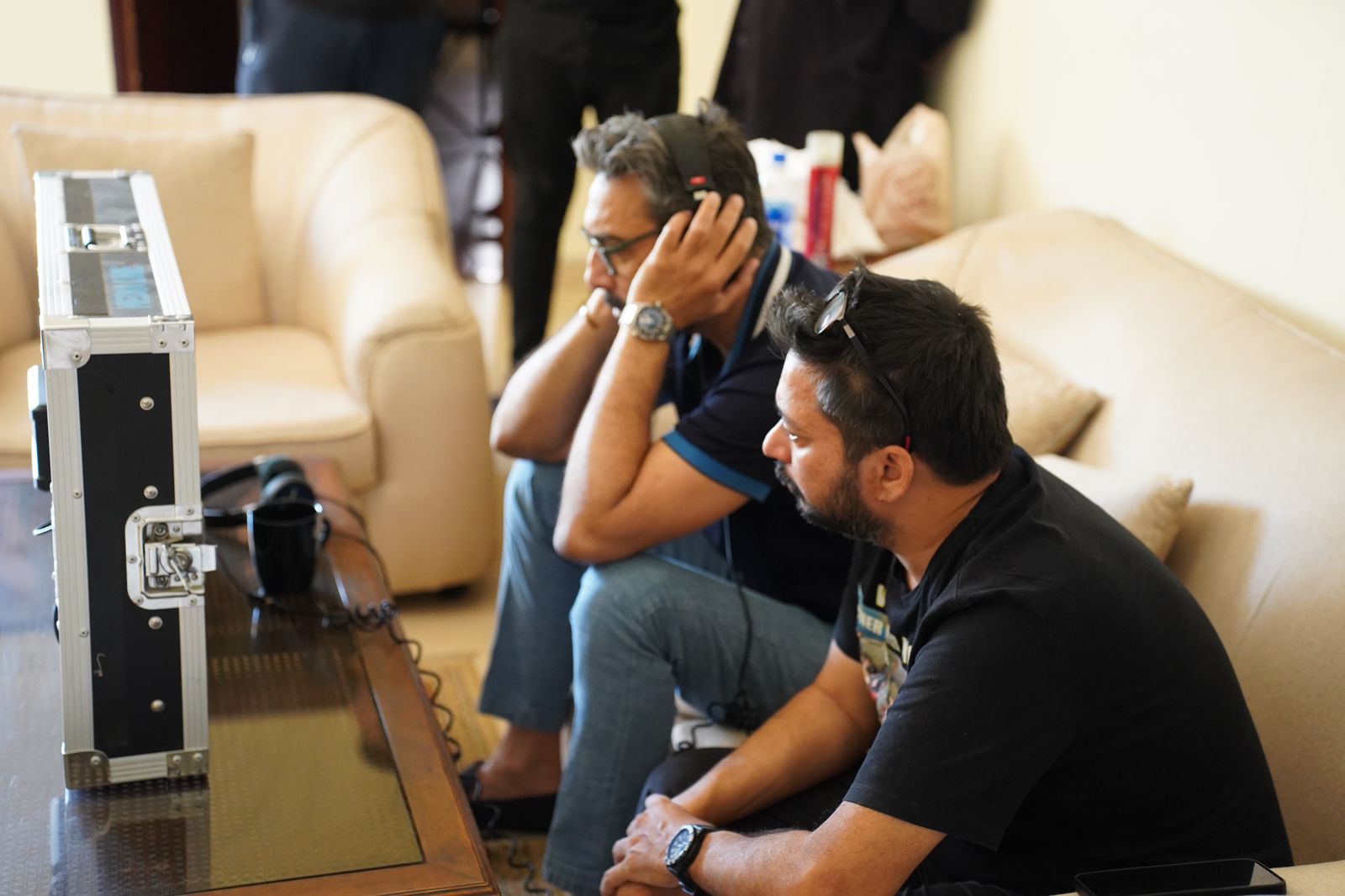
It’s an intriguing, poetic description, not really revealing much about the story except perhaps the fact that it will be based on emotions that are painful and yet essential to life. Fortunately, the film’s director Rafay Rashdi is a lot less elusive when describing the content: “Creative freedom is what every filmmaker longs for,” he says. “The themes within the short film may be uncomfortable ones but the motive was to produce and direct it with no holds barred. The creation process for me, as a filmmaker, involves essentially opening up different subjects for discourse within the audience. For the longest time, the nature of consent between a man and a woman was a subject that had been stuck in my head. I worked alongside and collaborated on the script, story and dialogues with Bee Gul. The script was completed prior to Badshah Begum (which aired on the Hum TV Network last year), but I waited for the serial to finish its run on local TV before turning my attention towards directing Jamun ka Darakht.”
According to Rafay, the short film is particularly targeted towards the international festival circuit. “The set of rules and regulations in local TV involve censorship. It was therefore my team and my decision to focus on the international market.”




The team behind Jamun ka Darakht includes some well-reputed names – and some surprising ones. The short film will feature Adnan Siddiqui on the screen, after a three-year long hiatus. The cast also includes models Maha Tahirani and Fouzia Aman and actors Saman Ansari, Syeda Ramsha Nawal, Ahad Touqeer, Zara Usman, Yogesh Karara and Irfan Motiwala. Rafay Rashid Productions, Syed Murad Ali Presentations and Faisal Kapadia are jointly producing the film.
What prompted Faisal Kapadia, well-known as a PR maven in the local fashion and entertainment circuit, to delve into production? “I’ve always wanted to make good content and I have managed to do so in the industries that I have been involved in, in the digital field and now, PR. Filmmaking and production has always been a pipe dream of mine and I am drawn towards quality content based on real stories. This is why I particularly gravitated towards this project and Adnan Siddiqui played a major role in convincing me to be producer.”

A story based on consent is very likely to dabble in risqué territory, which is possibly why the international market is being considered a more likely avenue for Jamaun ka Darakht’s release. What drew Adnan Siddiqui towards the film – and why hasn’t he been seen in an acting role for the past three years? “Nothing good was coming my way,” Adnan says. “As an actor, I am always on the lookout for roles that push boundaries and Jamun ka Darakht is a story with a very layered premise. It touches upon the complexities of human behavior, the various masks worn by people and the manipulation, exploitation and power plays which prevail in society. Humans are becoming increasingly morally corrupt – it wasn’t like this always!”
Will Adnan be playing a ‘morally corrupt’ protagonist, then? It’s a spoiler that he cannot reveal. “I hope that my character manages to shed light on a pertinent social issue. I hope that it inspires people to look inwards and around them and perceive how rapidly our values are declining.”
Has he missed acting over the past three years? “I miss it now, now that I’ve gotten a taste of it again!” Adnan confesses.
Not much has been revealed about the characters that will be enacted by the rest of the cast although certain details can be construed based on the fact that the ensemble is predominantly female. Could Adnan be the manipulative male, puppeteering the lives of all these many women? It is likely – and quite an interesting notion!
Can we hope to see Jamun ka Darakht on screens in Pakistan? The makers cannot confirm, so far. “The film has been submitted to the Toronto International Film Festival (TIFF) and the Nashville Film Festival” says Faisal.
Could this messy, sweet-smelling, shaded tree, spreading out with the aid of Bee Gul’s pen, extend its branches to the local landscape? Or do its tendrils spread into territory that’s too tricky to appeal to the palette of the local censor-board?
Let’s see.





What do you think?