




By Maliha Rehman
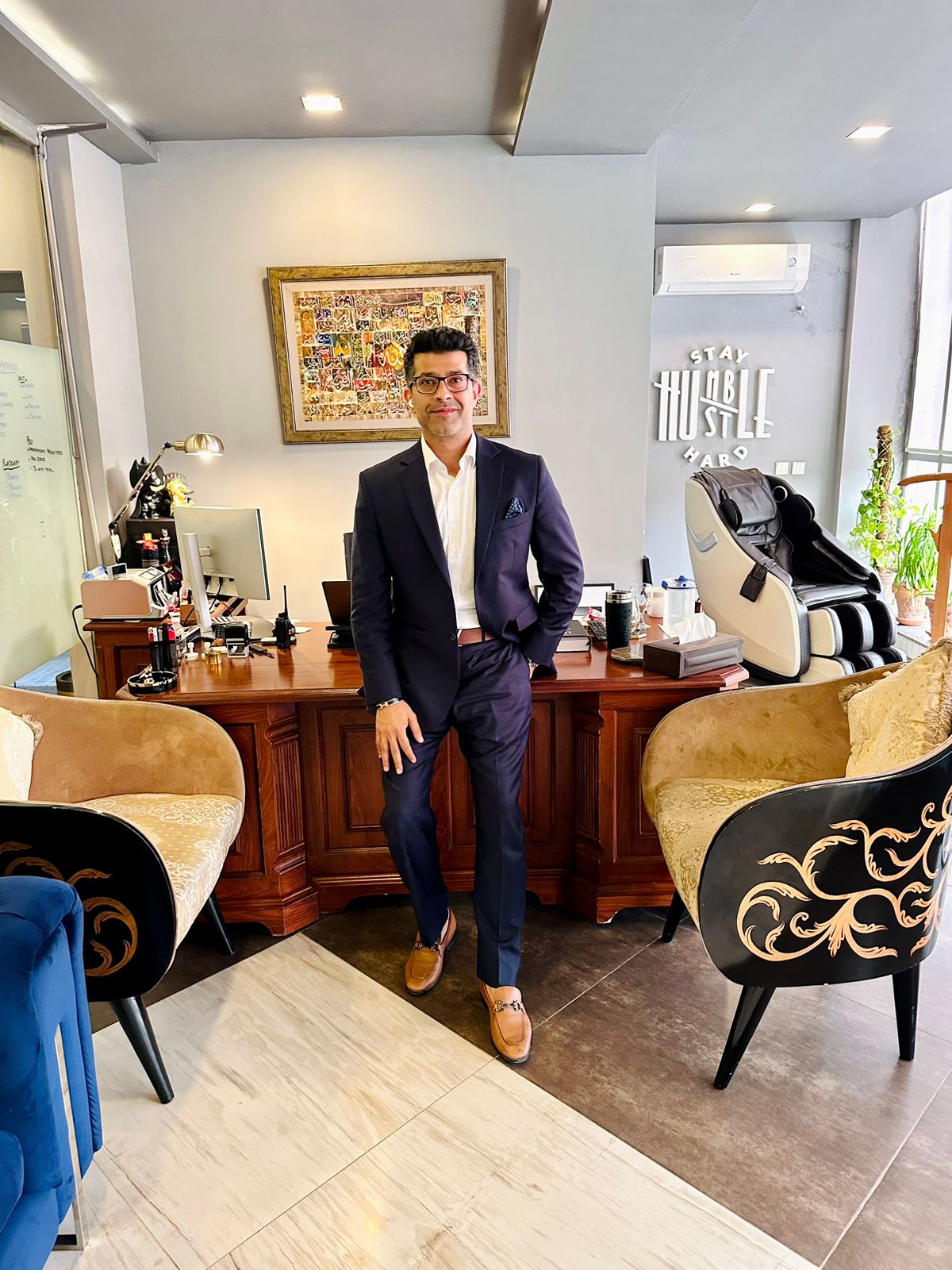
“The key is to realize we are all dispensable. The goal is to keep on evolving to beat the odds,” Asad Malik, CEO of Cresset Pakistan, tells me.
As I look over the path chalked by Cresset over a span of merely 10 odd years ago, his words ring true. Cresset, guided by Asad’s vision, harnessed the business potential that had been predominantly unrealized by the Pakistani fashion industry. Assisted by a team of professionals that has mushroomed over the years to over 400 personnel, Asad analyzed, strategized, streamlined, digitized and chalked out ambitious business plans for a range of Pakistani fashion brands. His clientele now spans a prodigious lineup of local ateliers.
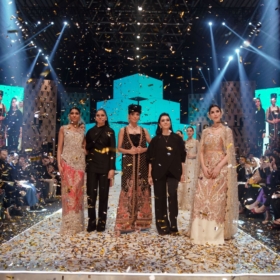
It all makes sense. Fashion is a creative field and South-Asian fashion even more so, with a variety of meticulous hand embroideries in artistic patterns being the hallmark of some of the region’s most esteemed ateliers. Designers are artistic and many don’t have a knack for business. This may have been fine perhaps 50 years ago, when designers’ clientele was limited to a particular region and bespoke designs were the order of the day. Now, with the boom of fast fashion and access to a global cyber-marketplace, it is essential that the business end of fashion is handled astutely, amplifying the creative strengths of a brand and maximizing profits.
Pakistan is the 5th largest nation in the world population-wise but we are often underrepresented and misrepresented. I felt that I could do my bit in pushing forward how brilliant Pakistani fashion is.
Asad, then, launched Cresset at a time when Pakistani fashion was expanding rapidly and managed to fill a much-needed gap in the market by effectively and efficiently handling the business end.
Cresset’s journey started off with the development and management of e-commerce for a few select brands. Over time, the company’s scope of work and number of clients have expanded. E-commerce is an important cogwheel running the Cresset machinery but Asad and his team are also significantly involved in other aspects that are imperative for the growth of a fashion business: distribution, retail, digital marketing, investment, expansion and even manufacturing.
“The methodology we adopt depends on the requirements of our clients,” says Asad. “We see the potential in a business and come up with strategies that could propel its growth. This could be limited to managing the logistics and customer services required in e-commerce or it could extend to the creation of new lines, becoming part of the manufacturing process, quality control, digital marketing and local as well as international expansion.”
He proceeds to elaborate, “We often partner with the brands that we are working with. This may mean that we share a percentage of their revenue with them over a certain span of time. We may be particularly invested in the running of certain of their outlets. We may be actively managing some of their retail stores, which may involve owning the real estate where the store is and setting up our retail teams there. In the case of e-commerce, our duties extend to cross-checking the quality of every online order before it is dispatched to the customer. Should the customer not be satisfied with the quality, we will be bearing the loss and paying the brand for this simply because it was our responsibility to make sure that the product was up to par.”
“Our collaborations are also often based on vertical integration,” Asad continues. “There are times when we will take on the responsibility of manufacturing the fabric. From helping with the production to the sampling, we then become involved in the nitty-gritties of running the brand.”
“In the case of an equity partnership, we have a stake in the overall business. In that case, even if at some point, the designer wants to end the digital partnership with Cresset and work with someone else, we will still be stakeholders within the brand.”
A quick overview of the Cresset Tech website highlights some of the company’s clients: all major players in the fashion high-street or in the realm of couture. “The very first websites that we developed were for Faraz Manan and Maria B., and then, over time, we ventured beyond websites and added more services to our portfolio,” says Asad. “I can’t profess that the websites that we have created haven’t ever crashed. But when they have, we have paid the penalties. We want to build long-term relations with our clients that are mutually beneficial.”
“A recent study by the Harvard Busines School stated that relationships are the backbone of business in the 21st century. In that vein, it is our priority to empathize with our clients, brainstorm with them, creating an emotional connection with them that ensures that we grow together.”
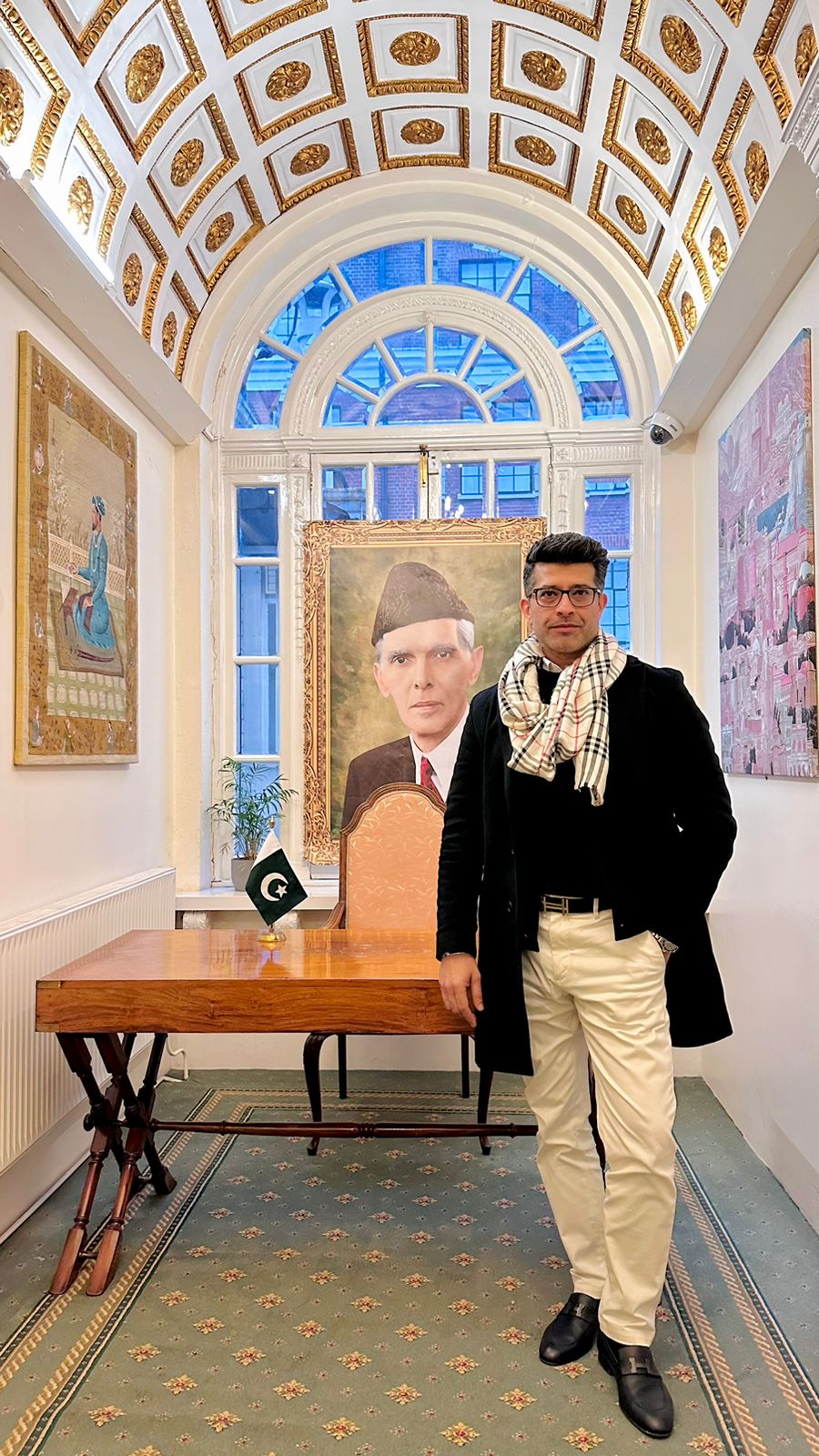
What prompted Asad, though, to place focus on Pakistani fashion? Prior to returning to his homebase in Lahore and setting up Cresset, he had been living in the U.S. since the age of 12 and was working as an investment banker. Why put his faith into fashion’s volatile business? “I just feel that there is so much potential in Pakistani fashion,” he says. “I had come from the U.S. to Pakistan to complete my CFA level studies and it just occurred to me that while there were phenomenal designers in the industry, many of them were satisfied with achieving short-term goals. They didn’t have plans for global expansion, or for building their country’s image internationally or for leaving behind a legacy. They were happy making a quick buck without realizing that they could go on to build an empire. I wanted to help change that.”

It is precisely because of the short-term goals that he outlined that many of Pakistan’s most creative powerhouses have sometimes been accused of unprofessionalism, of missing out on customers’ orders or delivering substandard designs unlike what they were promoting on their webpages. Didn’t Asad have apprehensions about entering into business deals not knowing whether the brand would operate ethically or turn out to be unprofessional? “That apprehension is always there and I can’t say that we haven’t had bad experiences,” he agrees.
While there were phenomenal designers in the industry, many of them were satisfied with achieving short-term goals. They didn’t have plans for global expansion, or for building their country’s image internationally or for leaving behind a legacy. They were happy making a quick buck without realizing that they could go on to build an empire. I wanted to help change that.
“However, every nation, every society, every industry, has positive and negative traits. Pakistan is the 5th largest nation in the world population-wise but we are often underrepresented and misrepresented. I felt that I could do my bit in pushing forward how brilliant Pakistani fashion is. I couldn’t give up on the industry just because of a few unprofessional people and I think it’s worked out for me and the brands that I have worked with.”
He continues, “As is the case with all businesses, designers running brands of their own need to set priorities. The client needs to be treated like a member of their family. They can’t give them pain by causing delays even if that means that they have to work harder.”
While Cresset’s collaboration with major local fashion labels has strengthened its brand image over the years, the company particularly made waves recently when it partnered with two Pakistani brands, playing a major role in their international expansion. The Farah Talib Aziz store in Houston is the first brick-and-mortar outlet opened by a Pakistani designer in the U.S.A. and earlier this year, designer Mohsin Naveed Ranjha opened his store in London, located in the prestigious Regent Street area.
“You have to dream big in order to achieve big goals,” Asad says.
Some of these big goals have indubitably been highlighted by Cresset, emphasizing on what Pakistani fashion can potentially achieve with the right vision, professionalism and creative effort. Zoning in on the immense artistry within Pakistani fashion, Asad’s added in the tech know-how, business acumen and understanding of global retail that is essential for the growth of a brand in today’s world.
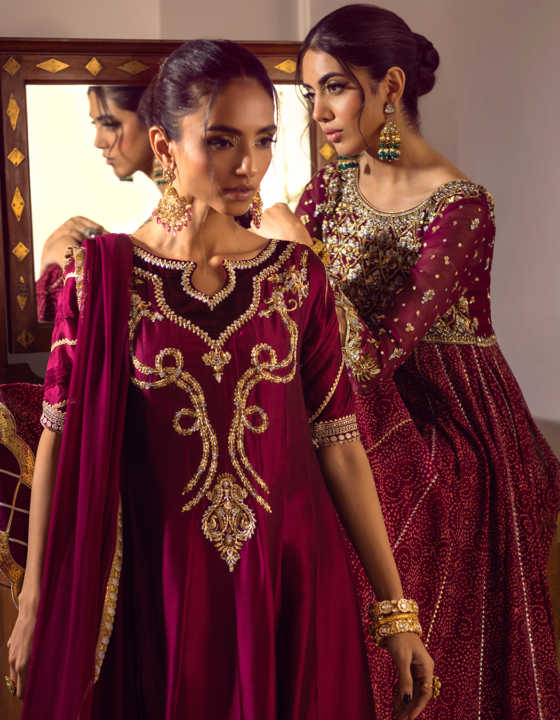
A case in point is the brand Farah Talib Aziz. My very first meeting with the designer Farah Talib Aziz had been when she had run a thriving but relatively small-scale business. Fast-forwarding to present day, the brand is one of Pakistan’s top-most labels, with multiple physical stores, a thriving e-store as well as a store in Houston.
A small but promising fashion atelier functioning from a single store today could be a global heavyweight tomorrow. As long as you dream big. And perhaps Pakistani fashion designers really are now dreaming big. Asad Malik is certainly dreaming big for them!




What do you think?