


By Maliha Rehman
Fashion weeks were going to make a comeback with Laam Fashion Week (LFW), it was said.
But could they really? Could the fashion forward catwalk, having slunk into the shadows ever since the pandemic, make a return and still manage to excite? Could fashion move away from vapid celebrification and put forward an event where design took centerstage? Would designers want to get away from their commercial comfort zones and innovate for the catwalk, like they used to?
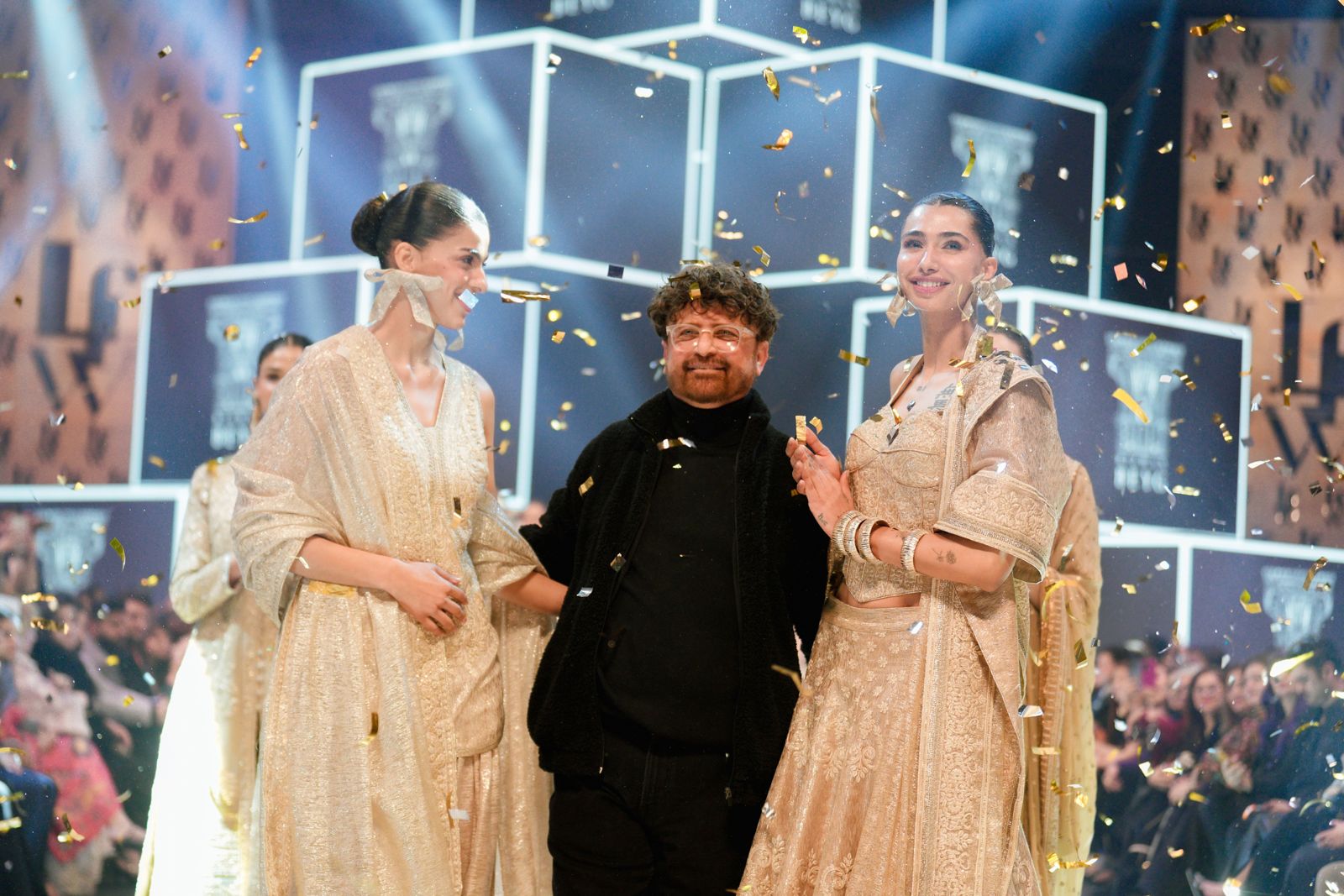
The first edition of the four-day long LFW took off on the 31st of January and the skepticism which had preceded it could happily be dismissed. There was a buzz in the air and there were familiar faces assuring you that this event was here to stay: particularly, designers Maheen Kardar Ali, Kamiar Rokni, HSY as well as Saad Ali, who has always been involved in the business side of fashion.
It all reminded one of the fashion week days and then, there was more. This was the fashion week behemoth, steamrolling into the future, tech-savvy, aiming to marry the runway to e-retail, live streaming the show worldwide.
A very Instagrammable digitized passageway wound its way to the main show area. A coffee area was set up in one hall, with a towering installation, featuring the work of fashion students, taking center stage. A massive catwalk – the biggest yet, I am told, to be set up for a fashion show – was laid out in the main hall, amplified by a three-dimensional digitized LED screen towering over it.
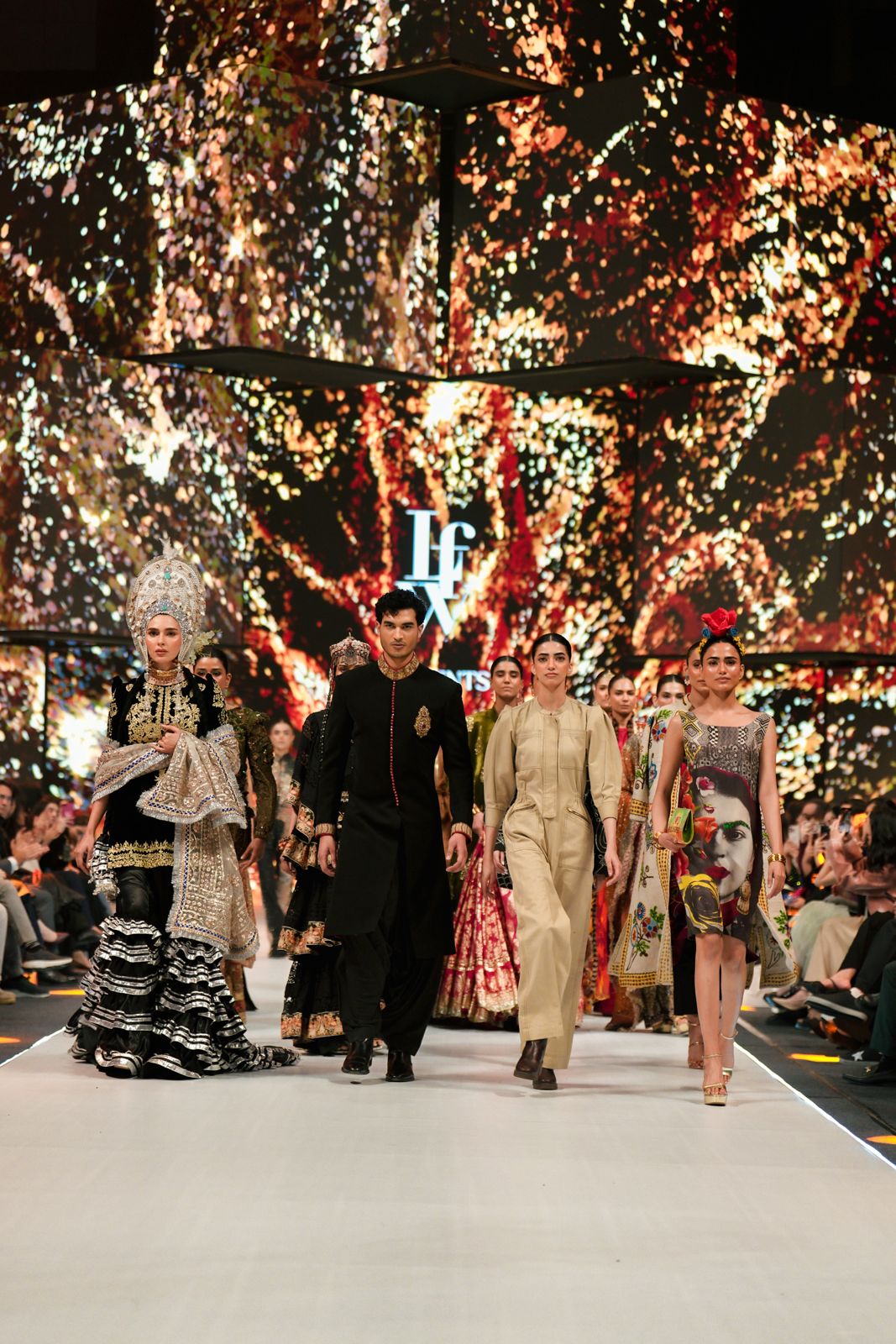
Once the shows began, this screen came ablaze with visuals: Victorian arches, winding trellises, fire, fireworks. It looks spectacular when seen in person and it is looking spectacular in the pictures.
And even when the fashion wasn’t spectacular, the backdrop helped in making it look exciting – somewhat. The LFW entourage set up the framework and got the wheels in motion. But they couldn’t very well nudge their way into designer’s ateliers and guide them on the aesthetics that make for an exciting show. Designers showed what they wanted to show; bridals, luxury-wear, even costumery.
This was one of the main differences between LFW and the council lead fashion weeks of yore. In the latter, certain design guidelines were given according to which designers would show wedding-wear at the ‘bridal weeks’ and pret at the other fashion week. In some of the better fashion weeks which took place back in those days, the council would go the extra mile and edit the collections, eliminating the bad, the boring and the downright ugly until a relatively interesting, possibly trendsetting lineup was ready to take on the catwalk. Similarly, the collections at Hum Showcase would also be edited rigorously by show director Rizwan Beyg and designers had to present avant-grade fashion and resist the urge to deviate towards the lucrative pastures of bridal.
LFW, on the other hand, had made it clear from the onset that it was a commercial avenue, created in collaboration with digital fashion retail platform LAAM and the Design651 team. The organizers would not be bending over backwards editing collections. Designers showed what they wanted to show and while not every collection seen on the runway was day one was remarkable, the backdrop at least made a huge difference!
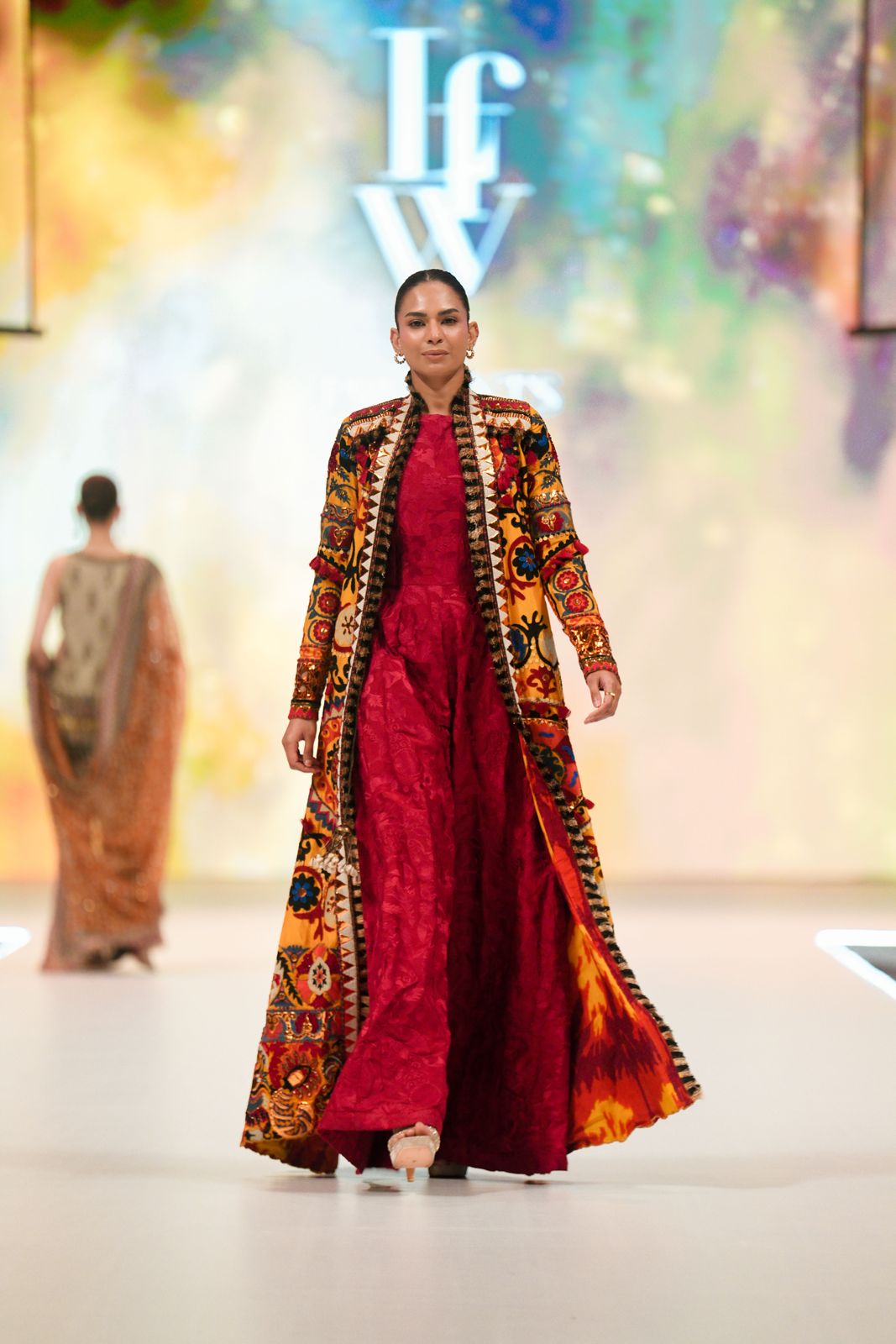
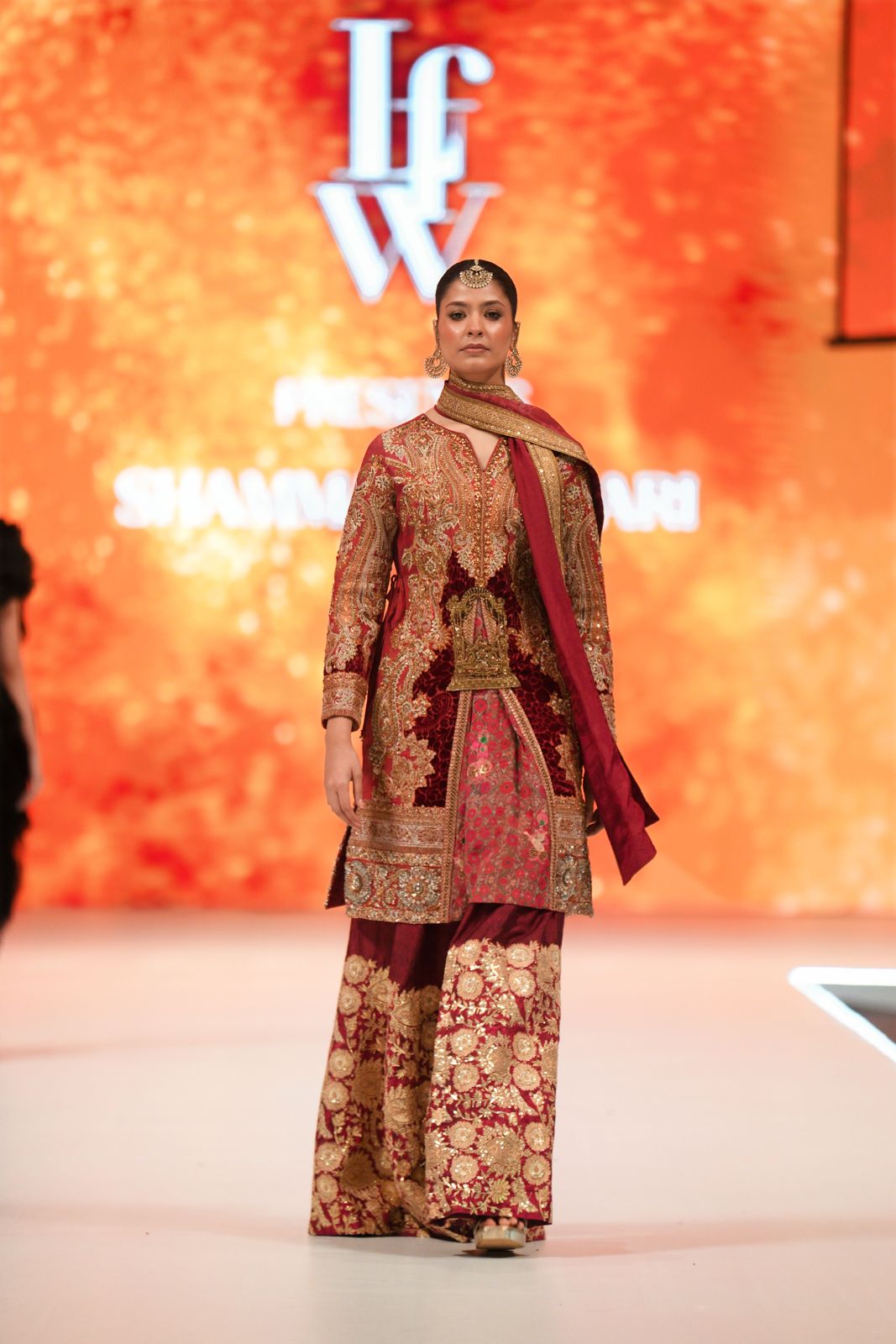
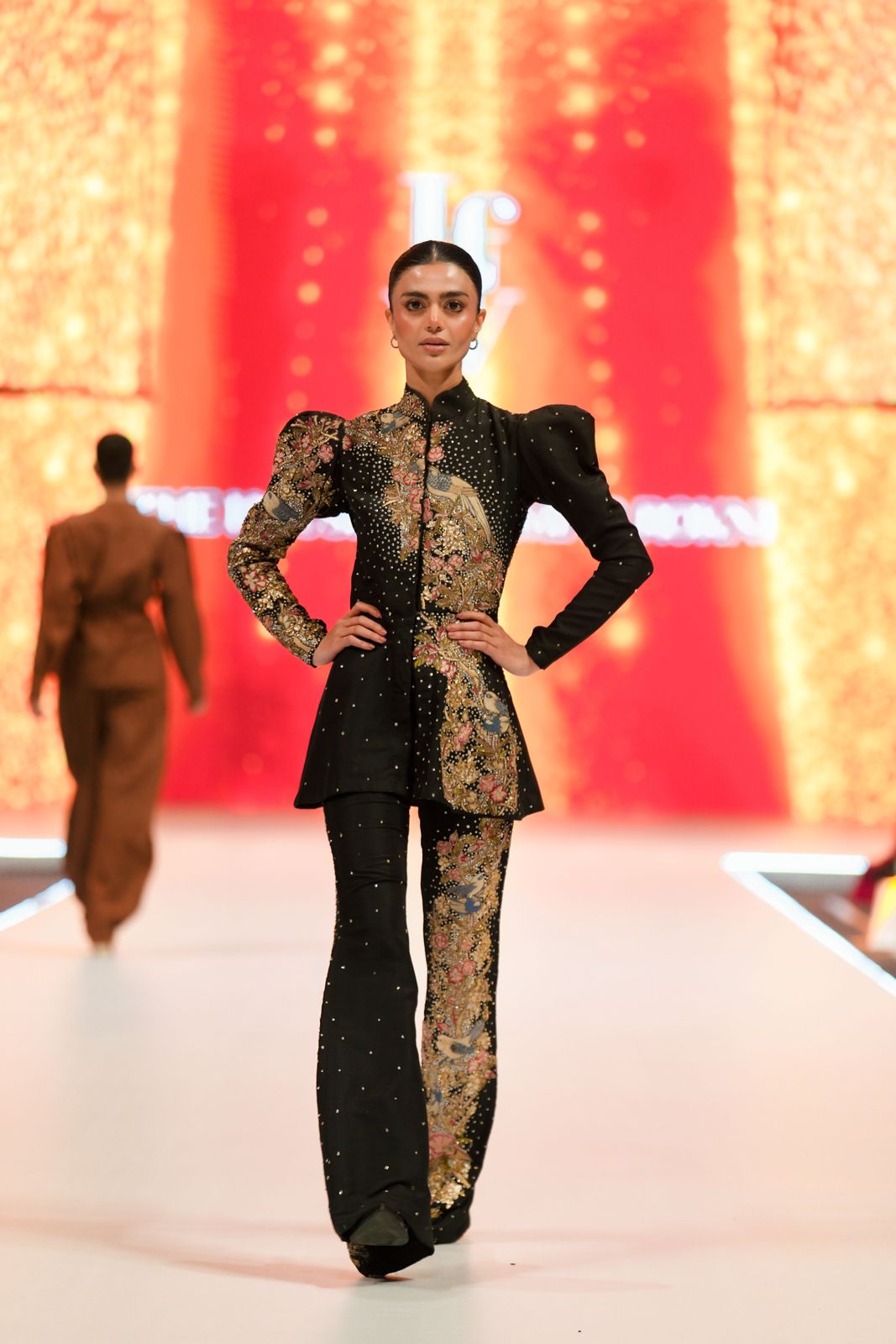
The LFW Presents lineup, for instance, which started off the event, presented a collective lineup of designs from different ateliers, representative of Pakistani fashion’s journey over the years and the many diverse aesthetics that exist within the industry. The show was a nostalgic throwback and those in the audience who had actively attended fashion weeks in the past could possibly recognize favorite designs: Deepak Perwani’s famous Frida Kahlo dress, Khaadi Khaas’ gorgeous long cloak from that long-ago Nomad collection, Kamiar Rokni sprinkling multicolours and some pixie dust on to a black canvas, Feeha Jamshed’s trendsetting janitor jumpsuit and HSY’s classic red wedding-wear, among others.
The LFW Presents lineup, for instance, which started off the event, presented a collective lineup of designs from different ateliers, representative of Pakistani fashion’s journey over the years and the many diverse aesthetics that exist within the industry. The show was a nostalgic throwback and those in the audience who had actively attended fashion weeks in the past could possibly recognize favorite designs: Deepak Perwani’s famous Frida Kahlo dress, Khaadi Khaas’ gorgeous long cloak from that long-ago Nomad collection, Kamiar Rokni sprinkling multicolours and some pixie dust on to a black canvas, Feeha Jamshed’s trendsetting janitor jumpsuit and HSY’s classic red wedding-wear, among others.
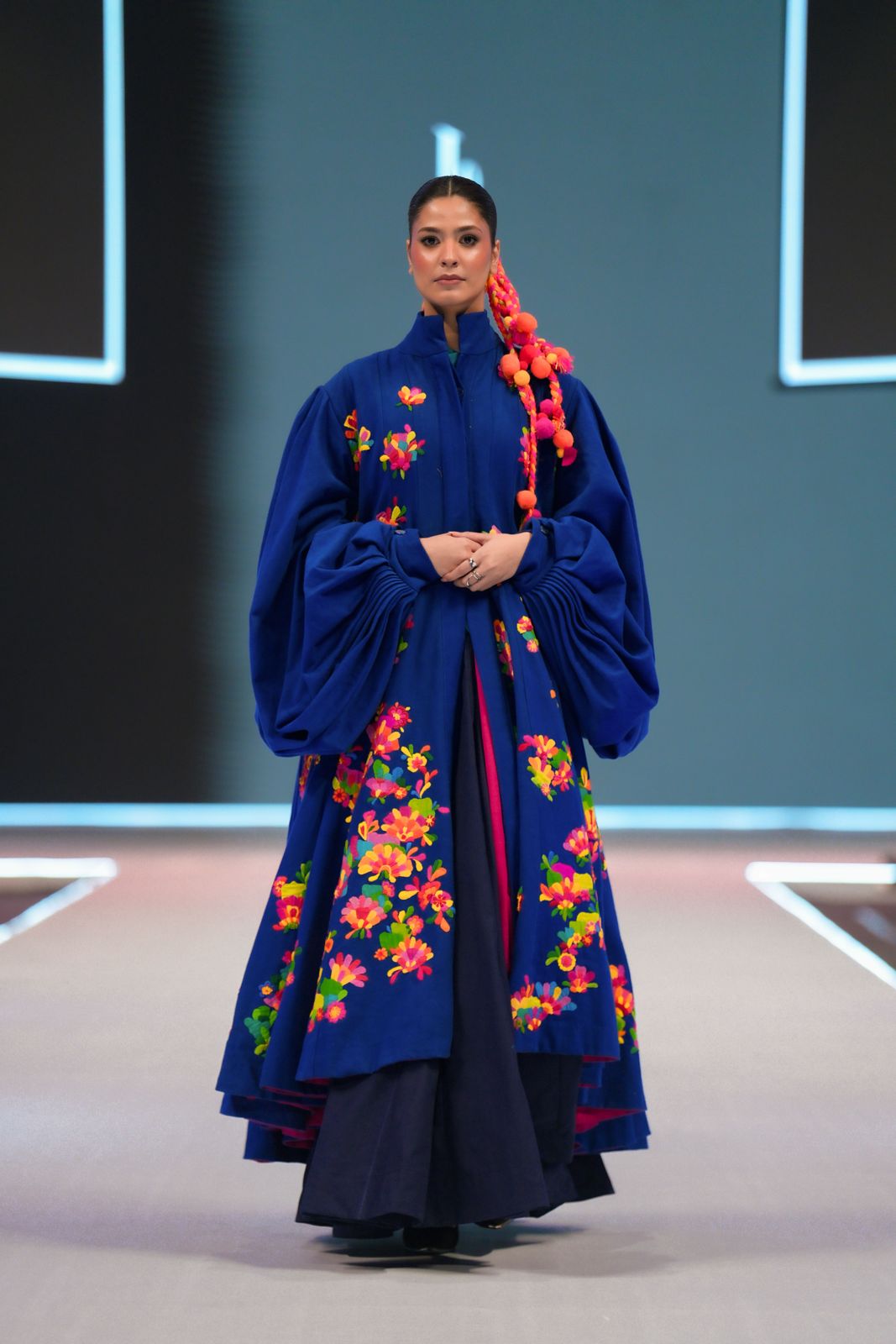
Next came the LFW Hot List, featuring the work of 10 recent graduates from the Indus Valley School of Art and Architecture (IVS) and Pakistan Institute of Fashion and Design (PIFD). It was an exciting display, with plenty of experimentation, interesting mixes of color and texture and some crazy, crazy details. Weaving and stitching techniques, patchwork, tie-n-dye, draping and quilting all played out in a lineup of artistic clothes.
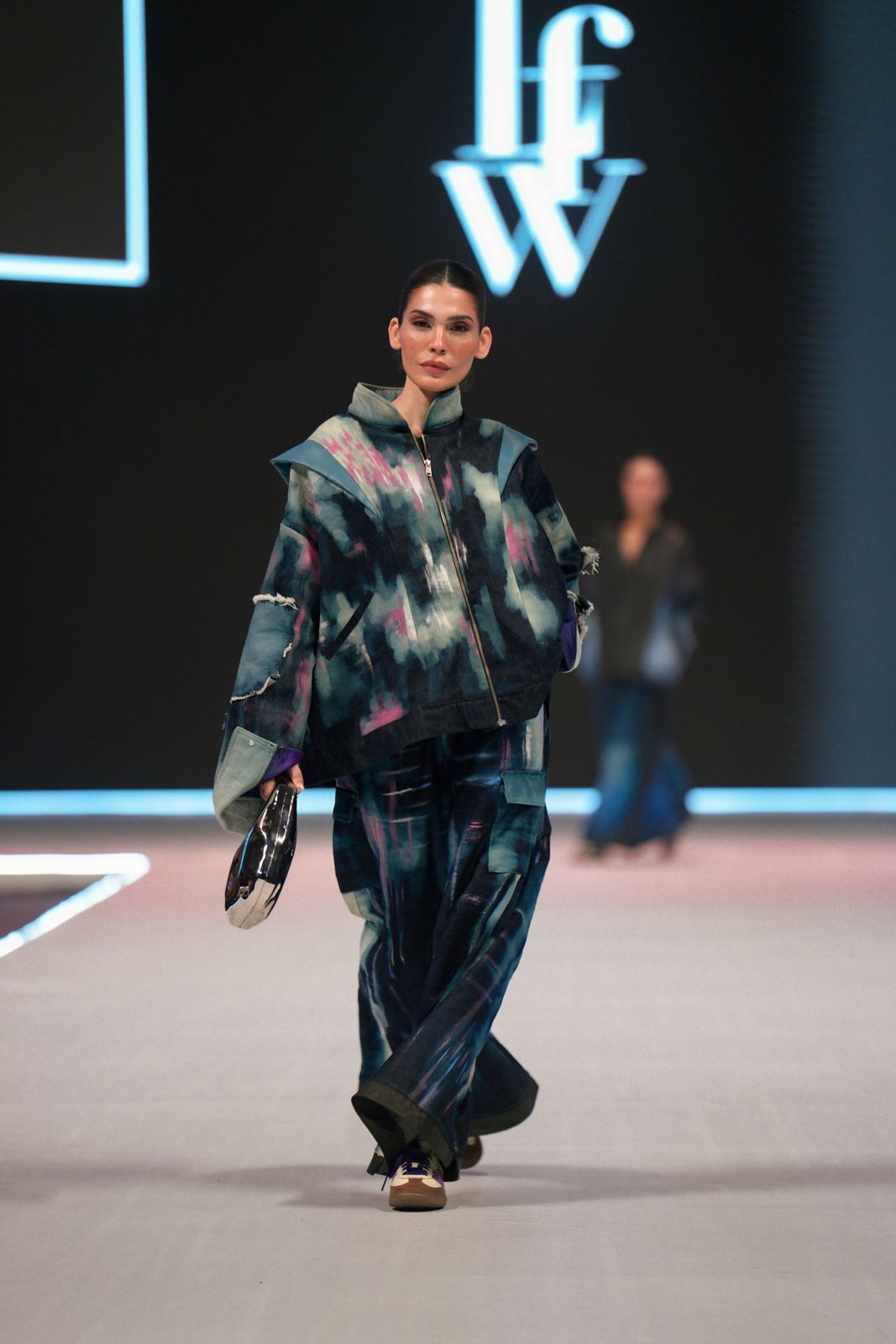
It was evident that while the collections had been created by fledgling designers, they had possibly been guided into creating design that was aesthetically pleasing even if it was off-the-wall. In the past, one has seen some ghastly lineups presented under the guise of ‘Rising Talent’. This was not the case this time around. The young graduates – IVS’ Simroza Khowaja, Marium Tariq, Mahnoor Amir, Eman Masood, Ahsan Jawed and Areeb Ahsan and PIFD’s Muhammad Ahsen, Rehab Rana, and Anza Razi – all did very well.
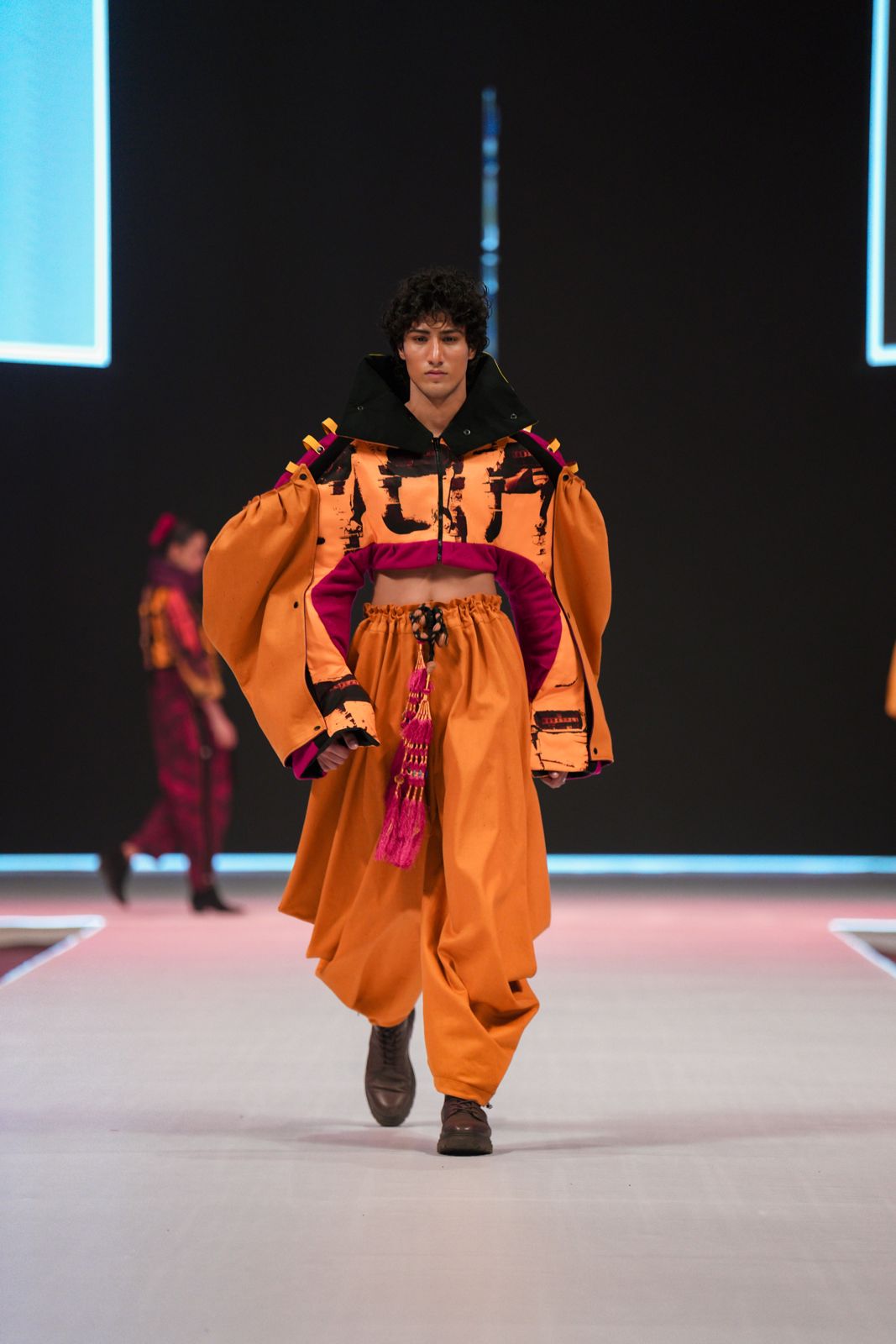
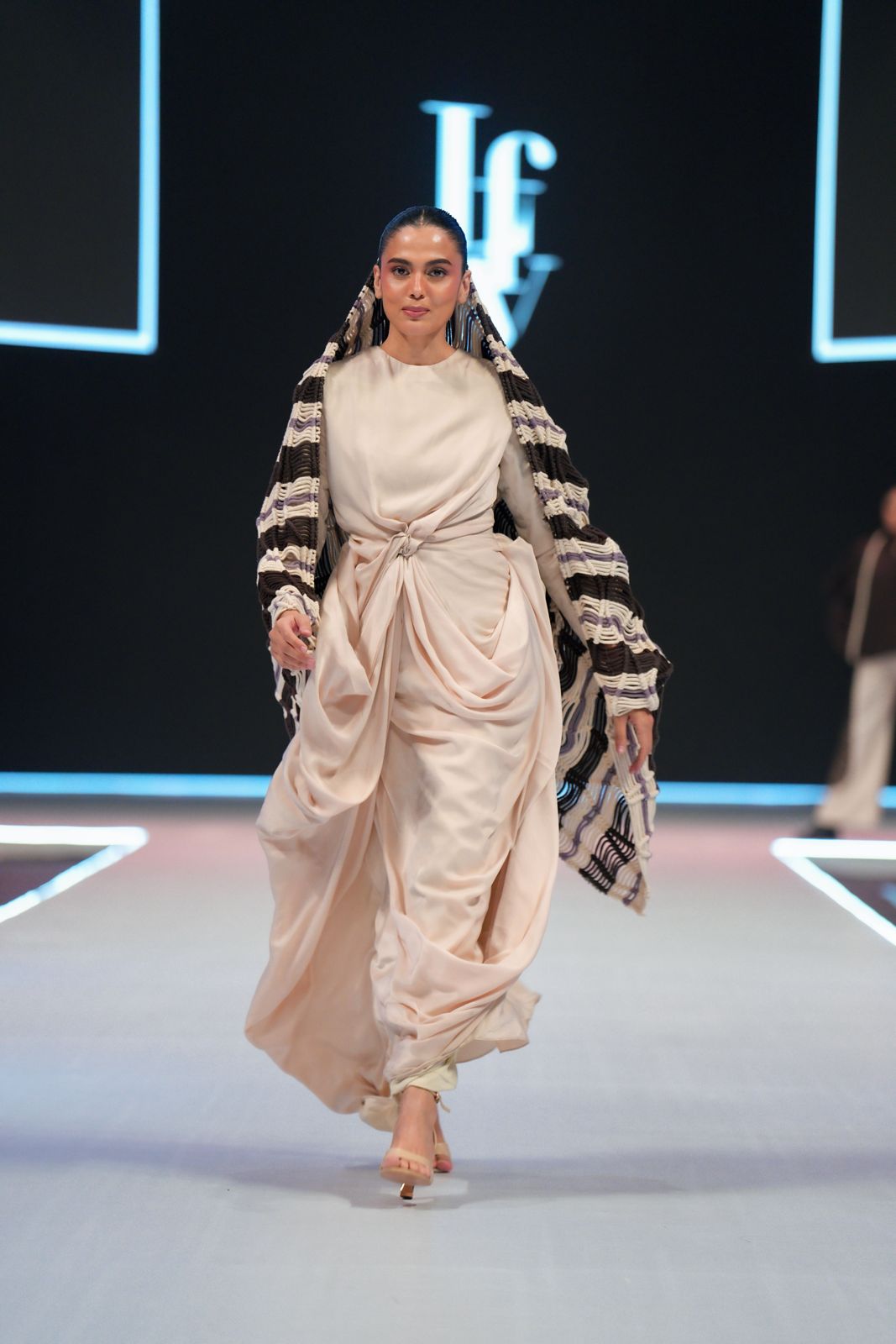
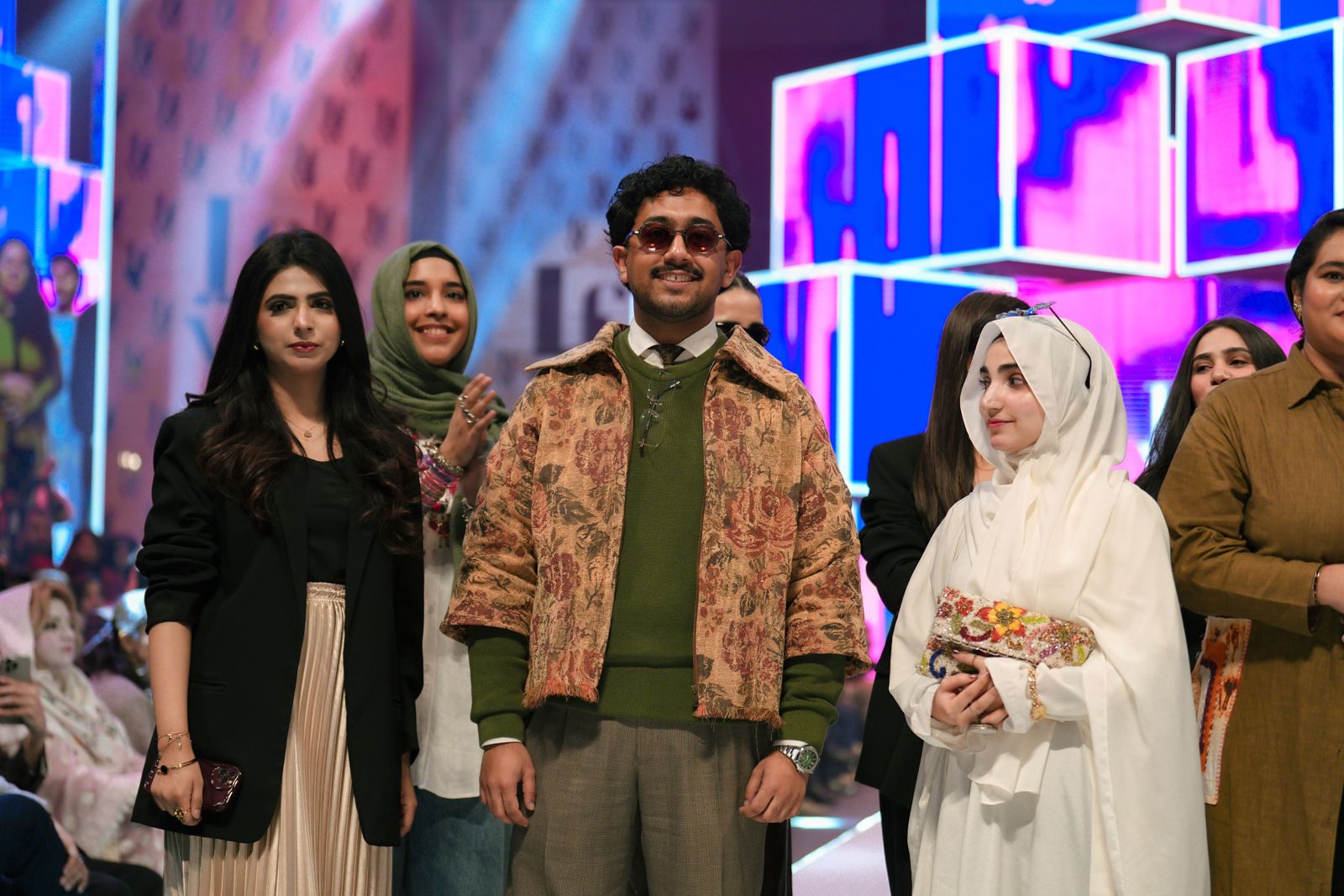
The musical talent featured in the LFW Hot List show was an added bonus. The top 16 finalists from Pakistan Idol lip-synced and danced on the catwalk while the models walked out. It was a great idea; young, up and coming musicians collaborating with young and up and coming designers and it made for a very energetic show.
The main designer shows followed with Tena Durrani making a long overdue return to the runway with a collection of wedding-wear. It was classic Tena Durrani and that is not a bad thing at all. The designer has always been popular for her very neat, very intricate embellishments and they were what caught the eye in the lineup of lehngas, cholis and long flowing shirts. The colors were all pretty; ivories, bieges and pretty pastels leading on to the inevitable red bridal. Luxe fabrics, the embroideries and a well-honed eye for finishing came together into a collection that particularly gave testament to Tena’s hold over her craft.
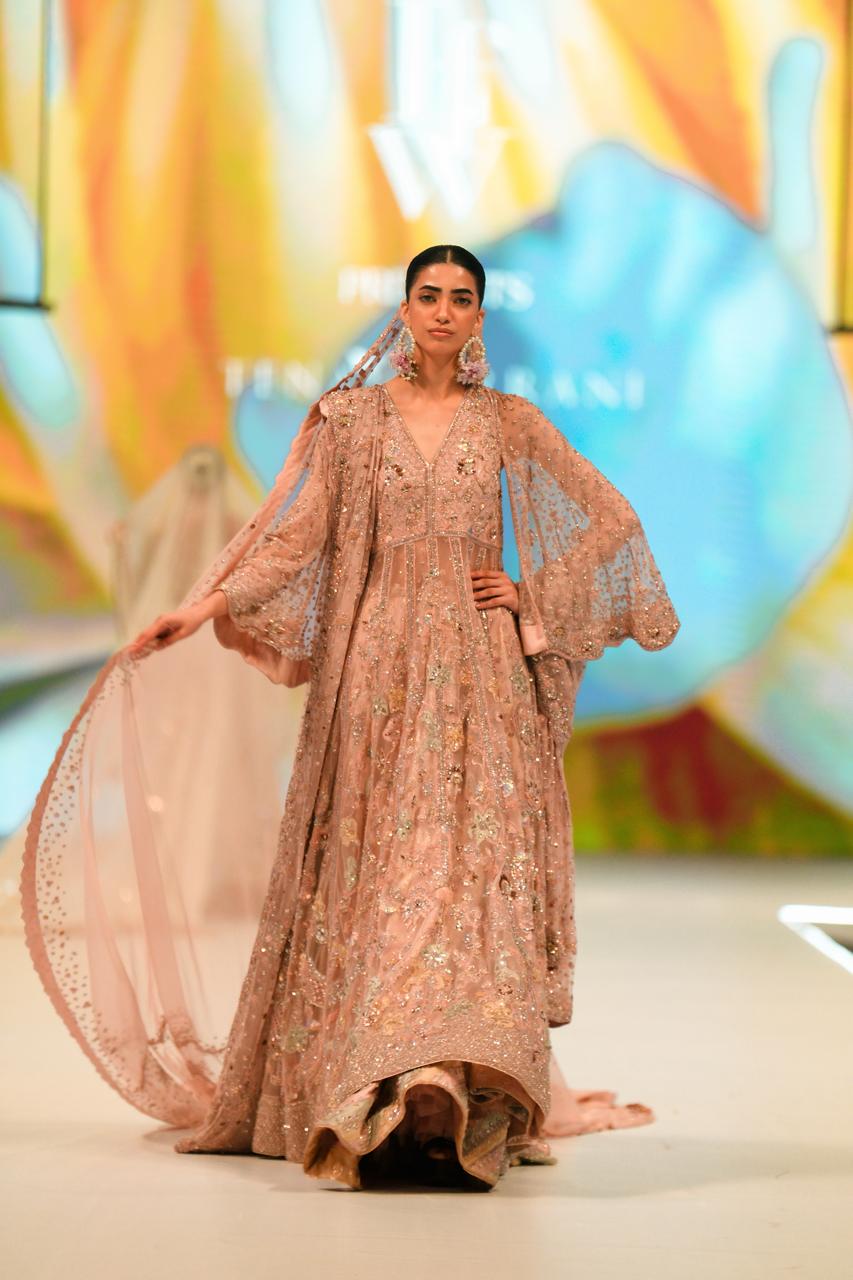
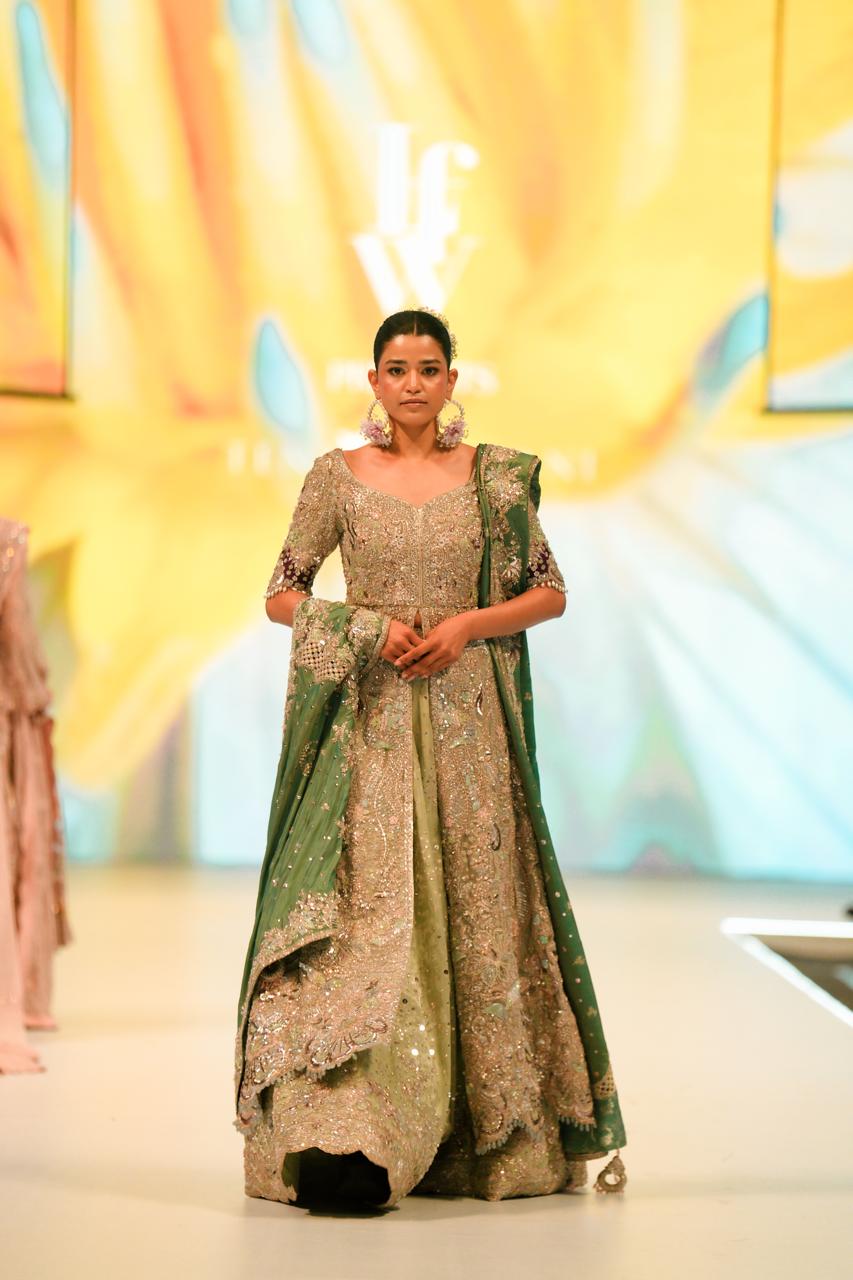
Having said this, one would have enjoyed the introduction of some new color ways and innovations in embroidery patterns. The collection was quite beautiful and could easily be worn as is, just as it was shown on the catwalk. This is understandable from a commerce point of view, especially considering LFW’s retail to runway format, but some tweaks in the styling, perhaps, could have added more oomph.
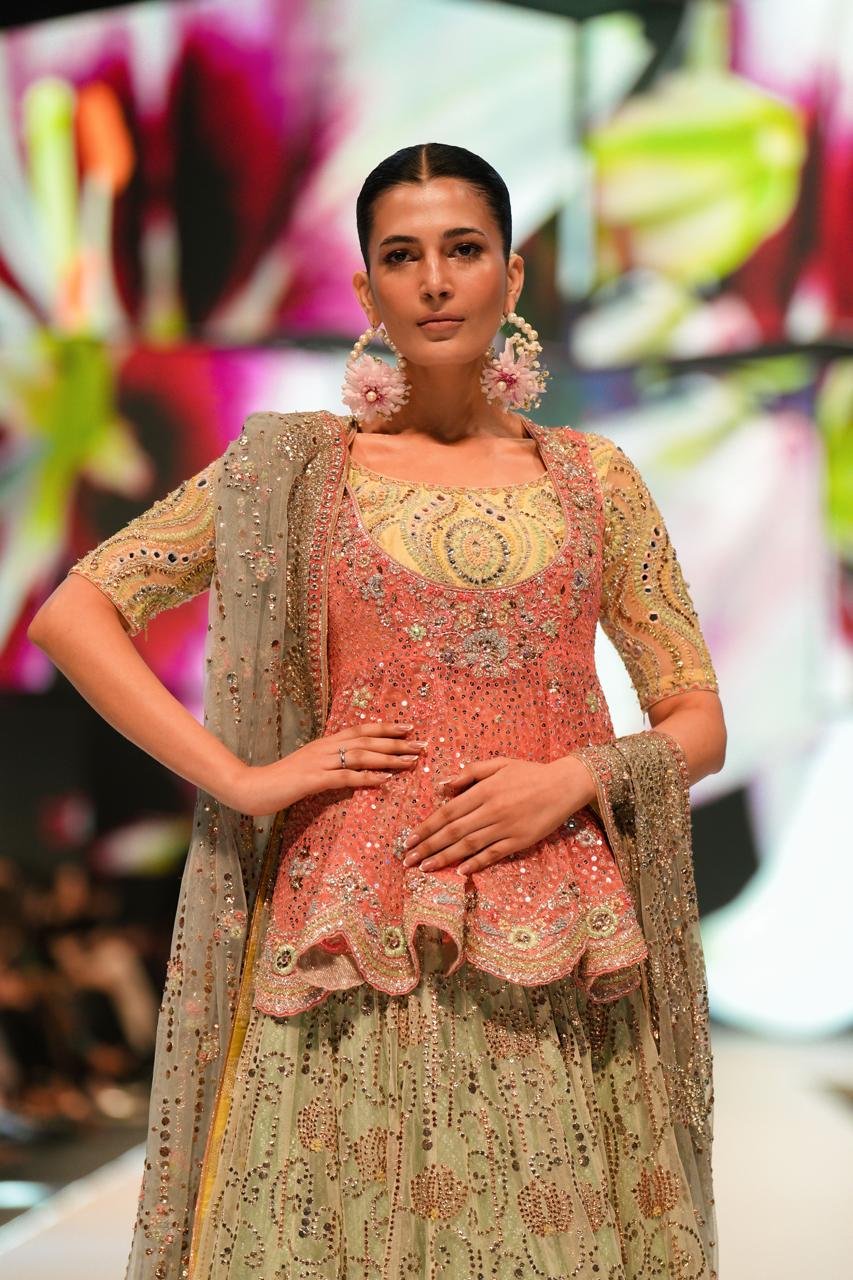
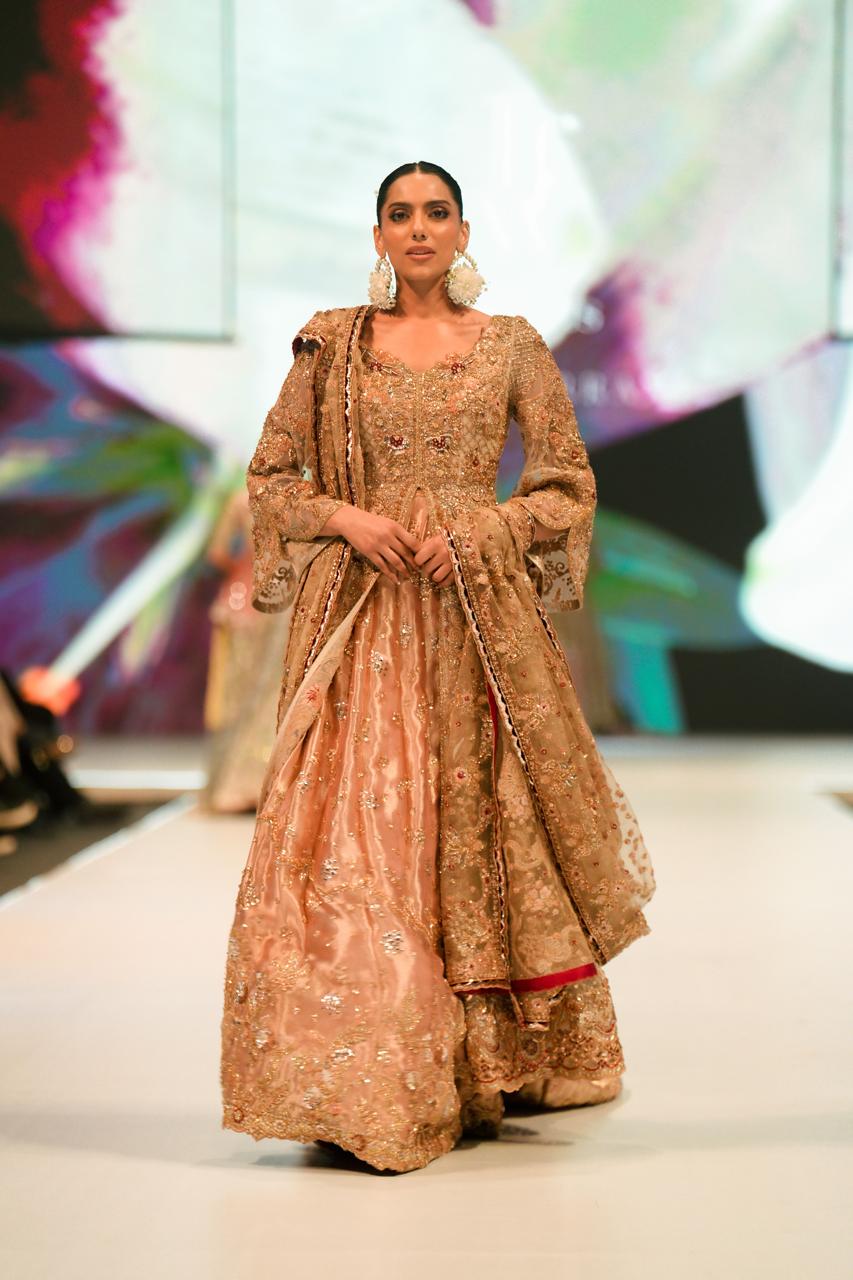
Next came Zainab Salman, with Antara. The bridal line was certainly pretty, fusing traditional elements with contemporary design, and dabbling with different cuts and structure. Traditional lehngas were followed by sequined jackets, elaborate ruffled skirts and fitted cholis. Again, it was all very viable, fitting right into LFW’s retail to runway ambitions. Experimentation with color, rather than the predominance of the usual pretty pastels, could have made things more interesting.
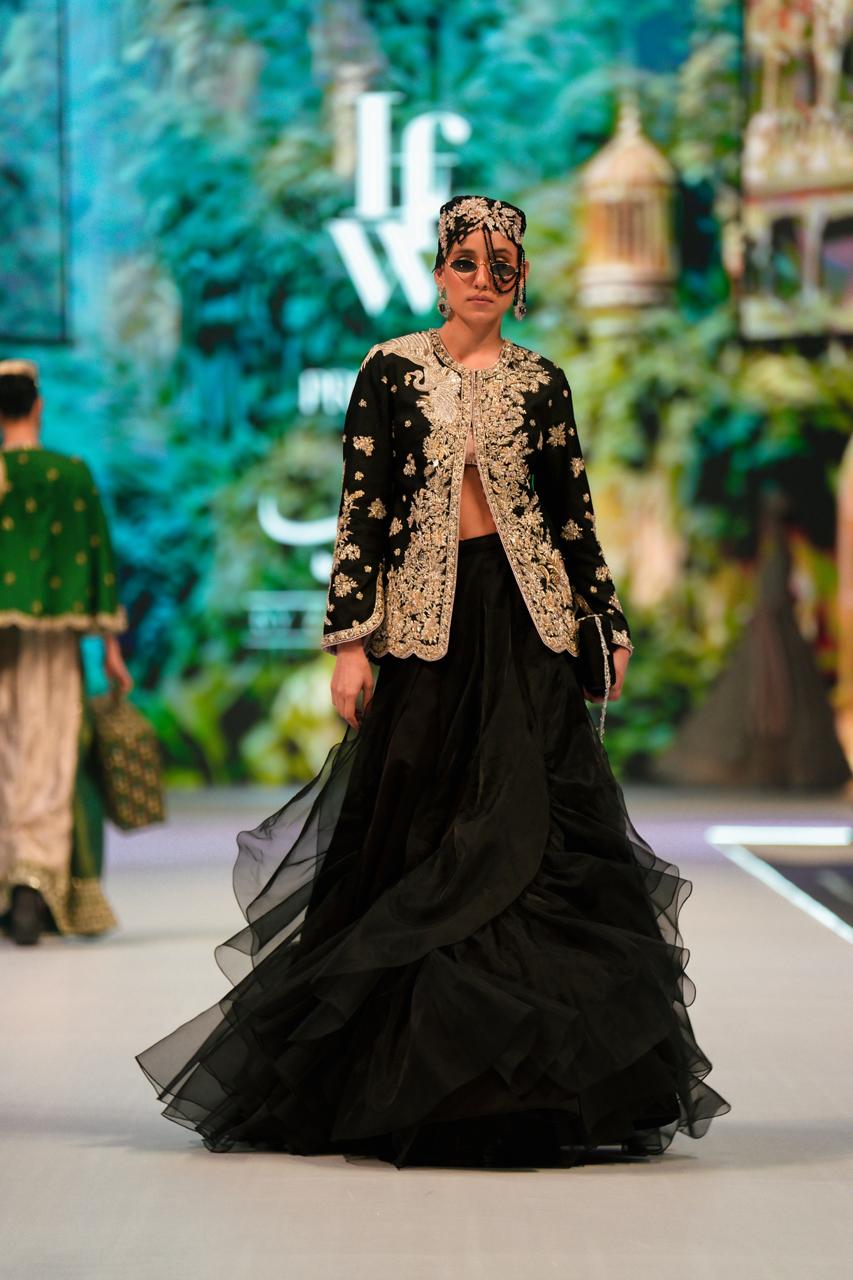
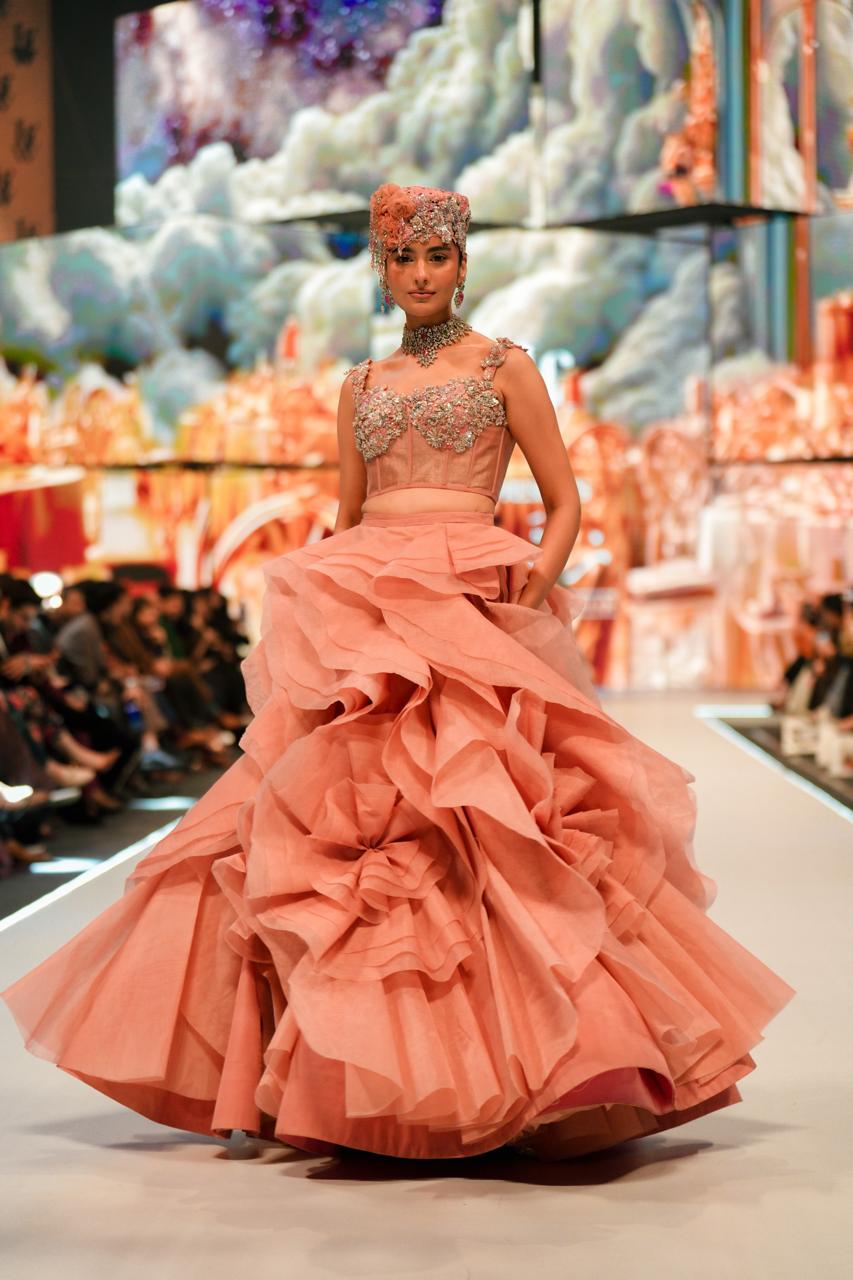
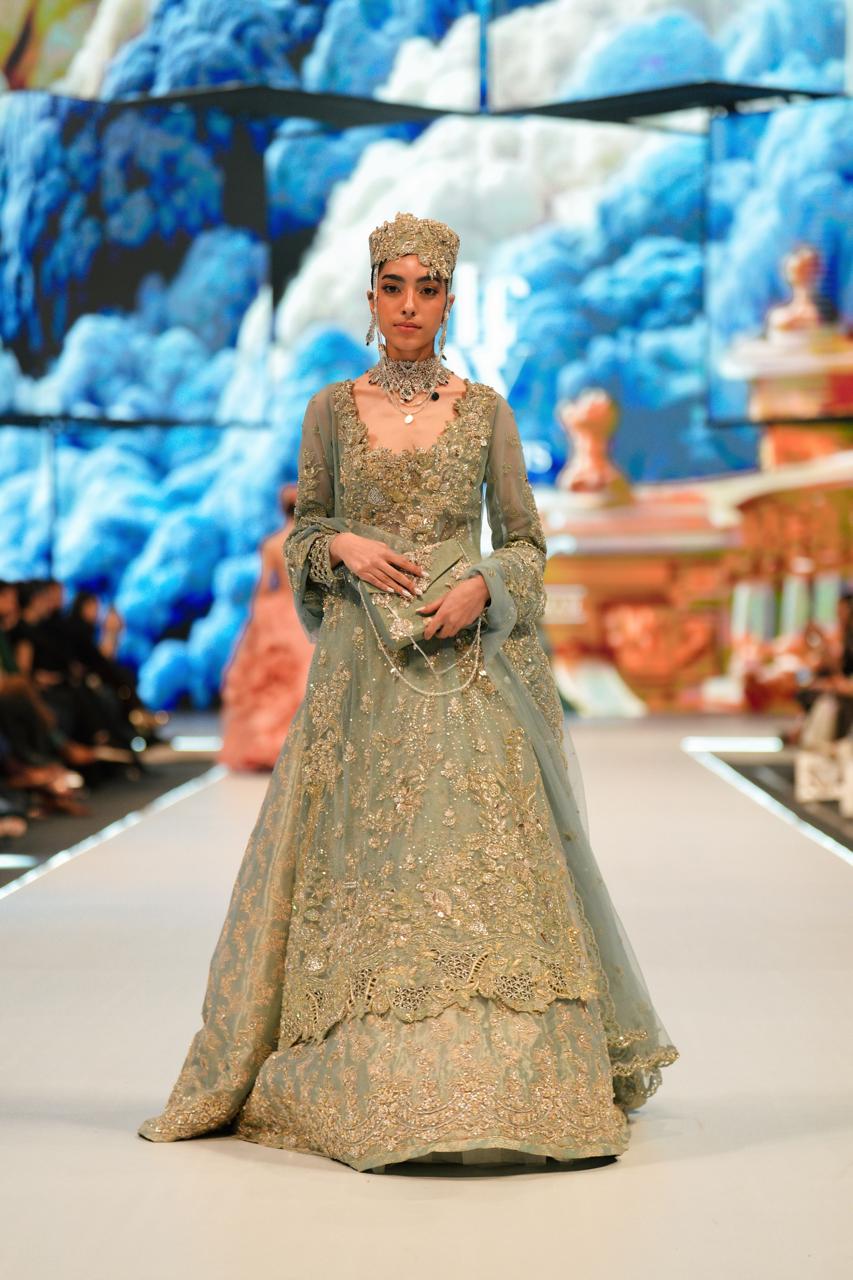
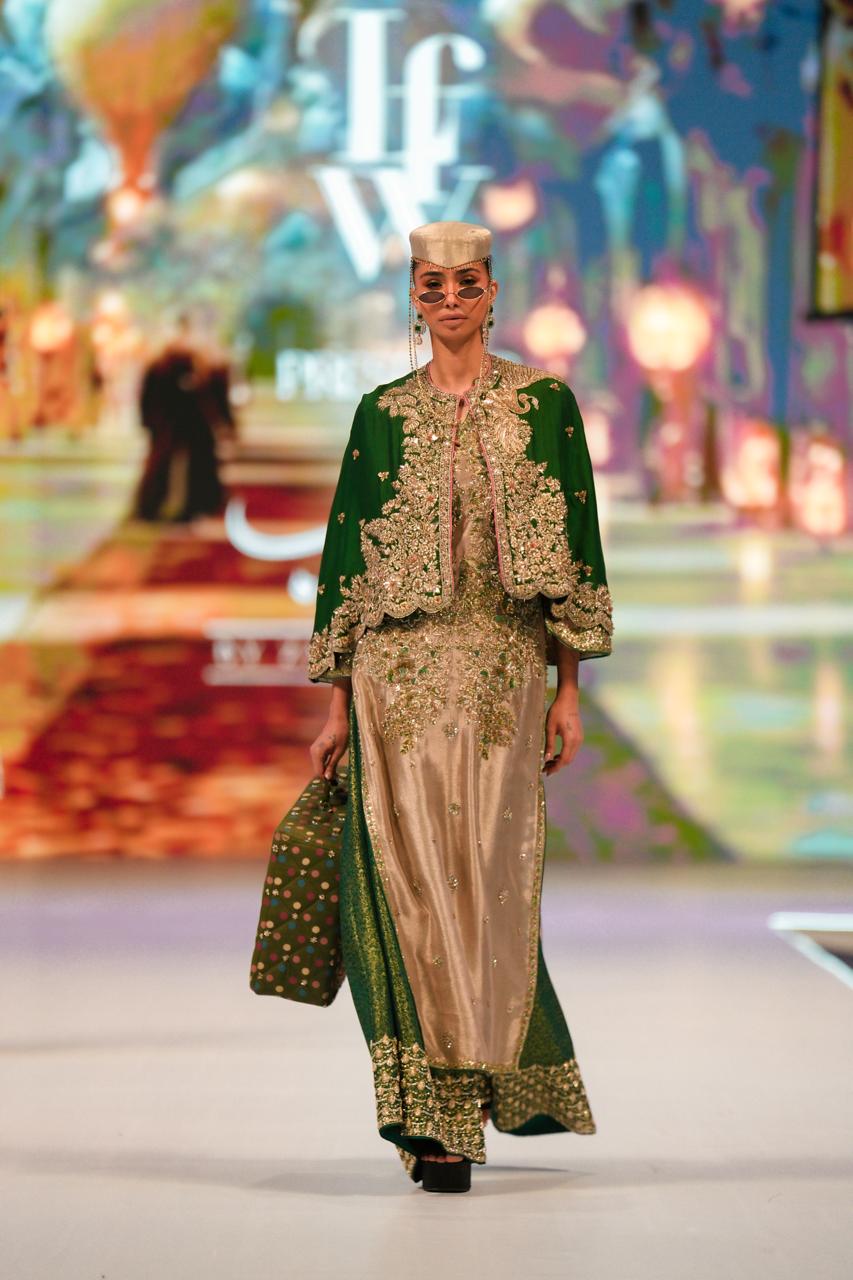
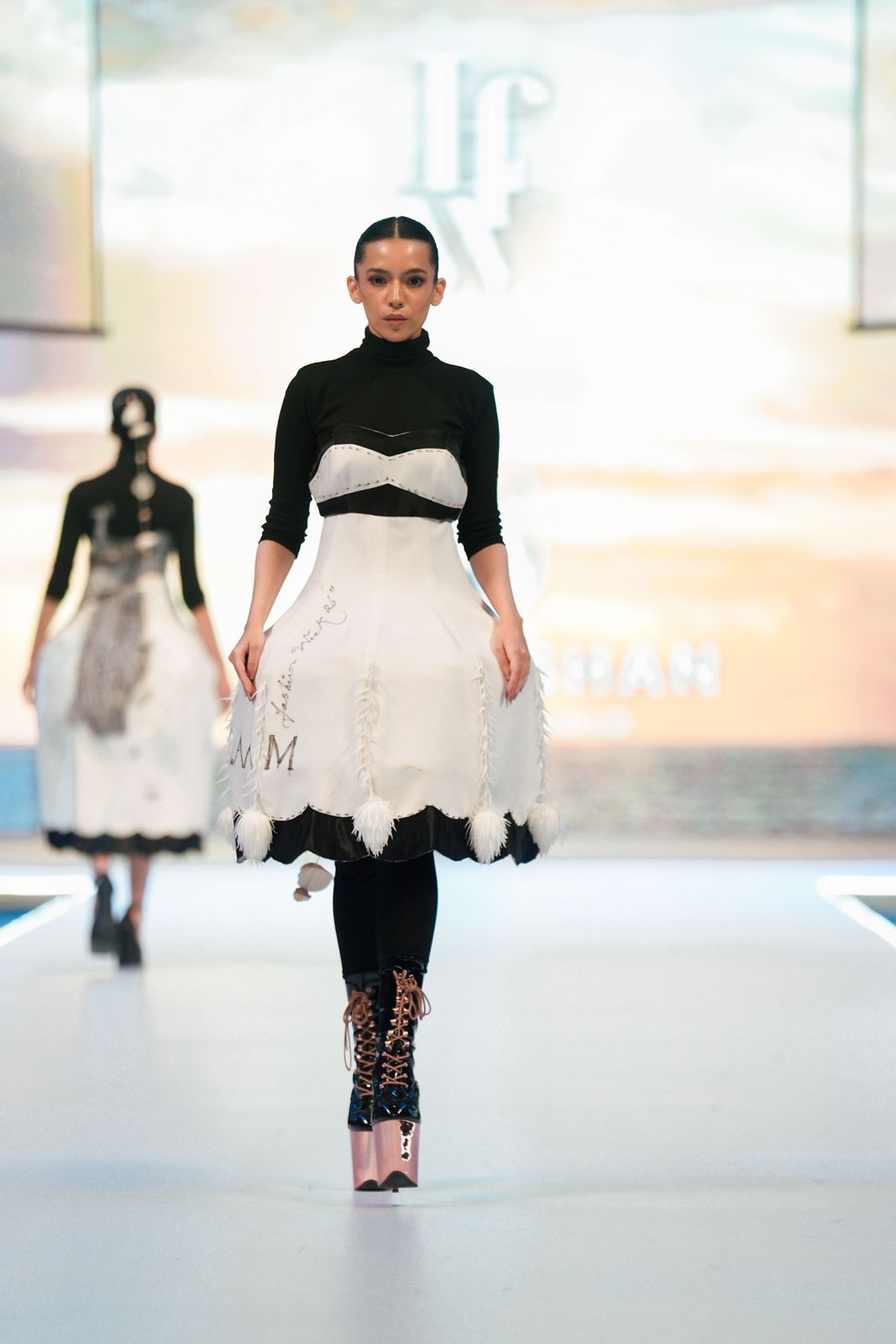
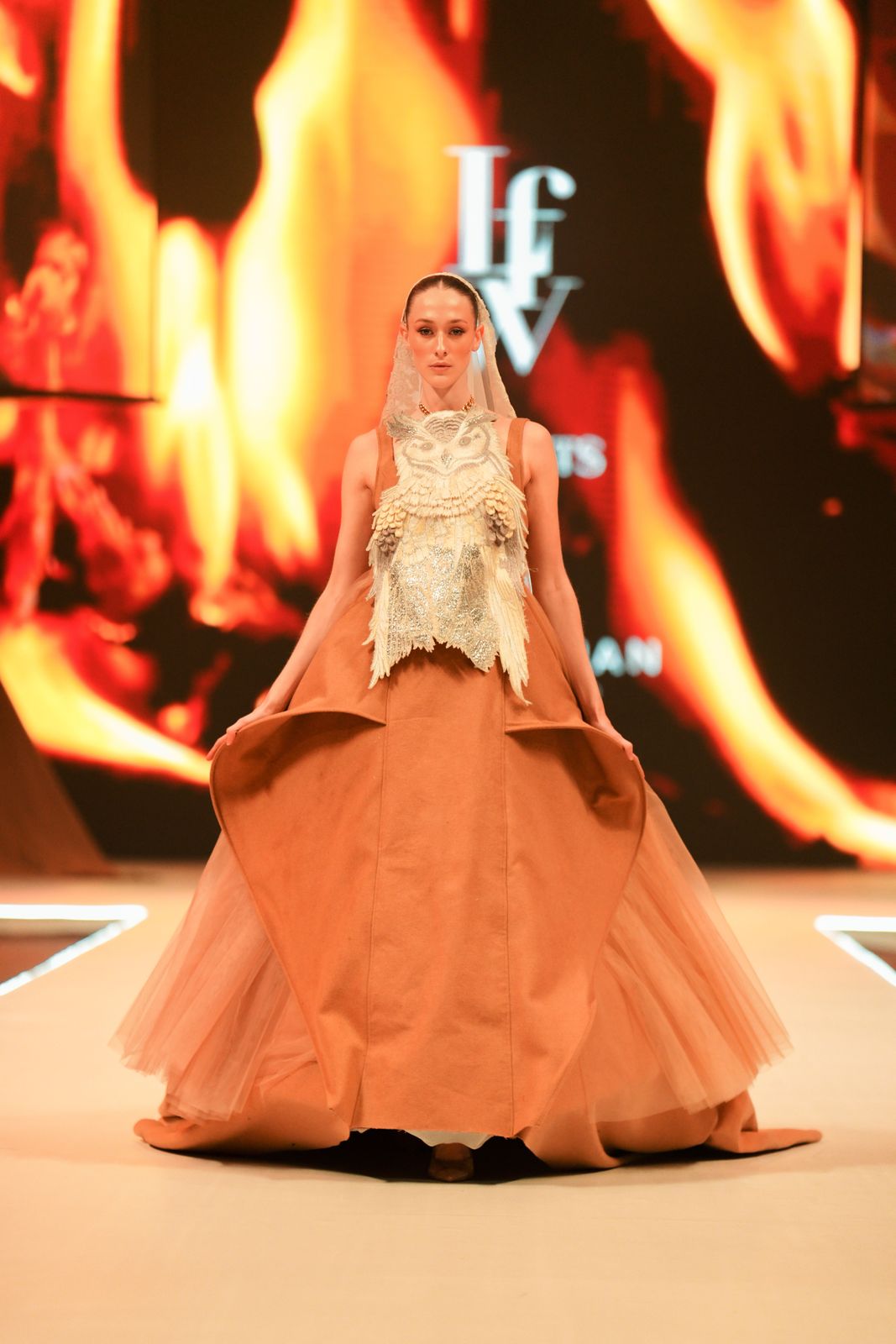
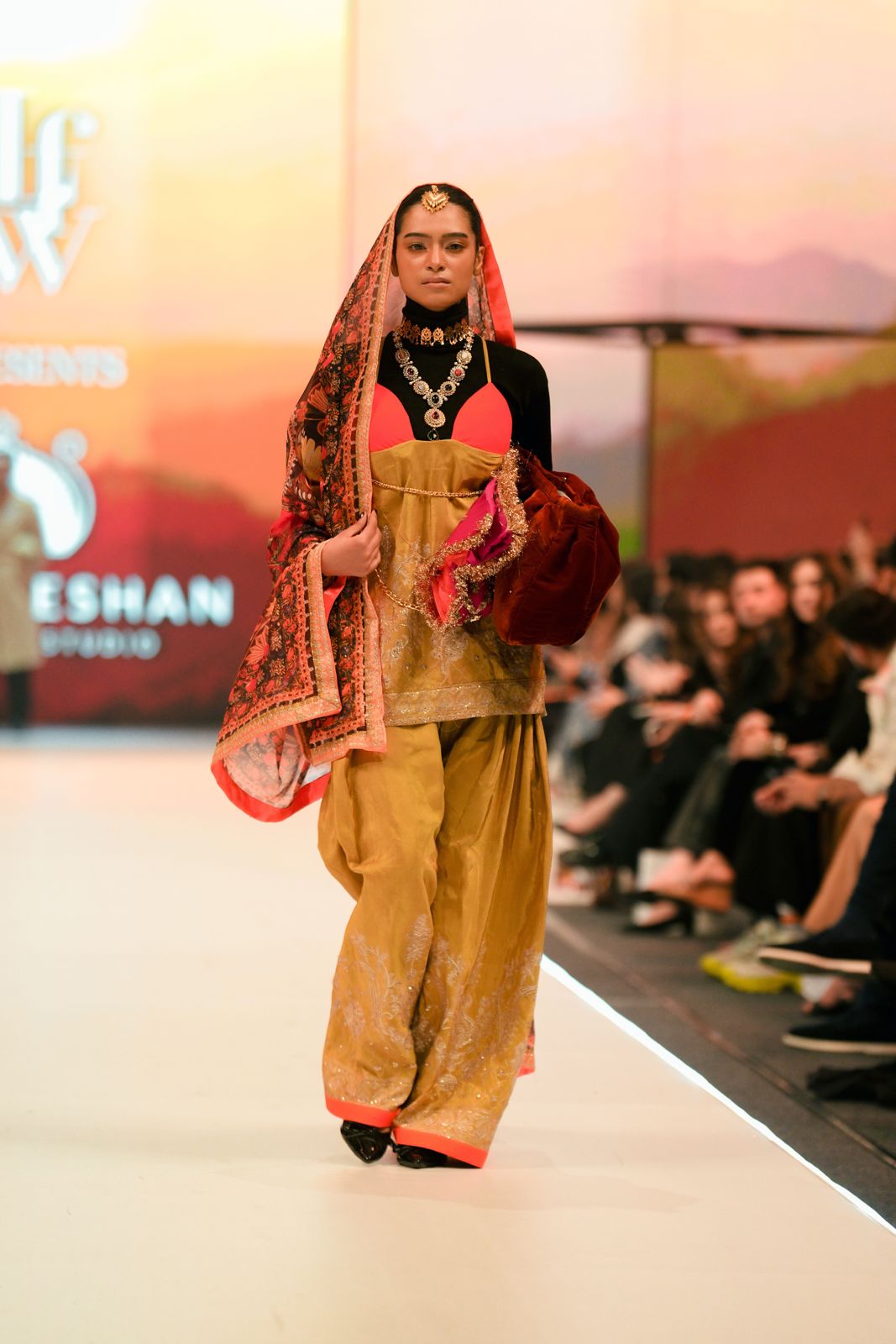
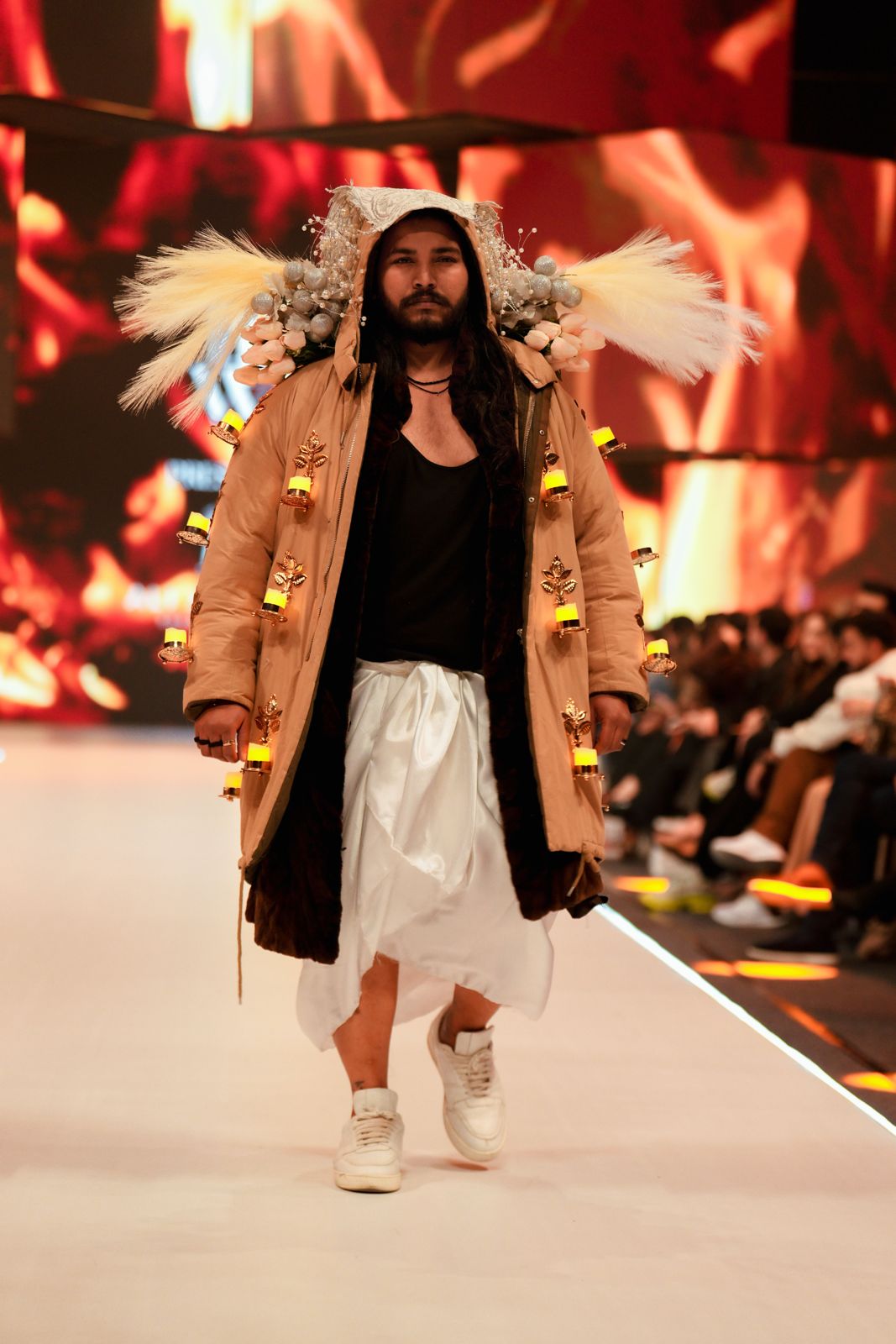
While on the topic of keeping things interesting, the next collection, Maqsad by Ali Xeeshan Theatre Studio, certainly wasn’t boring. Instead, it was mostly baffling, with elaborate symbolic pieces followed by traditional wedding-wear followed by more confusing costumery. The collection apparently represented the designer’s life and career but one wasn’t told how it managed to do so. It was left to the audience to peer at the catwalk, trying to solve this mystery.
What was the story behind the jacket, with artificial candles blinking all along its length and feather plumes protruding at the shoulders, paired with a black vest and a hybrid shalwar-shorts creation? Why was a model wearing a floor length gown, with a throw with the name of a resort embroidered on it, thrown across her shoulder? Why was the collection dominated by embellished owls, with feather added in here and there? What did the dresses in the beginning, reminiscent of the crinoline style from the early 19th century, tightly harnessing the body, represent?
Was the designer referring to being caged? Or liking owls or perhaps, leading a nocturnal life? Was he remember a hotel that he had once been to? It would be great if one knew the details.
The few wedding-wear designs in the collection were more fathomable. Ali Xeeshan has a signature take on color, bling and pattern that is a hit with his clientele. Some of the colorways were very pretty – the peach with silver and the ivory and gold, for instance. Neater silhouettes and embroideries would have definitely helped the collection.
While one appreciates Ali Xeeshan’s effort to always think out of the box, he is also now a senior designer with many years of work to his credit. One expects a certain finesse, a certain neatness, a certain innovation in design rather than just theatrics when watching his show. Also, one wants to understand the themes that he chooses to follow. The symbolism in his LFW collection should have been accompanied with a press release which elaborated on the details. Also, the lineup lacked cohesion, with the traditional wedding-wear simply strewn in between the off-the-wall statement pieces. What was the thought process? Will we ever know?
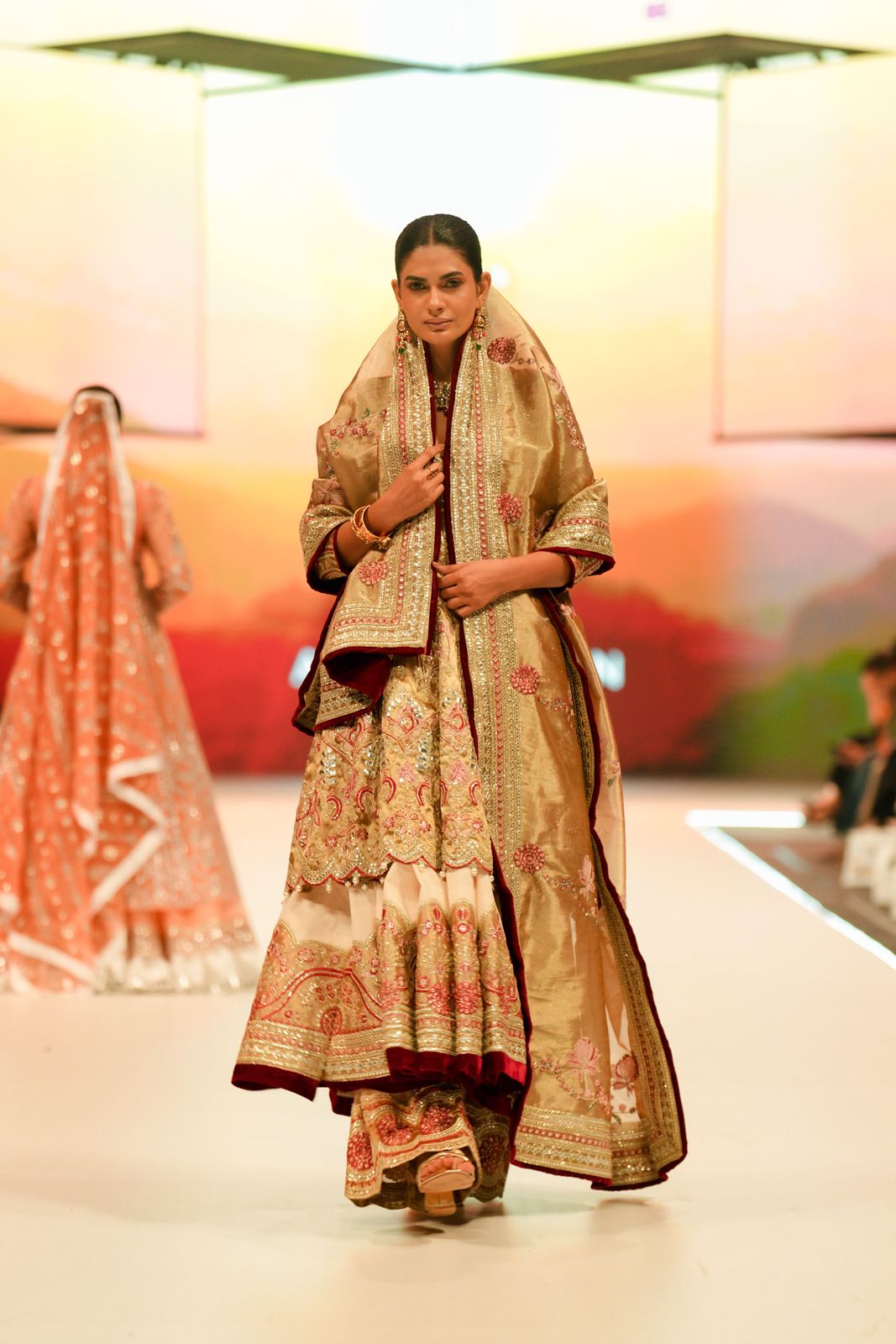
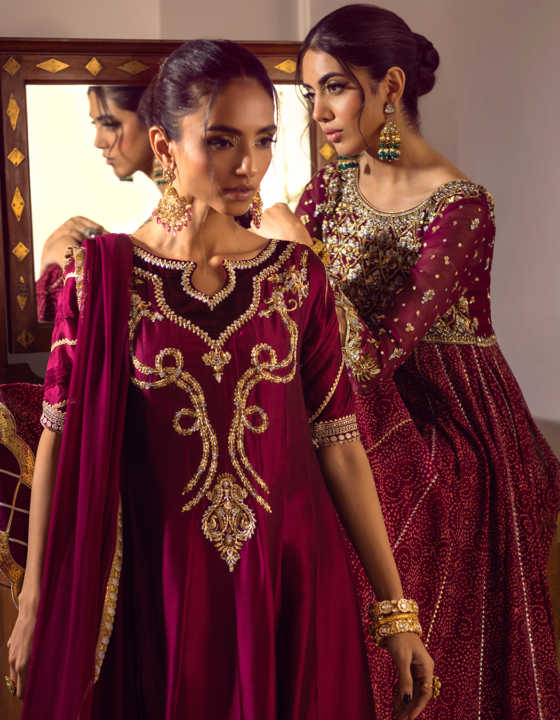
Moving on to the finale, Rizwan Beyg showcased Jashan, a collection that was testament to his artistry and expertise as one of Pakistan’s seniormost designers. In most shows, one hopes to see variations in color and silhouette but when a Rizwan Beyg lineup steps on to the catwalk, the embroideries and the tailoring take over. It is so sophisticated, so beautiful, so absolutely regal that you can imagine these clothes being worn by women in a royal court; the discerning begums, the sophisticated socialites, the ones who understand the timeless value of painstakingly created patterns on luxurious fine fabric.
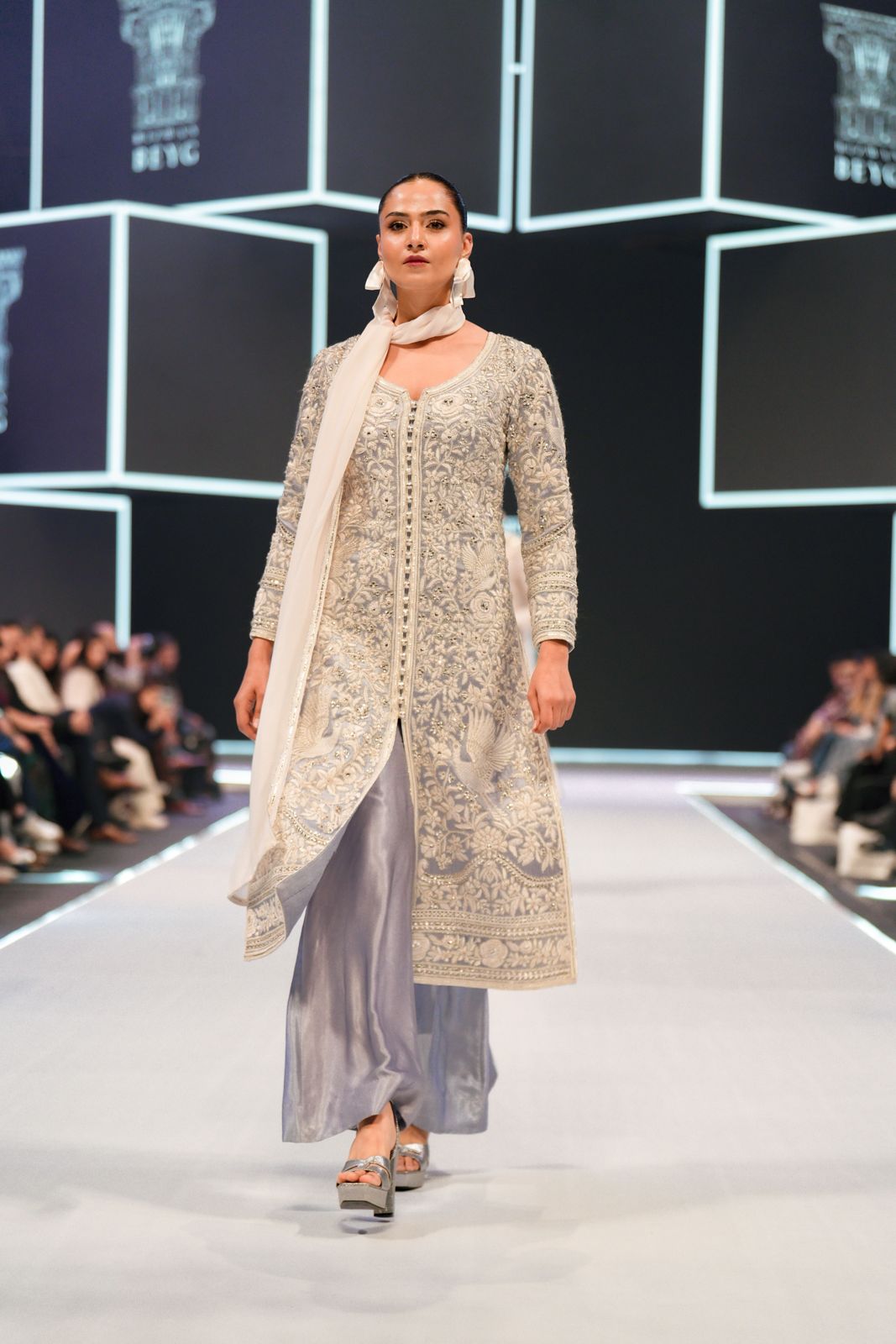
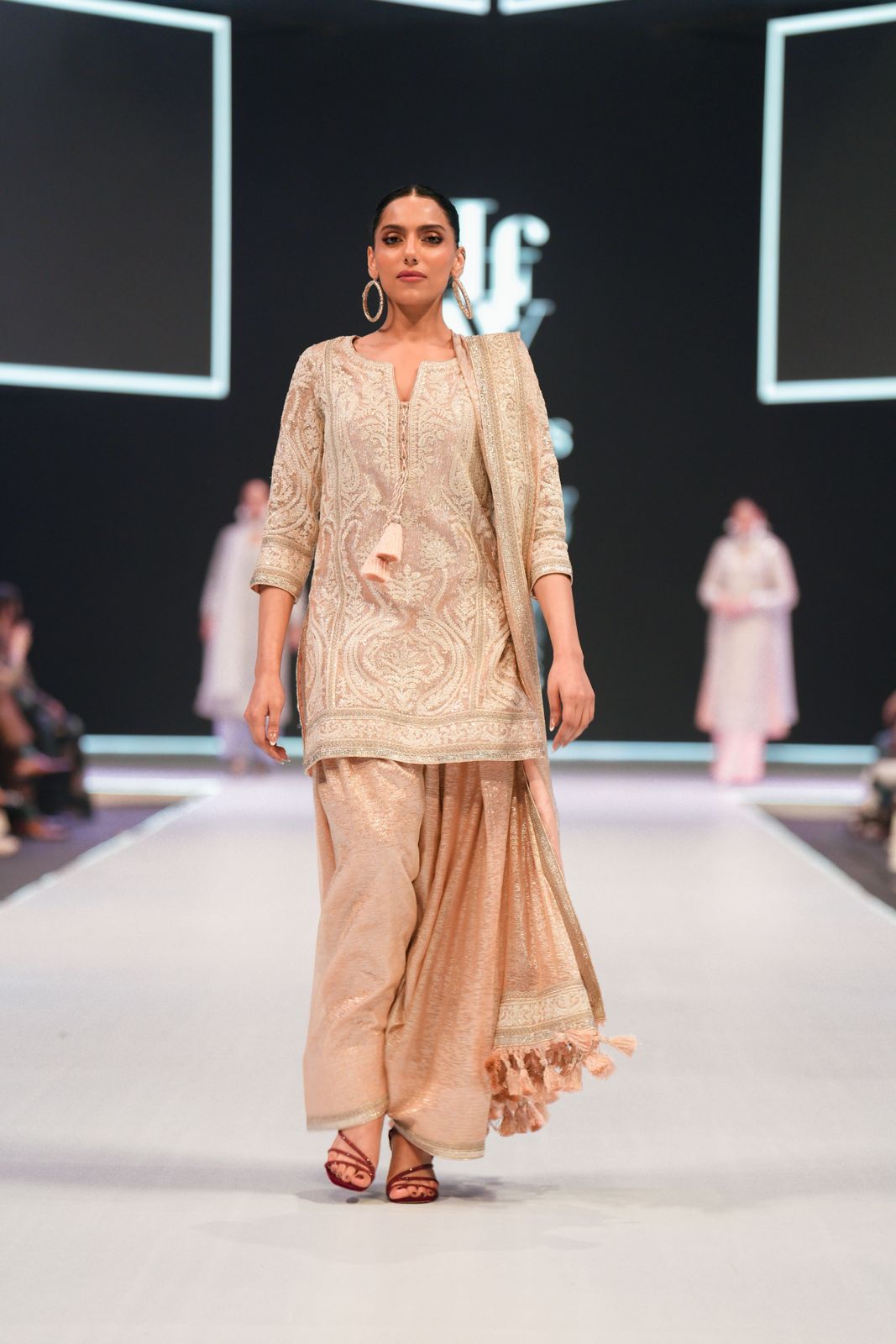
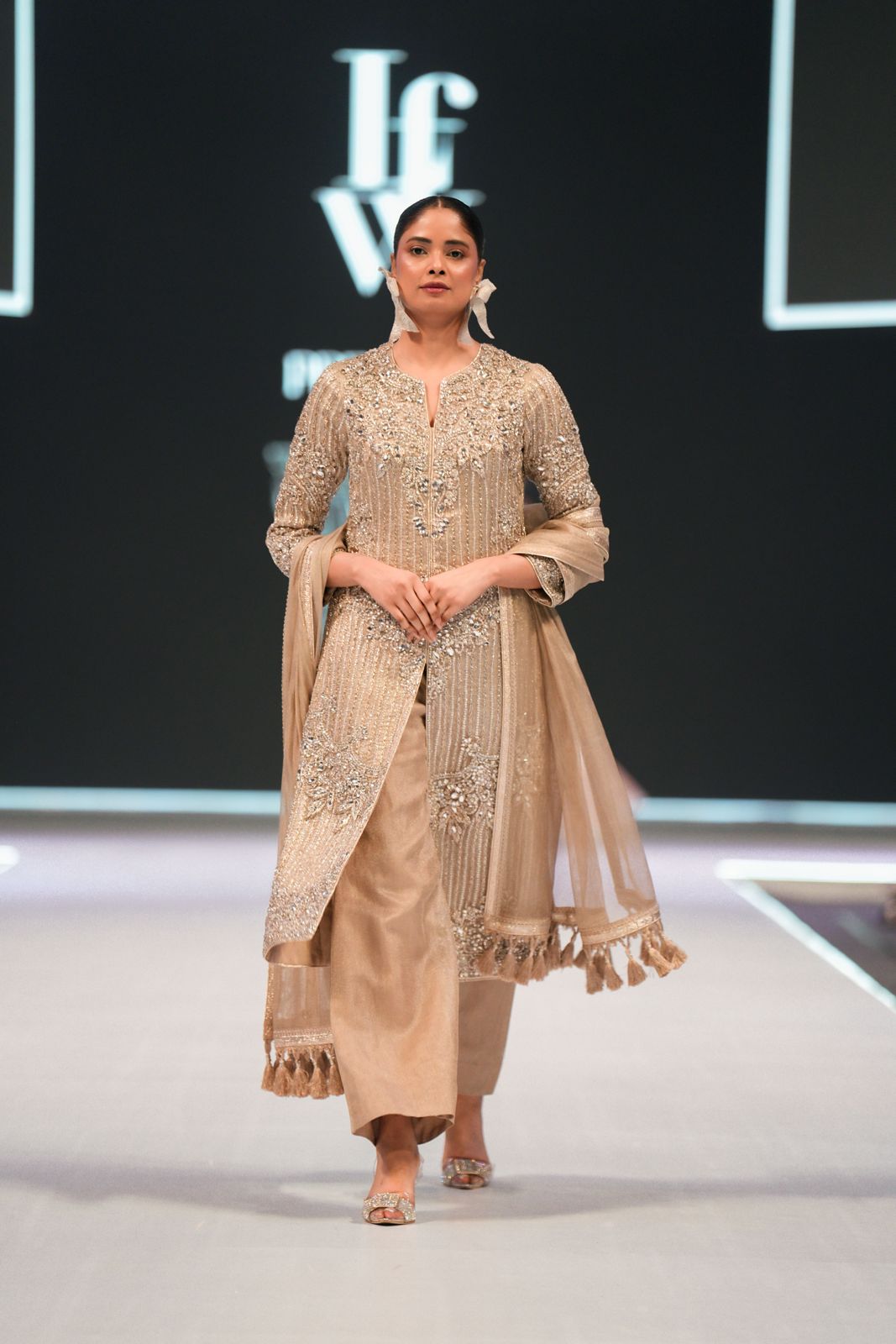
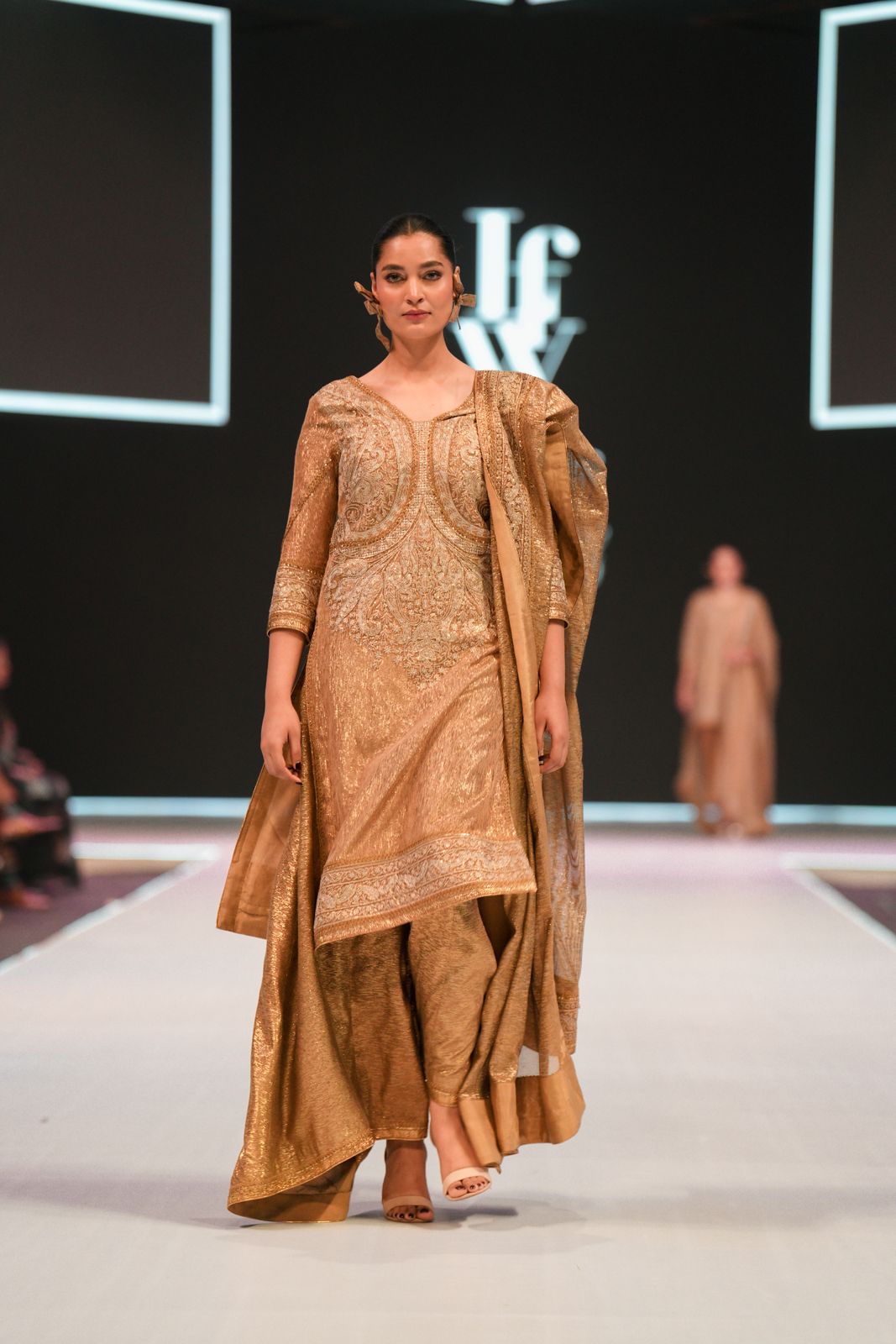
It is always eye-opening when one realizes that the intricate embroideries that are a Rizwan Beyg hallmark are created by female artisans in Southern Punjab, trained by the designer so that their indigenous skills have become fine-tuned. The paisleys, the Gara patterns, the trellises winding down the length of a shirt, the dainty florals interspersed with sequins were all classic Rizwan Beyg. The silhouettes were wearable, consisting of kurta shalwars, long column shirts and lehngas with the workmanship being at the forefront. Having said that, the collection could have been further accentuated with styling, perhaps more accessorizing and some bursts of bright color added in to the palette.
This finale show highlighted how, once a brand becomes seasoned, it is important for it to have a defined signature. It is necessary for a designer’s aesthetic to be recognizable as his or her own. Most designers do not understand this, creating outfits that may be beautiful but don’t stand out uniquely as their own.
Interestingly, the LED backdrop mentioned earlier dissolved into a basic black during the Rizwan Beyg show with just the label standing out in white. It goes to show that when design is distinctive, original and exquisite, you don’t need to rely on the spectacle of 3-D, tech-savvy, Cold Play concert-esque visuals.
The rest of the time you say, thank God for the backdrop.

What do you think?