







By Maliha Rehman
Critique is a tricky business. To be credible and respected, it is important to walk the fine line between being too politically correct and downright rude. An understanding of the art form being analyzed is considered necessary. And opinions should ideally be backed by examples and evidence.
Unfortunately, audiences tend to gravitate towards bashing. They want to see critics put down a project that they don’t like, ridicule it perhaps or use strong words against it. A show might feature an entire half an hour of balanced, respectfully worded critique and perhaps five minutes of heated comments and you can be quite sure that the latter will be viewed far more often than the former.
It’s no wonder then that people from the entertainment industry are often openly dismissive of critics. They don’t appreciate their projects and performances getting scrutinized and analyzed and the flaws getting pointed out in detail. On the other hand, this dislike is an inevitable burden that critics know that they have to bear. It’s certainly not fair but spurned egos and occasional angry outbursts have to be borne now and again, even if your opinion is an honest one.
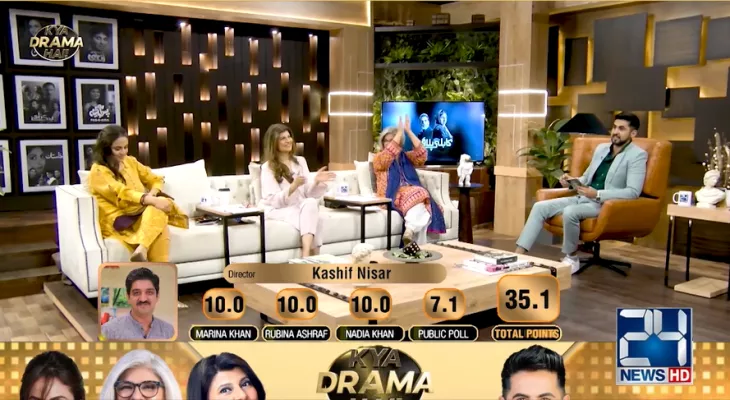
Matters can get a lot more convoluted, though, when people from the same fraternity start critiquing each other. A case in point is the show ‘Kya Drama Hai’, airing on 24 News, with its celebrity critics being its USP. A number of renowned stars have participated as ‘judges’ in the show, namely Marina Khan, Rubina Ashraf, Saqib Malik, Nadia Khan, Atiqa Odho, Faysal Quraishi, Nadia Jamil and Maria Wasti. In conversation with host Mukarram Kaleem, the celebrities dissect different dramas that are currently on air as well as sometimes, films. Actors’ performances, plot twists and specific scenes may get discussed in detail, with the guests rating different performances and making jibes should they feel the inclination. Clips from the show have often made for viral fodder on social media, reshared on Instagram and Facebook rampantly.
The show’s makers and its participants are probably quite happy about this. There are others, who are not. While getting interviewed live in a morning show on Samaa TV, veteran actor Behroze Sabzwari stated in a clip that has now gone viral: “It takes a lot of hard work to make dramas and there is this channel where a few women sit and discuss dramas, including some of our friends … I apologize to that channel and those women but who are they to judge that something should have been like this or that? This is unfair, because they even know how much hard work goes into the making of dramas …”
Senior actor Khaled Anam, also present in the show, added, “… If someone else had said it, who does not know the ways of this industry, we would have felt strange … but these are people who also come to drama sets and work there … they know of the tensions associated with the job … they can criticize but it needs to be constructive …”
Particularly referring to ex-morning show host Nadia Khan, who is one of the judges in the show, Behroze continued, “She was a major morning show anchor … she would always be humiliating her guests …” He added, “Rubina Ashraf and Marina Khan have been doing great work … but they are humiliating their own fraternity, the same fraternity from which they gain fame and recognition …”
These opinions are not altogether new ones. Time and again, actors have spoken off-the-record about whether it is ethical for working members of the fraternity to take the guise of critics and judge the work of their peers. This was the first time, though, that the opinion was stated out loud, on live TV. Behroze Sabzwari’s strong stance on it was particularly surprising since it is no secret that the actor has a close friendship with Marina Khan and Rubina Ashraf, who are both currently sitting as judges in ‘Kya Drama Hai’.
“Yes, they are like family to me,” Behroze agreed, when I questioned him about this, “but even when something goes wrong in a family, you have to point it out. I find it degrading that this channel is making fun of our artists and so are the people who agree to be judges on it. Before we start pointing fingers towards others, we need to look towards ourselves. Also, we are known for our dramas all over the world and just for the sake of money and fame, Rubina, Marina and Nadia have agreed to come to this platform. There are some points where one needs to draw the line. Rubina and Marina are very close to me, but I stand by my opinion in this conflict.”

There are other actors who have similar opinions. Veteran actor Adnan Siddiqui says, “As actors, our primary focus should be on acting. Critiquing our work is best left to the audience and critics who analyze it. Engaging in public criticism of fellow actors on talk shows or elsewhere is in poor taste and exposes our own insecurities. If you can’t appreciate someone else’s work, at least don’t do the disservice of putting it down publicly. Where’s the solidarity that is the cornerstone of any fraternity?”
Actor Saba Faisal, a popular choice in multiple dramas, says, “I quickly scroll down on Instagram every time a clip from that show comes up. This fraternity is like our home. There might be troubles in it but we can’t put them out in public. We cannot show disunity in front of the masses and that’s what a show like this manages to do.”
“Who is Nadia Khan anyway?” Saba adds. “What does she know about the various aspects of acting or direction? The rest of the judges are still working in this industry. How can they judge it? I have never watched this show. It would pain me to watch it.”
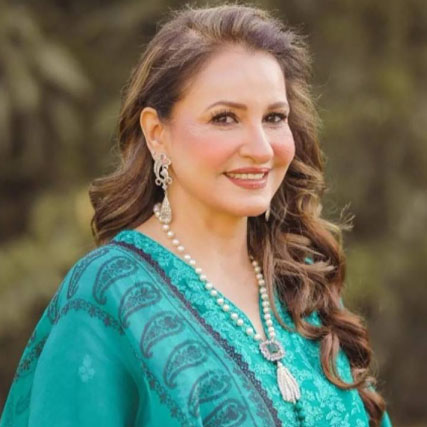
Ahsan Khan, whose consistent repertoire of work has ensured that he has encountered plenty of reviews all through his career, says, “I think that positive, constructive criticism is essential to any field and can help in its betterment. However, if a line is crossed, the criticism can end up being offensive and disrespectful. It can lead to unnecessary mental stress. As it is, we live in times when social media opinions can be very hurtful and cause distress. Critics, especially those belonging to the same fraternity, need to be more sensitive towards their peers.”
He continues, “Colleagues may sometimes have personal conflicts with each other but these don’t need to be made public knowledge. They certainly can’t make fun of each other. As actors, our expectations from outsiders are different. But when someone from amongst us decides to become a critic, we expect them to speak from a different perspective. Also, everyone follows different schools of thought in acting. It varies from person to person. The judges in the show end up being too personal in their comments. Their opinions end up losing credibility when they do so.”

Naumaan Ijaz, one of Pakistan’s finest performers, also thinks that members of the same fraternity can’t act as critics. “It’s a tricky question but all I want to ask these people is that since they work in the same industry, do they have the courage to challenge the writer or the director or the channel during a shoot? Can they point out problems in the story and make sure that they get corrected? If they, as established members of the industry, can’t do this, why do they think that younger actors can? How can they sit and critique actors who they know don’t come from any acting academy and are learning from experience? If they have to blame anyone, they should discuss the work done by content creators, writers and directors and the channels that insist on producing such stories.”
“As members of the fraternity, I expect them to have this understanding. They face the same difficulties so if they have decided to become critics now, they need to speak with a lot of responsibility.”
He adds, “Also, as actors, whatever they are doing in this program, they are being paid for it. They are being paid to criticize and as negativity sells in Pakistan, they are basically being paid to humiliate their own fraternity. It’s up to them. The industry shouldn’t be bothered.”
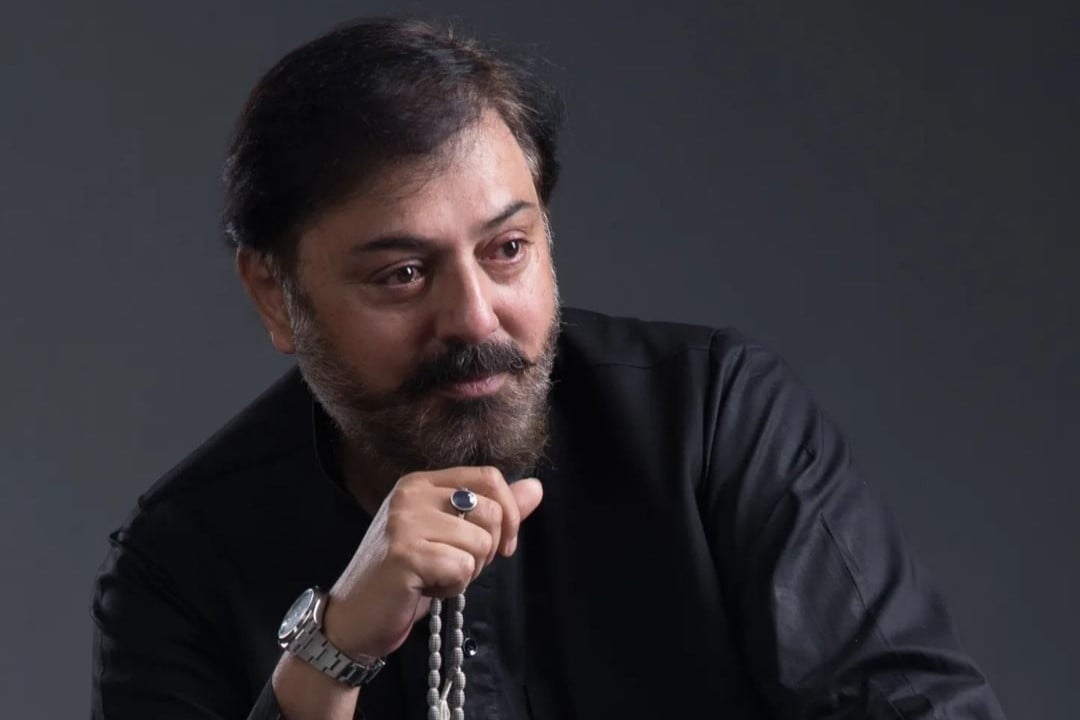
Actor Bushra Ansari has a slightly different stance: “I think there is a positive aspect to a show like this. At least the people discussing and critiquing know the craft. They have all been associated with the field for years. They have relevance, knowhow and years of experience in the fields of performing, directing and content-creation. They aren’t random observers who decided to become critics without any knowledge.”
“Having said that, I am still a part of the industry. I am still working in dramas, even being part of saas-bahu stories where there may be slapping about. I don’t agree with violence shown on TV but sometimes, I don’t have a choice but to be part of such scripts. Nevertheless, I understand my work and know that I can critique. I won’t do so, though, because I am still working. The makers of this show, in fact, approached me several times but I felt that it wouldn’t be fair since I haven’t retired.”
She adds, “It’s up to the stars who decide to become part of the show. I feel that whatever they say is right but perhaps they should mellow down and talk in less aggressive ways. They know how the industry works and so, when they talk aggressively, a lot of people may take offence and feel hurt.”

The other side to the story
At the other end of the spectrum, I got in touch with some of the actors who have opted to be part of the show as judges. Their opinions are markedly different. Actor Faysal Quraishi, for instance, who acted as judge in 12 episodes, talks about how his focus was always on discussing technicalities. “My focus was always on talking about the play, the characters, about specific scenes. I didn’t judge actors but certainly judged if a character hadn’t been developed well. I would point out basic flaws like handing plastic, very obviously fake guns to someone pretending to be a killer. And I would watch eight to 10 dramas in detail, without skipping scenes, in order to discuss them with complete honesty”.
“I would also particularly make sure not to make fun of newcomers. Some of my co-judges did do so but I feel that we need to give space to newcomers and allow them to learn, just like we learnt on the job when we were new.”
“Still, I eventually opted out of being part of the show. For one, a drama of mine tends to air every quarter and I had to stay quiet in the segments where it was being analyzed, with a guest judge taking my place. Also, I couldn’t continue to take out the time to watch so many dramas on a regular basis. More importantly, when I had come on board as a judge, the intention had been to offer constructive opinions that could help improve the quality of productions. I felt, though, that the makers were now emphasizing more on controversial things that some of the judges would say and sensationalize them in order to gain more mileage. I didn’t agree with that.”
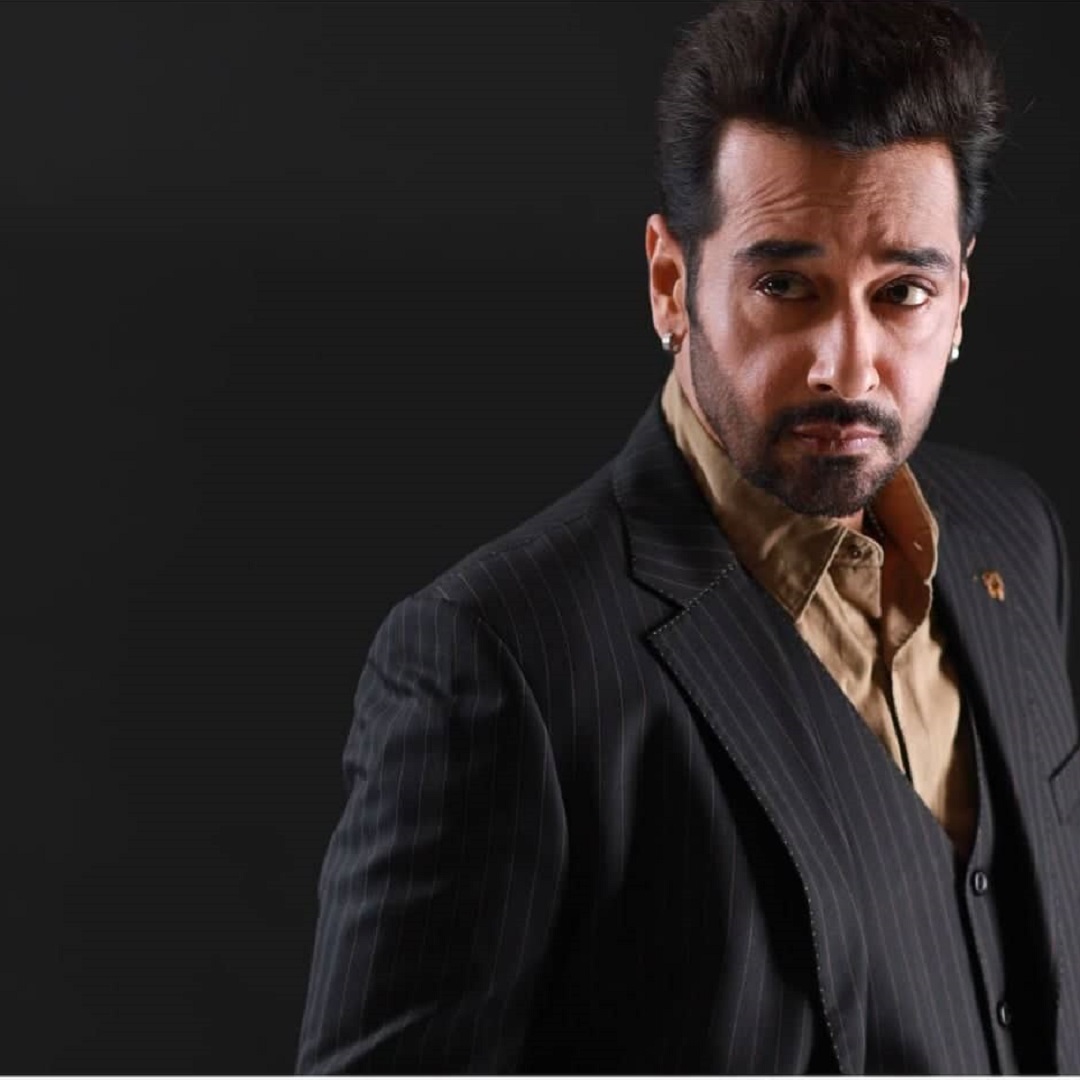
Maria Wasti, another former judge of ‘Kya Drama Hai’ says, “If something is released out in the open, then the makers need to be ready for critique. Having said that, who could critique the work better than someone who knows the craft? A cobbler or a dentist can’t talk to us about our work. We all have to strive to improve our field by pinpointing the good, the bad and the ugly. But the problem with us is that even before a full sentence is uttered, we take a stand against it. There are no discussions, only arguments.”
“As a judge in the show, I brought my 25 years of experience with me and the other judges similarly have been very knowledgeable. Also, we didn’t just randomly come on the show and pass judgements. For hours every week, we would take out time from our work schedules and religiously watch eight to 10 dramas. We researched, we took notes, we made sure we noticed the small details before we came on the show and made our comments.”
She continues, “A lot of times, the details that we have pointed out have been more perceptive compared to those that perhaps a journalist or a random social media commentator would observe. For instance, I know the working styles of different directors and so, I could say with complete surety if I didn’t see a director’s personal touch in one of his or her projects. I could talk about jumps in continuity and fluctuations in lighting with the knowledge of someone who is well-versed with the workings and the pressures that are part of shooting a drama. When I say that there is a loophole, it really will be there and I will explain why I have said what I said. Also, I have never judged a drama on the basis of how highly rated it is. My comments are based purely on merit.”
“And everyone is entitled to free speech. In fact, as an actor myself, I would welcome any comments, criticism or words of advice extended to me by my own community. It is for our betterment, after all.”
“The only reason why I stepped away from being a judge in the show was because it took up too much of my time. I could no longer spend hours and hours every week watching dramas in detail. Otherwise, I think that I tried my best to offer constructive criticism.”

Atiqa Odho, who was featured as a judge in Kya Drama Hai’s very first season – and chose to leave because her work schedule had gotten too hectic to allow her to watch the many dramas reviewed in the show – says, “This show is a by-product of the industry. When it was pitched to me, I felt that it was a great idea. Our work is judged frequently by people who are not part of the fraternity. As professionals working within the industry, we have knowledge regarding so many different aspects. We are on set every day, we are well aware of the behind the scenes problems and we could observe what was happening and give suggestions that could lead to improvements.”
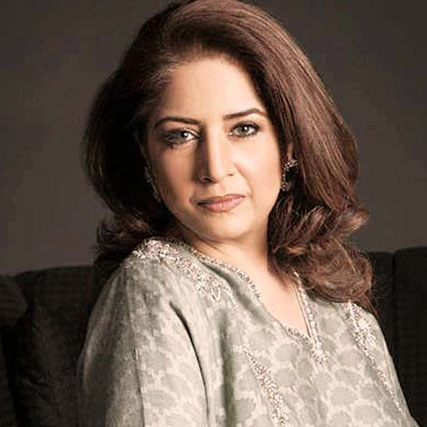
“While I was judge, my aim was never to criticize. I would never want to demoralize people who work hard from morning till evening or disparage an industry which generates jobs for so many. I would always clarify that my critique was based on my personal opinion and of course, opinions vary from person to person. I would discuss technicalities, plagiarism, ways of improving the content and how we need to make sure that we don’t dumb-ify the viewer with stories that don’t make sense.”
She adds, “Perhaps actors have reacted in such a sensitive way because this show is the first of its kind. But I, as an actor, have been criticized too. A drama that I acted in was also discussed in the show and flaws were pointed out, many of which I agreed with. Unknown people on social media can get so nasty. On the other hand, this is a show where members of your own fraternity are sitting together and raising issues that can lead to betterment.”
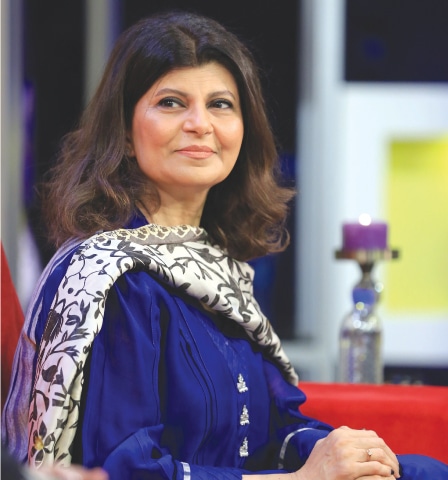
Rubina Ashraf, who continues to judge ‘Kya Drama Hai’ firmly believes, “Everyone has a right to agree or disagree with us just like we have a right to be part of this show and state our opinions. I have come on board this show because I felt that it was the need of the time. As professionals who have been working in the industry for many years, we know the ins and outs and the pressures involved. And while we understand that dramas are made with great difficulty, we still feel that it is necessary to point out flaws as well as acknowledge the good that is done. My intention is always to make improvements and I critique with a lot of responsibility despite knowing that some of the people I am talking about may take offence and I may meet them the very next day while at work.”
“All the judges come into the show after doing detailed research. We don’t influence each other in supporting one project or the other but we do share pointers and correct each other if we feel the need, on the spot, while we are filming. A lot of times I get calls later from writers, directors, actors who don’t agree with my opinion. If I feel that I have made an error, I correct myself the next time around and if I feel that they have made mistakes, I have discussions with them. It’s that simple.”
She concludes, “I am not on the payroll of any channel which may prompt me to support certain projects. I am being paid a fixed amount for being part of the show and so, I am not depending on sensationalism in order to earn from YouTube views. My opinions are sincere. The fact is, as a nation, we find it difficult to accept criticism. But people need to recognize genuine constructive criticism, based on the observation of professionals who understand the industry.”
It’s an ongoing debate that could go on and on. Can working members of the fraternity critique their peers? Can their peers consider this critique to be honest and not wonder if there are personal agendas or rivalries at play?
More importantly, is there a fine line that shouldn’t be crossed by critics, so that the focus remains on genuine feedback rather than ridicule? There are certain judges in Kya Drama Hai who may offer balanced opinions but there have been certain others who don’t see any issue with being harsh, making bold declarations and cracking jokes at the expense of actors or productions. Perhaps it is these particular judges that have actually prompted artists to take offence at the show.
Perhaps while taking on the responsibility of critiquing dramas and films and aiming towards improving the industry overall, the makers of Kya Drama Hai also needs to set certain standards regarding their own content.









What do you think?