



By Maliha Rehman
Mannat Murad, helmed by producers Abdullah Kadwani and Asad Qureshi and directed by Syed Wajahat Hussain, came to an end this week with a feel-good happy ending.
But perhaps this was one drama where we weren’t rooting for a happily ever after as we watched it. Starring Talha Chahour and Iqra Aziz as the main leads, Mannat Murad may have initially given off the illusion of being a sweet romance but the story very quickly proceeded to become a very tense, difficult watch. This wasn’t a story about a girl and a boy in love – it was a clash of wills between them and their families. The focus was on Murad’s possessive mother and sisters and how they could not accept his newly married wife. It shed light on Mannat’s over-protective elder brother and how he could not bear to see her struggling through the difficulties in her early married life. It showed a husband torn in a tug of war between his family and his newly-wed wife and unable to strike a balance between the two.
There were toxic elements and scenes that frustrated, especially since many of them seemed to be true.
Perhaps many women watching the drama saw their mothers-in-law or sisters-in-law mirrored in the behavior of Murad’s family. Perhaps many older women were antagonized by the new daughter-in-law Mannat’s forthright manner immediately following her marriage. It was all so sad but the audience kept watching because the story hit at the heart.
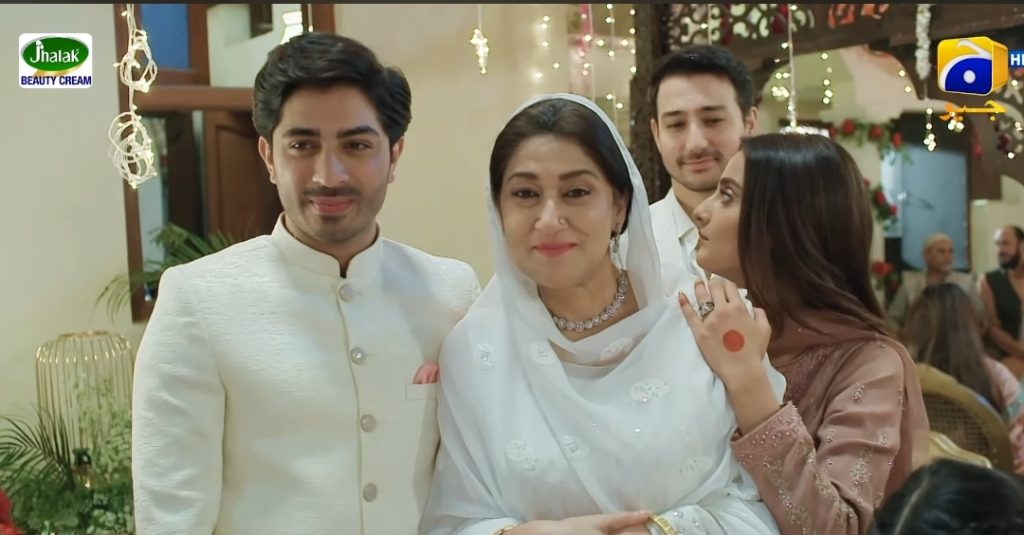
Also, very true was how the spineless Murad behaved. He lied, he cried, he made excuses. If he brought flowers home for his wife, he had to hide them in a paper bag. If he had to stay the night at his in-laws, he had to make it look as if he was at the hospital, making up a story that his friend had met an accident.
And then, pushed to the point of weariness, he became the poster boy for red flags; shouting at his wife, slapping her, telling her to respect him because he is her husband, huffing and puffing and proclaiming himself to be her ‘majazi khuda’ (next to God).
Ultimately, Murad and his family saw sense but after so many painful scenes, many in the audience – including myself – had lost patience for them. How could these people, who had been so cruel, be expected to do justice to Mannat now? Were happy endings only ones where the hero and the heroine got back together? Couldn’t a more true-to-life conclusion have been reached, where the wife washes her hands off a difficult marriage and eventually move towards a more peaceful, sane future with the other man in the scenario, the squeaky-clean, urbane Hammad?
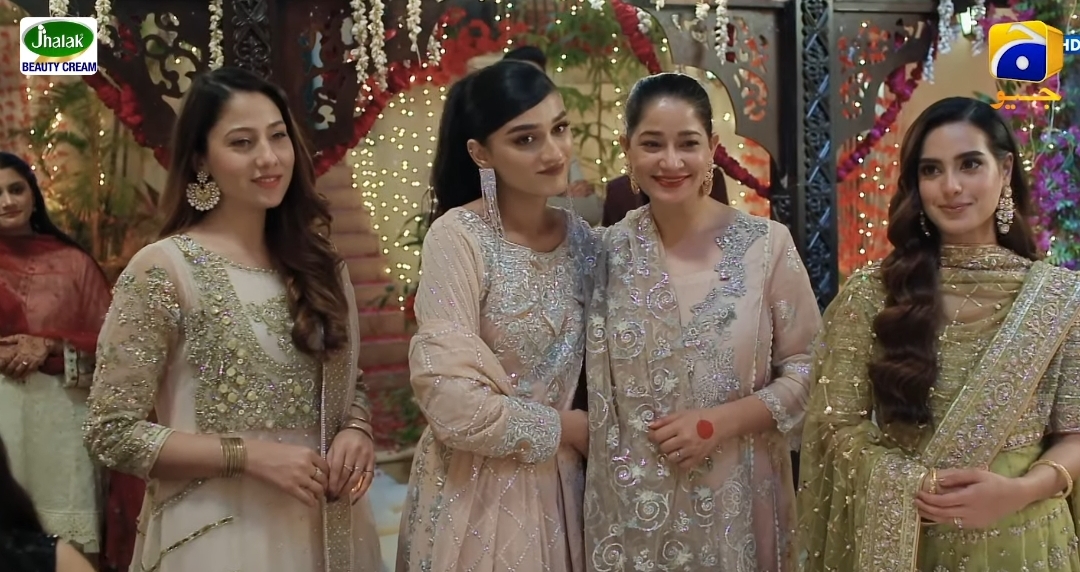
Was it alright for Mannat and her family to forgive and forget just because she was pregnant now? And how could matters become so hunky dory that Mannat eventually gets her elder brother married to Murad’s elder sister? Also, Mannat’s victory was somewhat bittersweet with Razia Sultana, her cantankerous mother-in-law, not really softening towards her and Murad still making excuses for his family.
It’s interesting to note that throughout the drama, romance wasn’t an essential part of Mannat Murad’s narrative. Perhaps it was the makers’ intention to make the drama’s audience question the various nuances in the plot. Romance may be a part of married life but within a desi joint family, what is equally essential are feelings of mutual respect, cooperation and understanding.
In fact, from the very onset, one wondered what Mannat, living her glossy life, cherished and spoilt by her family, saw in Murad’s boisterous, over-crowded home? Did she think that she would marry him and then change him in certain ways? That’s a point to ponder over: girls can’t expect to marry someone with very disparate lives from their own and then plan to bend them to their will.
There are many more thought-provoking aspects to Mannat Murad. Talha Chahour and Iqra Aziz acted very well as did the ensemble cast. Irsa Ghazal, playing Murad’s mother, was very much in the spotlight and although there were times when she was too loud, she was probably required to be this way in order to emulate the emotional Punjabi matriarch. There were certain points where Irsa Ghazal’s expressions spoke volumes – it was a convincing performance, albeit a painful one.
View this post on Instagram
The pain and the emotional strains were a perpetual part of Mannat Murad’s story. Syed Wajahat Hussain skillfully directed the script, written by Nadia Akhtar, and the 7th Sky Entertainment touch was very much there, with effort invested into wardrobe, interiors, set design, the details! These high production values served as the shiny candy foil that were part reason for luring the audience towards the drama but what kept them rooted was the story within and the harsh truths that it delivered.
Could the ending have been different? In the real world, yes it should have been. Even with a besotted Mannat and Murad gazing into each other’s eyes at the end, you felt a sense of disbelief nudging at you. How long would this ‘happily ever after’ really last? That’s the kind of drama it was. It made you think about the story, long after it had ended in a bonanza of fairy lights and a shiny happy ending.






What do you think?