

By Maliha Rehman
Welcome to the twilight zone.
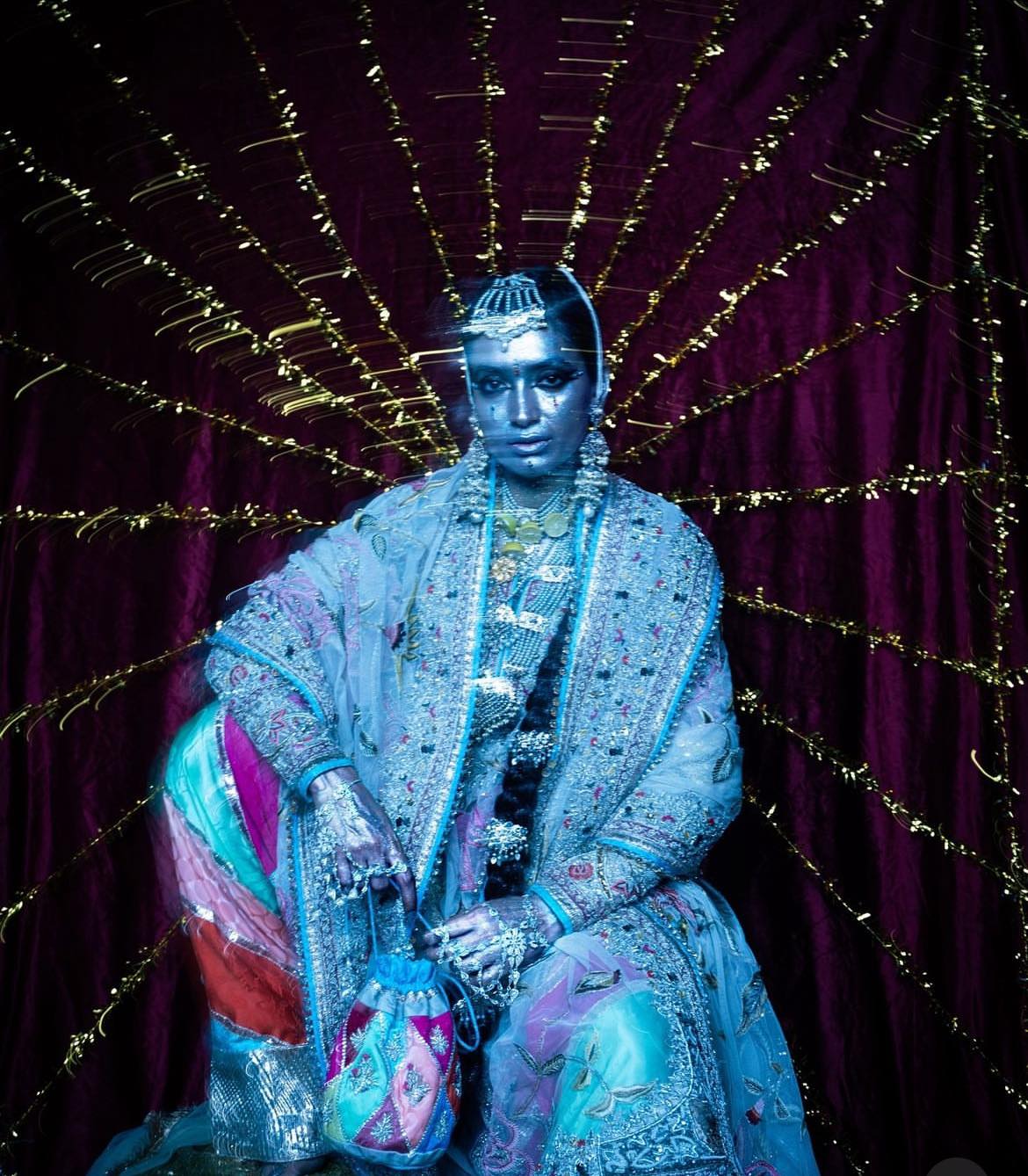
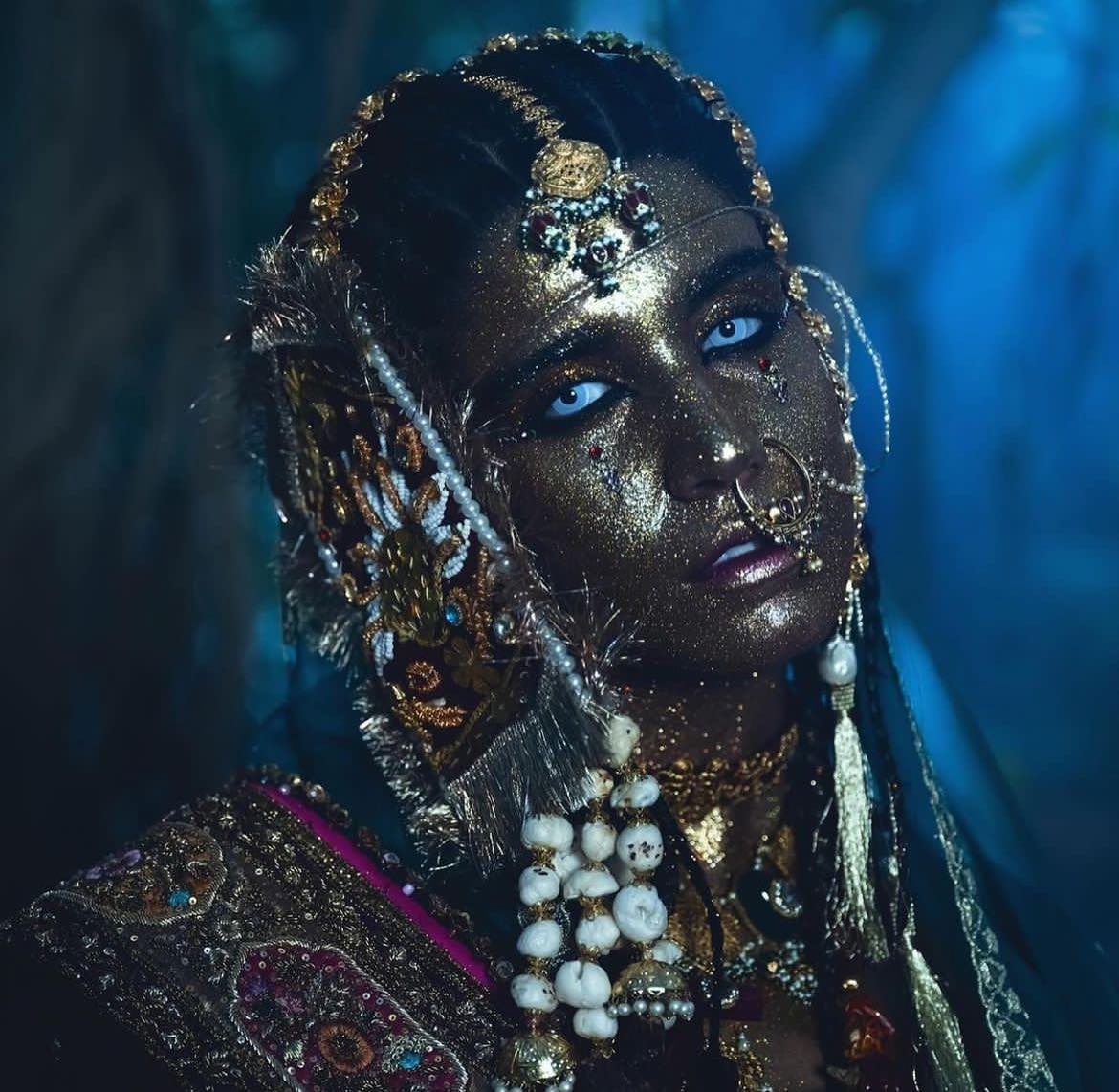
Flitting about social media is a churail with glassy eyes, a sinister wedding entourage of jinns wearing multicolored wedding wear with faces glinting in blue and gold, men and women with chains and other contraptions criss-crossing over their faces and bodies and a dulhan, wearing a black crown with huge red tassels dangling down from it and horns on either side!
There have been many times when Pakistani fashion has been so garish that it has been downright scary. However, this is spooky stuff, literally.
Fahad Hussayn’s Chalawon Ki Barat
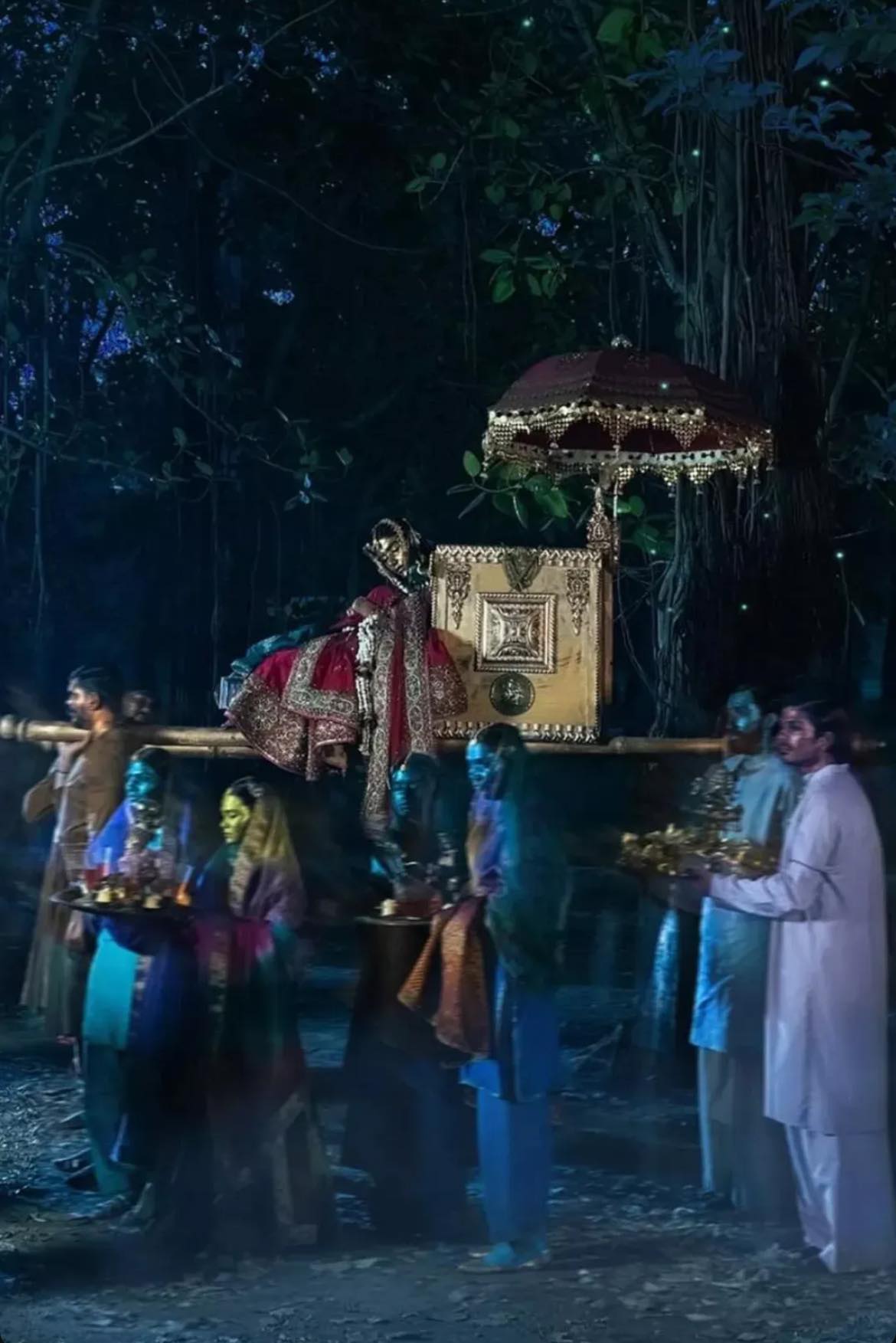
In a campaign launched two odd weeks ago, designer Fahad Hussayn put forward an elaborate shoot titled Chalawon Ki Barat, inspired by age-old Punjabi folklore. As the story goes, the ‘barat’ consists of jinns and in their marriage ceremony, they lure common folk into their realm and then, turn them into one of their own.
In the barat envisioned by Fahad, the jinns and churails wear elaborate wedding-wear from his recent wedding-wear lines. Their faces are painted in glistening, metallic hues and they stare at the camera, with eerie eyes whitened perhaps by the means of contact lenses. As is the case with all of Fahad Hussayn’s shoots, this one is also a labor of love: the jinns wear elaborate jewelry, there is a groom wearing the traditional sehra and the churail bride sits atop a glistening doli surrounded by her spooky entourage, her face tilted at an odd angle. A narration accompanied by music by Grehan band recounts the folk tale associated with the shoot.
It’s quintessential Fahad Hussayn: from the styling to the props to the art direction, the original soundscore and the designs, it’s obvious that a lot of effort has been invested into the campaign. However, did Fahad not worry that this shoot might spook off potential clients? The images he put forward can hardly be associated with the typical desi wedding where sadqah and dua’s are given in order to protect the bride and groom from evil.
Ali Xeeshan’s Jin Ke Shadi
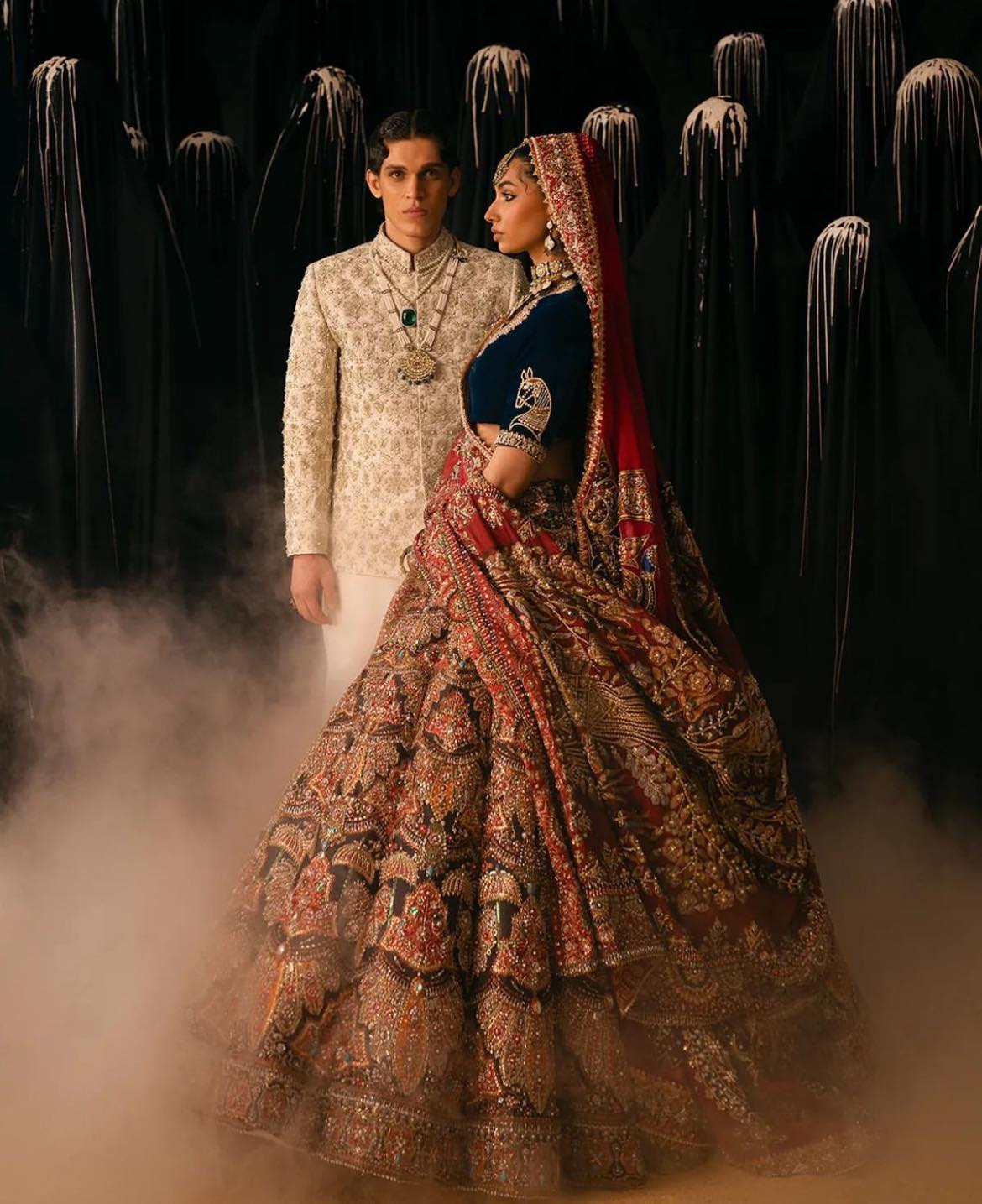
Less elaborate but following a similar tangent is Ali Xeeshan Theatre Studio’s latest bridal campaign, titled Jin Ke Shadi. Ali’s campaign released about two weeks after Fahad’s and similarly leans towards the eerie. A model wearing a red lehnga and choli twirls, looked upon by a sinister group of men – or rather, jinns – dressed in black, wearing jagged crowns, horns jutting from their heads. In one image, a man and woman – he, wearing a traditional sherwani, and she, in a lehnga choli – pose for the camera, with figures shrouded in black behind them. There’s more: models in wedding-wear with a huge chandelier behind them, a play of light and smoke, a few blurry images.
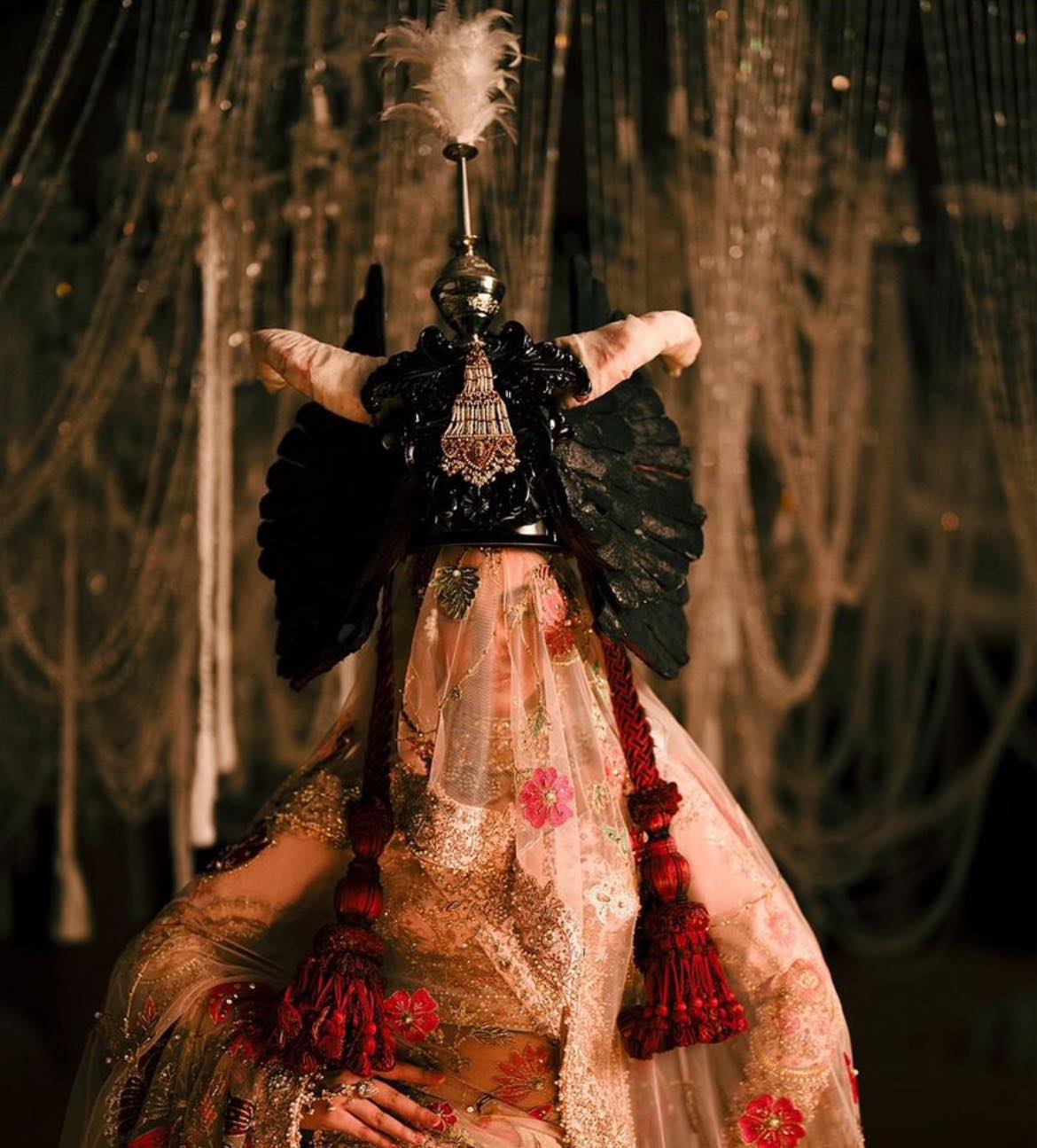
The shoot’s piece de resistance is the image of a bride, her face covered by a net dupatta, with a sinister-looking crown atop her head. There are large red tassels dangling down from the crown and horns on either side. Eerie music – ‘Ritual’ by Sam Marshall – accompanies the Instagram post. It may be considered a form of creative expression by some – for many, it’s just plain scary.
View this post on Instagram
But why?
“Why? Everyone gets married – jinns and humans!” Ali Xeeshan quips.
Wasn’t adding horns to a dulhan a tad too much? “A lot of women, when they are getting married, feel like cattle being sacrificed,” he points out.
Still, why would a wedding shoot be dedicated to a bride who feels like she is at the sacrificial altar rather than experiencing the happiest day of her life? Why should a shoot ultimately showcasing wedding-wear be tinged by sadness? Go figure.
“Luckily for me, a lot of my clients are very discerning,” says Ali. “I have clients in Pakistan, India and Middle East who are able to understand my creative expression and are excited about this collection. We’re already getting orders.”
Fahad Hussayn feels that his entourage of fashionable jinns are magical, rather than dark. “This shoot is inspired by the stories that my Bari Ami would tell me when I was young. They would not be scary when she recounted them, her eyes would light up with excitement. Folklores are such an important part of growing up. They inspire imagination and we need to keep them alive. I would always want my brand to stand with that vision.”
He continues, “I was as excited about Chalawon Ki Barat as I am about all my campaigns. Many of my followers are artists, aspiring as well as established ones, and they appreciate the vision behind the shoot.”
But what about the clients? Would women, on the search for wedding-wear for their daughters and daughters-in-law, be inclined towards a collection associated with supernatural jinns and churails? “The clothes have been selling well, ever since I first showed them at the Hum Bridal Couture Week last year,” says Fahad. “I put together this editorial shoot, styling together pieces from my signature bridals and formals. Some shalwars were created particularly for this shoot, paired with the bridal shirts.”
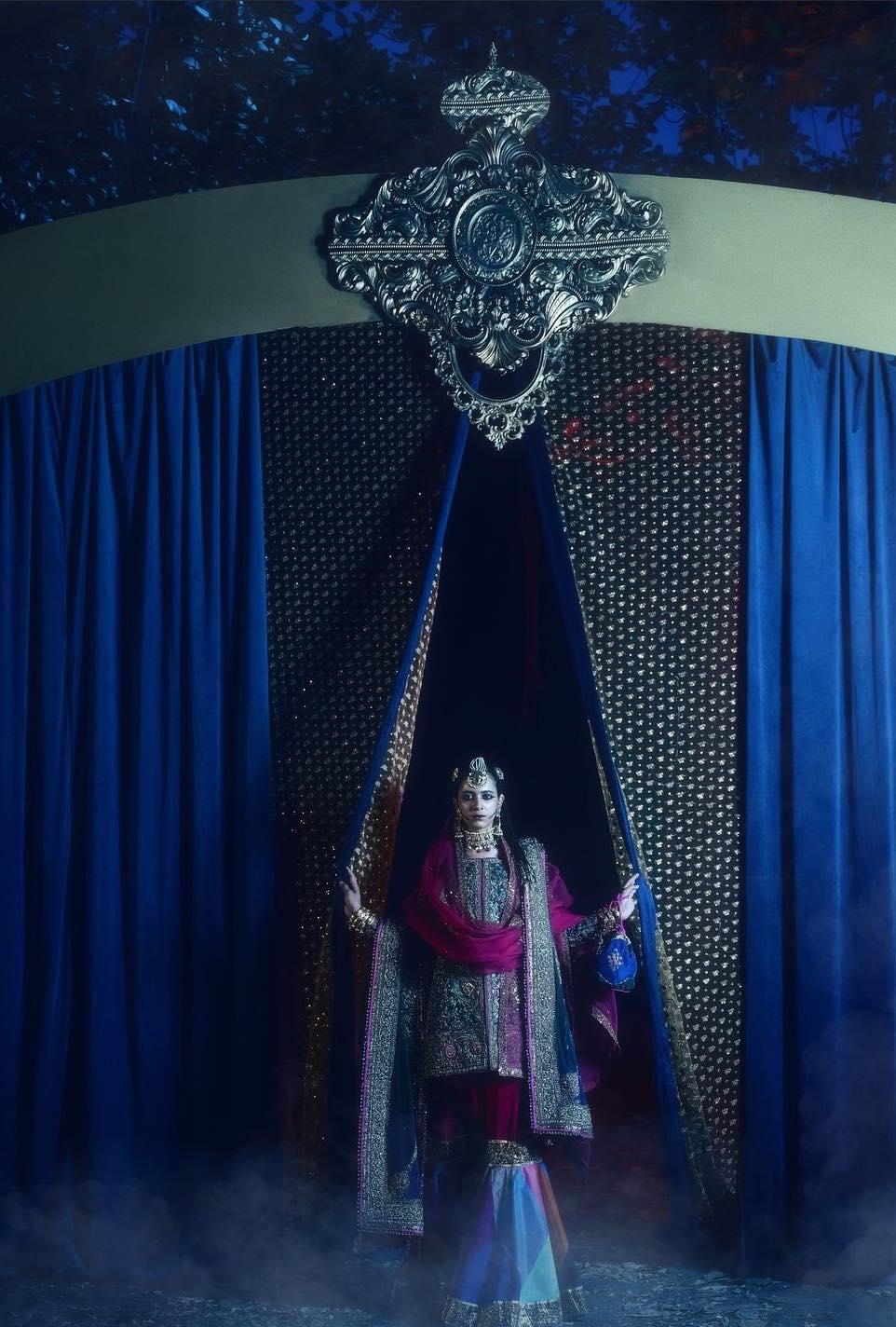
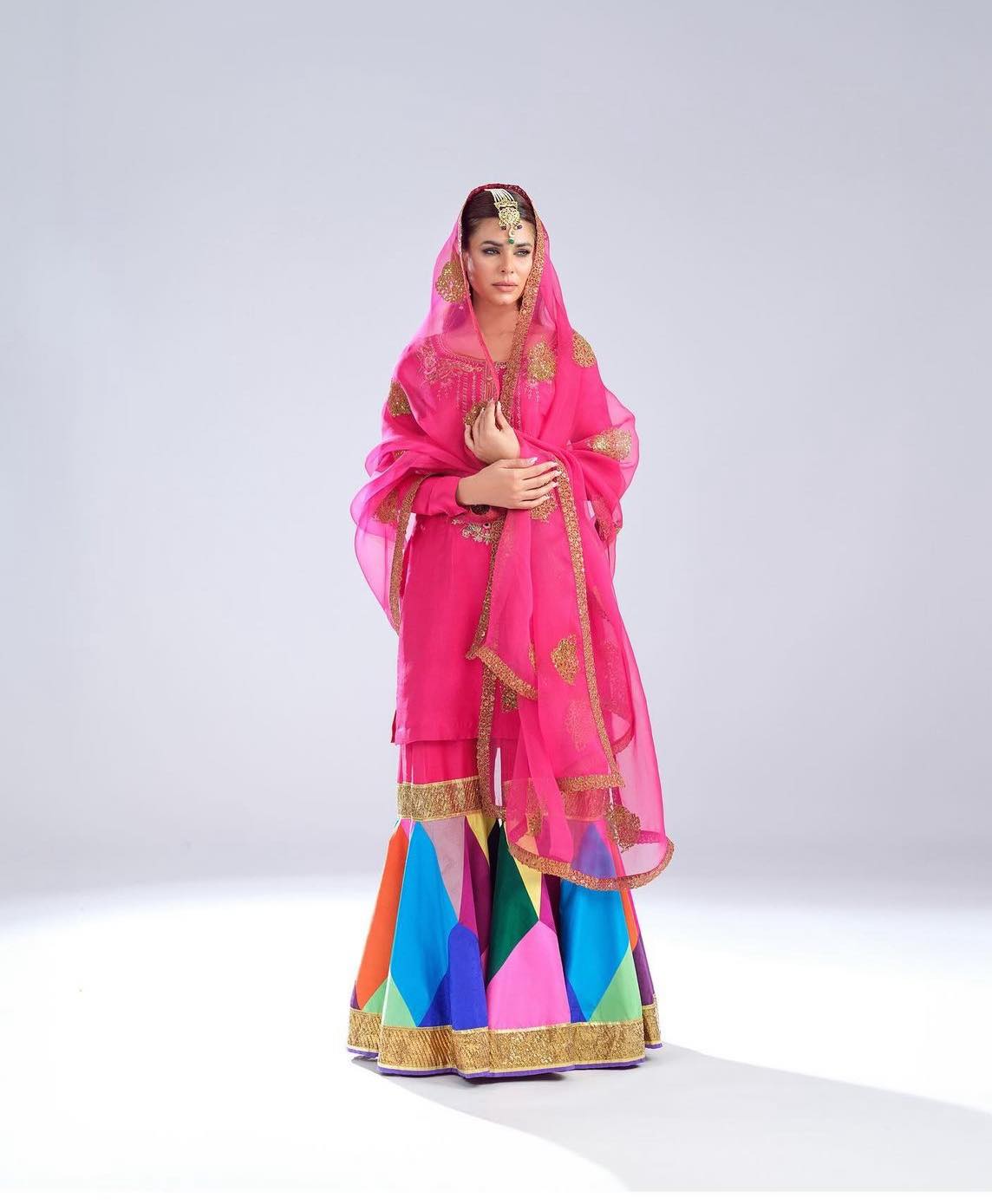
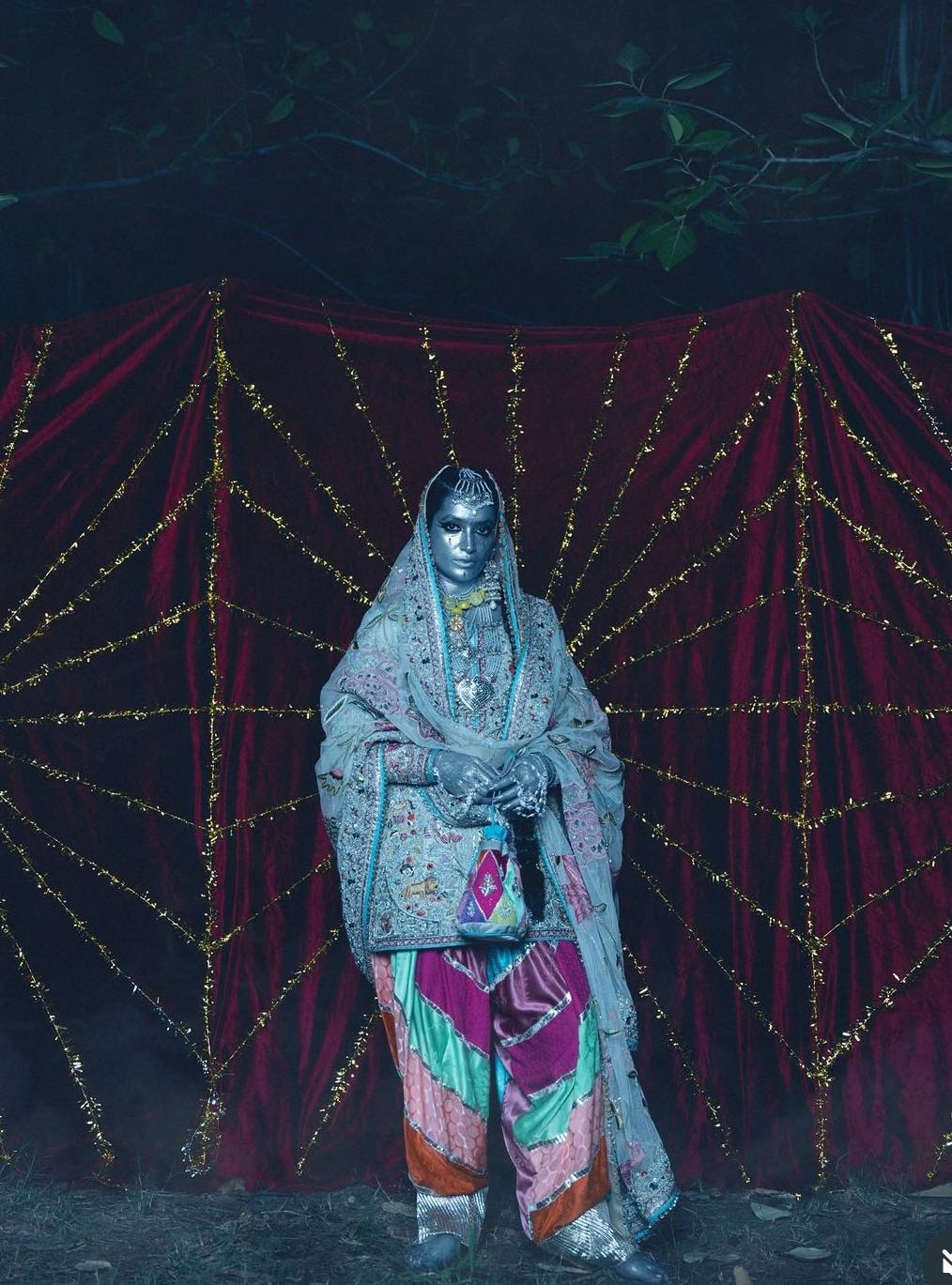
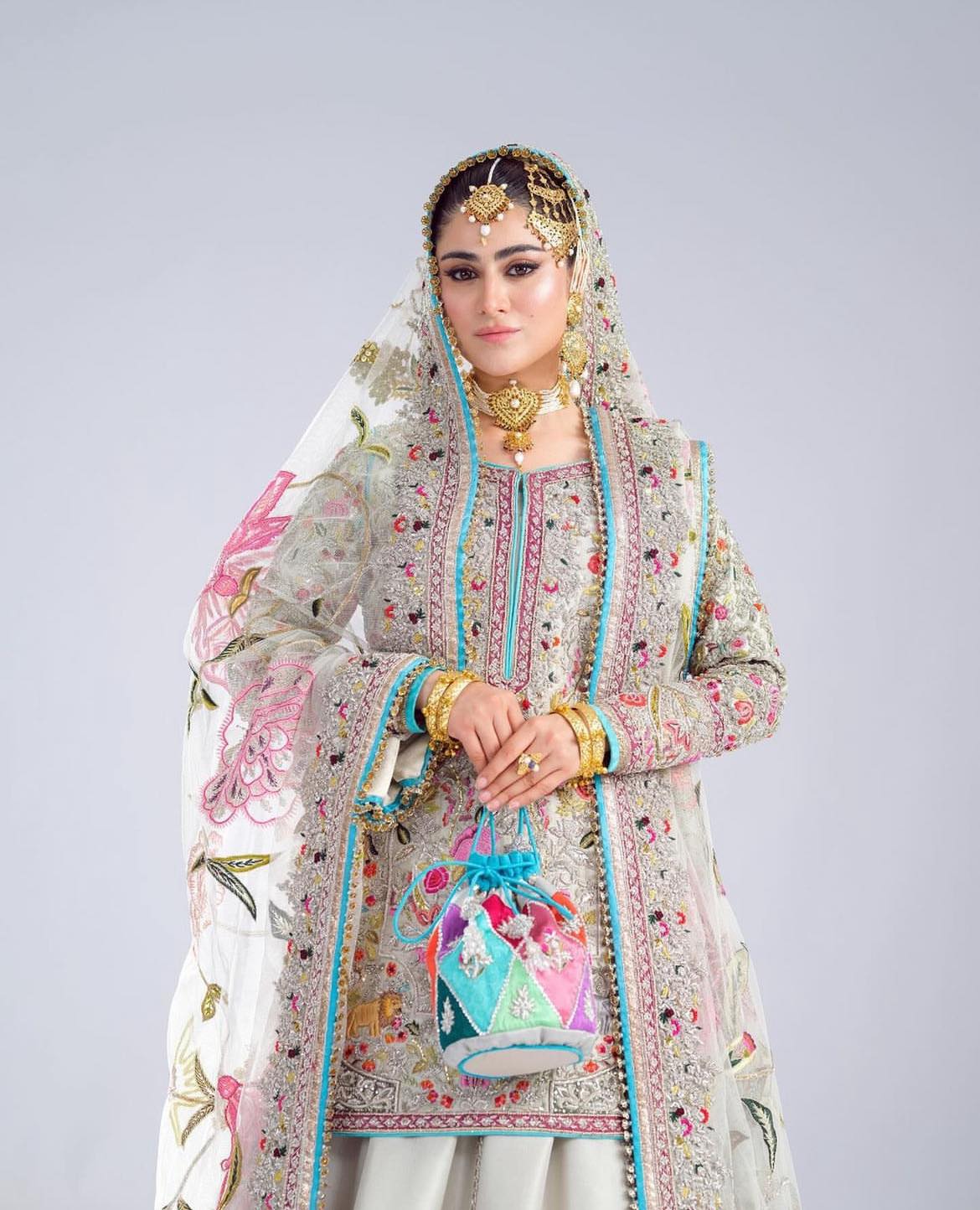
Fashion a la jinn and fashion a la catalog! Same shirts, two different shoots by Fahad Hussayn
“For my e-store, on the other hand, I always put together clean, crisp catalog shoots (where the details are visible). The campaign catalog – created for clients wanting to have a closer look at the design – and the editorial shoot are different.”
I pose the same question to Ali. His ‘discerning’ clientele may have an appreciation of the arts but ultimately, all desis have certain beliefs attached to weddings. Mothers and grandmothers don’t usually like allusions to magic and the supernatural to be attached to the bride and groom. “For me, money is not the only priority. I have to express myself creativity. Also, let the campaign unfold. Then, even mothers and grandmothers will not have any problems,” promises Ali.
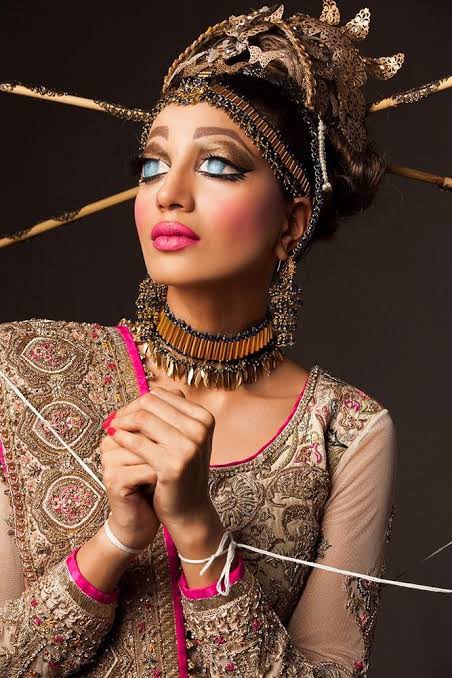
Time will tell. It isn’t the first time that fashion has veered towards images that tread unconventional ground. Fahad Hussayn’s Putli Ghar from about a decade ago, for instance, featured model Rabia Butt as a ‘putli’, sticks jutting from her head, her eyes glassy, her body tilted unnaturally like a puppet suspended by strings. The image may have been disturbing but it was also impactful and told a story, unlike the usual repetitive ‘pretty’ shoots.
Perhaps a certain clientele really does appreciate creative expression and doesn’t mind jinns, churails and the like. Perhaps. I have my doubts.
While one enjoys theatrics and elaborate campaigns, the desi wedding is a shiny, happy event. For many – including myself – the highlight of a beautiful bridal campaign is the mix of craft, color and silhouette, showcased through a creative shoot. It is true that Pakistan’s social media landscape may be littered by far too many generic bridal-wear shoots and a collection leaning towards the occult is likely to stand out in the clutter. But, is also very likely to leave many appalled rather than enchanted. Amidst the controversy, would most people even notice the design details to the clothes?
Also, should certain lines be drawn even in creative expression in order to abide by cultural norms? Or is it quite alright to place horns on the head of a bride or envision a ‘sonehri churail’ dulhan?
And how ever did two designers from Lahore manage to release collections centered around such similar themes within a gap of two weeks? Isn’t that too much of a coincidence?
On a personal note, didn’t the designers and their teams not get the jitters as they went about the shoots?
Also, what’s more horrifying: fashion showcased in a scary shoot or scary, ugly fashion running rampant on the catwalk and on Instagram? That’s a difficult one.

Hamza Tariq
August 19, 2024The most creativity shown in these shoots is to get attention. As far as folklore is concerned those stories were about pariyon ki mehndi. That would have been incredible. These campaigns are done just to go viral. Nothing has been revived in these shoots. And nobody wants to look at those looks to get inspired for their wedding. There are more than many girls who choose bridals according to their mothers. I don’t think they would agree to these looks 😜😜